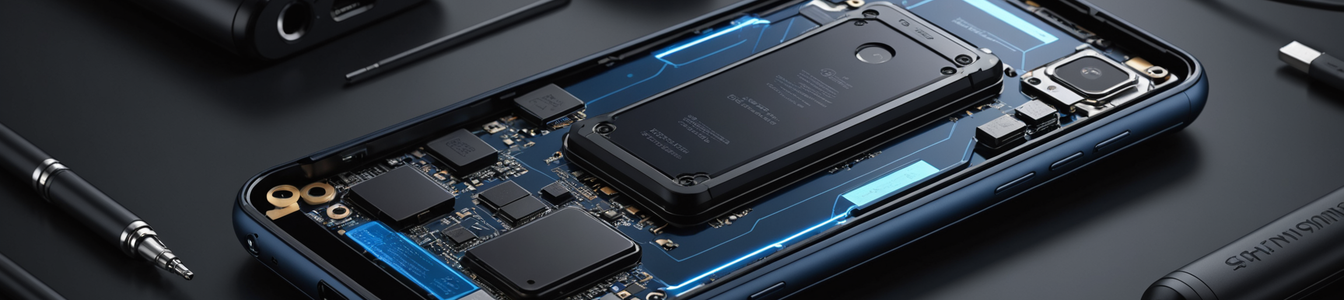
The smartphone industry's relentless pursuit of battery life has reached a critical inflection point with the emergence of 10,000+ mAh devices. Manufacturers like Realme are teasing smartphones that promise a full week of uptime without charging, fundamentally altering user behavior and device security paradigms. While consumers may view this as purely a convenience feature, cybersecurity professionals are recognizing a significant shift in mobile threat models that demands immediate attention.
Extended Uptime: A Double-Edged Sword for Security
The most immediate security implication of week-long battery life is the dramatic reduction in natural security resets. Traditional smartphones benefit from regular charging cycles that often coincide with reboots, clearing volatile memory and terminating persistent malware processes. With devices potentially running continuously for 168+ hours, attackers gain unprecedented windows for establishing deep persistence. Memory-resident attacks that would normally be cleared by daily reboots can now maintain presence indefinitely, while forensic investigators lose crucial evidence that disappears during routine shutdowns.
Thermal Management as a New Attack Surface
The engineering challenge of managing heat dissipation in devices with massive batteries creates unexpected security vulnerabilities. To prevent thermal runaway and maintain battery health, manufacturers implement sophisticated thermal management systems with multiple sensors and control mechanisms. These systems, often operating with elevated privileges to manage power distribution and processor throttling, represent new attack vectors. A compromised thermal management controller could be weaponized to induce hardware failures, bypass performance-based security checks, or create denial-of-service conditions while appearing as legitimate system behavior.
Security Update Compliance in an Always-On Environment
The extended uptime directly conflicts with established security update practices. Most mobile operating systems require device reboots to complete critical security patches, a process users frequently delay when their device is constantly in use. Organizations enforcing security policies now face the challenge of devices that may remain unpatched for weeks despite available updates. This creates compliance gaps in enterprise environments and increases the attack surface for known vulnerabilities that would otherwise be promptly addressed.
Physical Security Implications of Battery Form Factors
The physical dimensions required for 10,000 mAh batteries introduce novel physical attack considerations. The increased internal space could potentially conceal additional hardware components, including surveillance modules or interception devices that draw power from the massive battery capacity. Security teams conducting physical inspections must now account for this expanded internal volume when verifying device integrity. Additionally, the battery's extended lifespan increases the window for supply chain attacks, as devices remain in service longer with potentially compromised components.
Embedded Surveillance and Data Exfiltration Risks
The combination of extended power availability and increased internal space creates ideal conditions for embedded surveillance capabilities. Malicious actors or state-sponsored entities could theoretically integrate monitoring hardware that operates independently of the main operating system, drawing minimal but consistent power from the oversized battery. Such hardware could facilitate data exfiltration, location tracking, or audio/video capture while the device appears powered off or in standby mode. The security community must develop new detection methodologies for hardware-level implants that leverage these power reserves.
Enterprise Security Policy Reassessment
Organizations must urgently update their mobile device management (MDM) policies to address these new realities. Mandatory reboot schedules, previously aligned with charging cycles, now require explicit enforcement. Thermal monitoring should be integrated into security event management systems, with anomalous temperature patterns triggering security alerts. Physical inspection protocols need enhancement to detect potential hardware modifications in devices with expanded internal volumes. Most critically, security teams must balance user convenience with security requirements in an era where 'never reboot' becomes a selling point.
The Road Ahead: Security by Design in the Battery Arms Race
As manufacturers continue competing on battery capacity, the security community must advocate for security-by-design principles in this new paradigm. Hardware security modules should include independent power monitoring to detect anomalous consumption patterns. Thermal management systems require robust authentication mechanisms to prevent unauthorized access. Operating systems need enhanced capabilities to force security updates without disrupting critical user workflows. The industry stands at a crossroads where convenience innovation must not come at the expense of fundamental security protections.
The emergence of 10,000+ mAh smartphones represents more than just a battery capacity milestone—it signals a fundamental shift in how we must approach mobile device security. By proactively addressing these challenges, security professionals can ensure that extended battery life enhances rather than compromises our digital safety.
Comentarios 0
Comentando como:
¡Únete a la conversación!
Sé el primero en compartir tu opinión sobre este artículo.
¡Inicia la conversación!
Sé el primero en comentar este artículo.