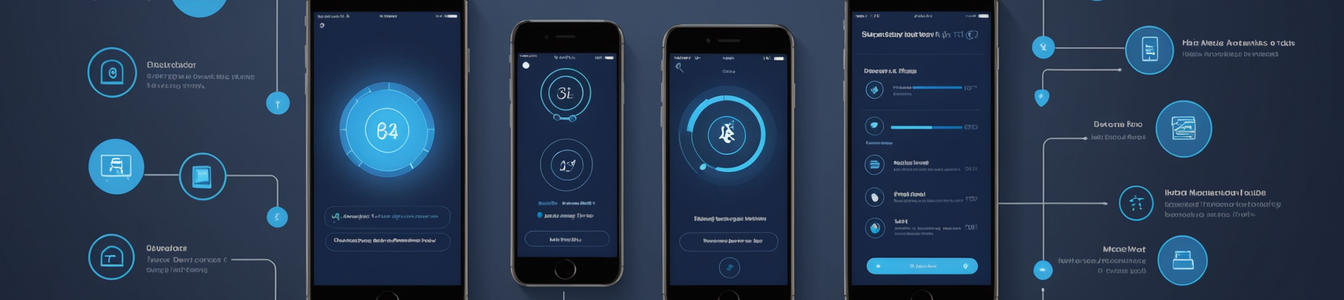
A quiet but pervasive shift in consumer technology is eroding user choice and consolidating security risk: the mandatory mobile application. From smart light bulbs that refuse to function without a vendor's app to digital health devices like TempraMed's newly launched VIVI Cap Smart that gatekeep vital data behind proprietary interfaces, users are being funneled into digital walled gardens. These ecosystems, while convenient for manufacturers seeking customer lock-in and data monetization, represent a fundamental challenge to cybersecurity principles, creating fragmented, opaque, and often vulnerable environments.
The core of the problem lies in the replacement of open, standardized communication protocols with closed, app-dependent architectures. Historically, devices could communicate via local protocols like Zigbee or Z-Wave, managed through a central, potentially more secure hub. The modern paradigm, however, often bypasses local control entirely. A smart plug, for instance, may only be configurable via a cloud-connected app, with no local API or fallback. This design has several critical security implications.
First, it creates a massive attack surface centered on the mobile application itself. These apps are frequently updated with varying degrees of security rigor, can contain vulnerable third-party libraries, and become permanent endpoints on a user's smartphone—a device already rich with sensitive data. A compromise of the app can lead directly to control of the physical device. Second, it obscures data flows. Users and enterprise security teams cannot easily audit what data the device collects, where it is transmitted, or how it is stored. The app acts as a black box, with privacy policies that are often changed unilaterally.
The trend is accelerating across sectors. In digital health, TempraMed's expansion into this space with VIVI Cap Smart is indicative. Such devices collect highly sensitive personal health information (PHI), yet the security of that data is contingent on the vendor's app infrastructure and their commitment to patching. In the smart home arena, platforms like Tuya Smart are launching AI-driven assistants to manage device collaboration. While promising interoperability within their own ecosystem, these assistants further cement the walled garden, discouraging integration with competing or more secure external platforms. Even major communication tools like WhatsApp are deepening device integration, as seen with potential Apple Watch connectivity features, tying more aspects of digital identity to a single app's security posture.
For cybersecurity professionals, this presents a multifaceted challenge. Risk assessment becomes more difficult when every device requires a unique, cloud-dependent app with unknown backend security. Incident response is complicated; an exploited vulnerability in a smart lock app may not trigger alerts on a corporate network monitoring system. The principle of least privilege is violated as these apps often request broad device permissions (location, network access, contacts) far beyond their functional needs.
Furthermore, the longevity of security support is a major concern. Consumer IoT and digital health companies are not known for providing decade-long security patches for their apps. When a vendor discontinues support or goes out of business, the device—and any security risk it poses—becomes an unmanageable orphan, yet remains connected to the network. This planned obsolescence is a security time bomb.
The solution requires pressure from both consumers and the security community. Advocating for and purchasing devices that support local control protocols (like Matter, where possible) and open APIs is crucial. Security teams must expand their policies to cover 'Bring Your Own IoT' (BYOIoT) and mandate security assessments for any app-based device entering a corporate or home-office environment. Ultimately, the industry must be pushed to view interoperability and transparent security not as a cost, but as a core feature and responsibility. The convenience of an app should not come at the cost of locking users in and locking security out.
Comentarios 0
Comentando como:
¡Únete a la conversación!
Sé el primero en compartir tu opinión sobre este artículo.
¡Inicia la conversación!
Sé el primero en comentar este artículo.