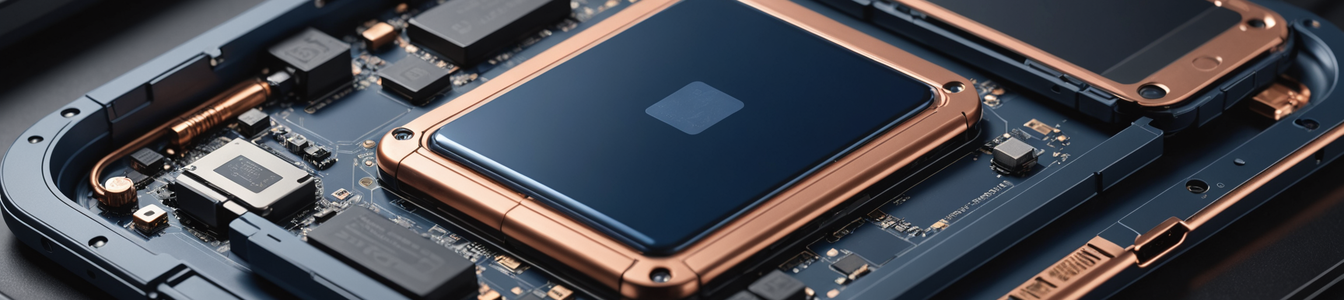
The smartphone market is locked in a hardware arms race. The battlefields are battery life, thermal performance, and distinctive form factors. While consumers cheer for devices that last days on a single charge, don't throttle during intensive gaming, and offer novel features like pop-up cameras, a less visible conflict is emerging for cybersecurity teams. Each of these hardware advancements introduces new layers of complexity, firmware dependencies, and physical components that expand the device's attack surface in unforeseen ways.
The Battery Behemoth: A Powerhouse of Risk
The announcement of smartphones like the upcoming Honor model featuring a massive 10,000 mAh battery represents a clear market shift. For users, it's a promise of multi-day endurance. For security architects, it's a significant escalation in risk profile. Larger battery cells and the advanced power management integrated circuits (PMICs) required to control them are prime targets. A compromised PMIC firmware could be used to create dangerous charging cycles, physically damaging the battery and potentially leading to thermal runaway—a safety and security incident. Furthermore, the economic drive to offer such capacity at aggressive price points (rumored under $140 for the Honor device) pressures supply chains, increasing the risk of counterfeit or tampered components being introduced. A maliciously modified battery or PMIC could serve as a persistent hardware backdoor, difficult to detect through standard OS-level security scans.
Active Cooling: A New Vector in the Chipset
The integration of active cooling systems, as seen in the Xiaomi Redmi K90 Ultra's dedicated cooling fan, marks a departure from passive thermal solutions. This fan isn't just a simple motor; it's managed by a microcontroller, complete with its own firmware and sensors to monitor temperature and RPM. This introduces a new, low-level subsystem that must be secured. An attacker who gains control over this microcontroller could, for instance, disable the fan under load to cause overheating and forced shutdowns—a denial-of-service attack at the hardware level. Alternatively, they could run it at maximum speed constantly, draining the battery prematurely. The IP68 rating, while beneficial for water resistance, also complicates physical inspection and may obscure signs of tampering with these internal mechanical systems.
The Mechanical Intrigue: Complexity as the Enemy of Security
Perhaps the most illustrative example of novel attack surfaces comes from Honor's showcased smartphone with a "robotic camera" mechanism. This device, teased at CES, features a complex, moving camera system whose exact purpose remains shrouded in mystery. Such mechanical assemblies represent a quantum leap in physical complexity. They rely on a suite of sensors (hall effect sensors, gyroscopes) and motors, all controlled by yet another dedicated microcontroller. This creates multiple new vectors:
- Physical Tampering: The moving parts create potential entry points for invasive physical attacks, potentially bypassing sealed device exteriors.
- Sensor Spoofing: The mechanism's operation likely depends on sensor feedback. Spoofing this data could cause malfunctions, damage the hardware, or trick the device about its physical state.
- Firmware Blind Spots: Security teams are adept at securing application processors and basebands, but the firmware for a niche robotic camera controller may fall outside standard vulnerability management and patch deployment cycles, leaving it perpetually exposed.
The Converging Threat Landscape and Strategic Implications
These trends do not exist in isolation. A future flagship device might combine a huge battery, an active cooling fan, and multiple mechanical components. The interdependencies between these systems create a cascade of potential failures. A compromised cooling system could force the high-performance chipset to draw more power, stressing a potentially compromised battery management system.
For the cybersecurity community, this demands a paradigm shift:
- Expanded Firmware Scope: Device security assessments must now include the firmware of every microcontroller—PMICs, fan controllers, motor drivers, and sensor hubs. This requires new tools and expertise in low-level embedded systems security.
- Supply Chain Vigilance: The cost-driven nature of this hardware race makes robust component provenance and anti-counterfeiting measures more critical than ever. Hardware attestation for secondary controllers becomes a necessary feature.
- Physical Security Re-evaluation: Device hardening must account for novel mechanical features. Red teams need to develop new techniques for testing the resilience of these moving parts against manipulation and spoofing.
- Incident Response Adaptation: Forensic analysis of a compromised device must now consider data logs and states from these ancillary systems, which may hold clues to a hardware-rooted attack.
In conclusion, the industry's drive to win the hardware arms race is inadvertently creating a new frontline in cybersecurity. The very innovations designed to enhance performance and user experience are introducing a web of physical and firmware vulnerabilities. Defending tomorrow's devices will require looking beyond the application processor and into the heart of the power, thermal, and mechanical systems that make them tick. The hidden hand of hardware innovation is reshaping the threat model, and security strategies must evolve to grasp it.
Comentarios 0
Comentando como:
¡Únete a la conversación!
Sé el primero en compartir tu opinión sobre este artículo.
¡Inicia la conversación!
Sé el primero en comentar este artículo.