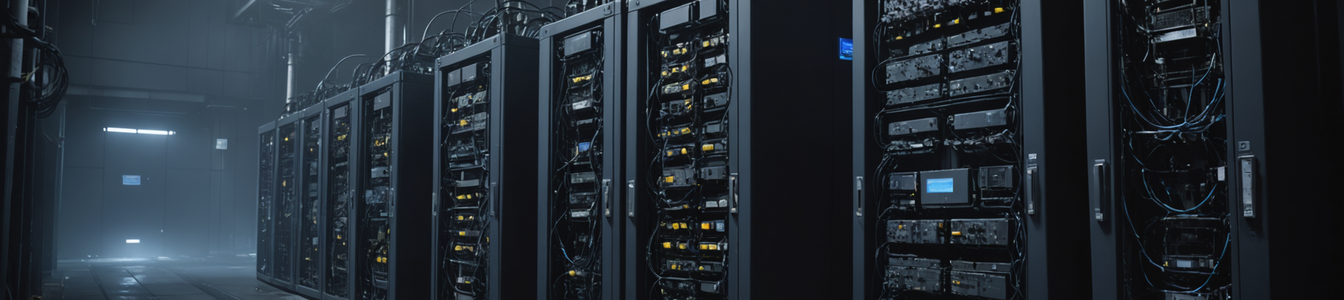
The traditional cybersecurity playbook, focused on defending digital perimeters from malicious actors, is being fundamentally challenged. A series of concurrent physical crises—from hurricane-force winds in the US Pacific Northwest to rising floodwaters in the English Midlands—are demonstrating that some of the most severe operational disruptions now originate not from a keyboard, but from the physical world. For Security Operations (SecOps) teams, this represents a paradigm shift, demanding they expand their scope to include environmental threats that cripple the very infrastructure their digital defenses rely upon.
The Storm Front: When Power Grids Fail, So Does Digital Security
This week, the Pacific Northwest faced a brutal reminder of this interdependence. A powerful storm system brought hurricane-force winds, triggering massive power outages across Washington and Oregon. For businesses, the immediate concern was loss of electricity. For SecOps teams, the crisis had only just begun. Widespread power failures don't just darken offices; they threaten data center uptime, sever cloud service connectivity, and disable the environmental controls that keep server rooms cool. Backup generators, a staple of business continuity plans, become single points of failure. The integrity of physical security systems—access control badges, surveillance cameras, and intrusion detection—is compromised, creating blind spots that malicious actors could theoretically exploit during the chaos.
This scenario forces cybersecurity professionals into unfamiliar territory: coordinating with facilities management, assessing fuel levels for generators, and managing the secure shutdown and restart of critical systems. The incident response plan is no longer just about containing a data breach, but about maintaining the physical conditions necessary for digital operations to exist.
The Flood Waters: A Soaking Threat to Data Integrity
Across the Atlantic, a different physical threat emerged. Official warnings were issued for properties in Derby, UK, as river levels soared, posing a significant flood risk. While the direct impact is to homes and businesses, the secondary effect on digital infrastructure is profound. Flooding can inundate underground cable conduits, damage substations powering colocation facilities, and directly threaten on-premises data storage. For organizations with legacy systems or locally hosted data, a flood represents an existential risk to data integrity and availability.
This highlights a critical gap in many disaster recovery (DR) strategies. While data may be backed up to a geographically distant cloud, the local access points, networking hardware, and last-mile connectivity required to failover to that DR site can be rendered inoperable by physical events. SecOps must now validate that their recovery plans account not just for cyber incidents, but for regional physical disasters that could isolate an entire geographic node of their operation.
The Regulatory Ripple: Physical Asset Status as a Security Variable
Simultaneously, a less dramatic but equally significant development unfolded in the energy sector. Sable Offshore announced that the Pipeline and Hazardous Materials Safety Administration (PHMSA) confirmed its pipeline as an interstate asset. This regulatory classification has substantial operational and security implications. Interstate pipelines fall under stricter federal security and cybersecurity guidelines (e.g., TSA directives). This decision effectively transforms the pipeline from a purely industrial asset into a piece of nationally significant critical infrastructure.
For the cybersecurity teams responsible for such Operational Technology (OT) environments, this reclassification mandates a heightened security posture. It brings increased scrutiny, compliance requirements, and potential consequences for failures. It also illustrates a key point: the security profile of digital control systems (SCADA, ICS) is intrinsically tied to the legal and regulatory status of the physical assets they control. A change in a physical asset's classification can trigger a mandatory overhaul of its associated cybersecurity framework.
Convergence Imperative: Bridging the Physical-Digital Risk Divide
These concurrent events underscore a non-negotiable trend: the line between physical security and cybersecurity has dissolved. The concept of 'cyber-physical systems' is no longer academic; it is the reality of modern infrastructure. A SecOps team cannot effectively protect an organization's data if it does not understand the vulnerabilities in its power supply, the flood plain of its primary data center, or the regulatory obligations of its industrial control systems.
The path forward requires an integrated risk management strategy:
- Expanded Threat Modeling: Risk assessments must systematically include environmental threats (severe weather, geological events) and supply chain dependencies (power, water, fuel) alongside traditional cyber threats.
- Unified Command Structure: Incident response plans need to integrate physical security, facilities management, and IT/SecOps teams under a common command protocol for cross-domain crises.
- OT/IT Collaboration: Cybersecurity strategies must formally incorporate Operational Technology environments, recognizing that an attack surface now includes valves, pumps, and pipelines monitored by vulnerable digital systems.
- Resilience Over Redundancy: Beyond having backups, systems must be designed for graceful degradation and manual operation when digital controls fail due to physical events.
Conclusion: The New Perimeter is Physical
The firewall is no longer the primary perimeter. The new frontline in cybersecurity is the power grid feeding the data center, the river level near the backup site, and the regulatory framework governing critical infrastructure. The recent storms and floods are not isolated news items; they are stress tests for modern SecOps. Teams that successfully adapt will be those that look beyond the server rack, understanding that business continuity in the digital age depends on defending against the very real storms of the physical world. The mandate is clear: to secure the digital, we must now secure the physical context in which it operates.
Comentarios 0
Comentando como:
¡Únete a la conversación!
Sé el primero en compartir tu opinión sobre este artículo.
¡Inicia la conversación!
Sé el primero en comentar este artículo.