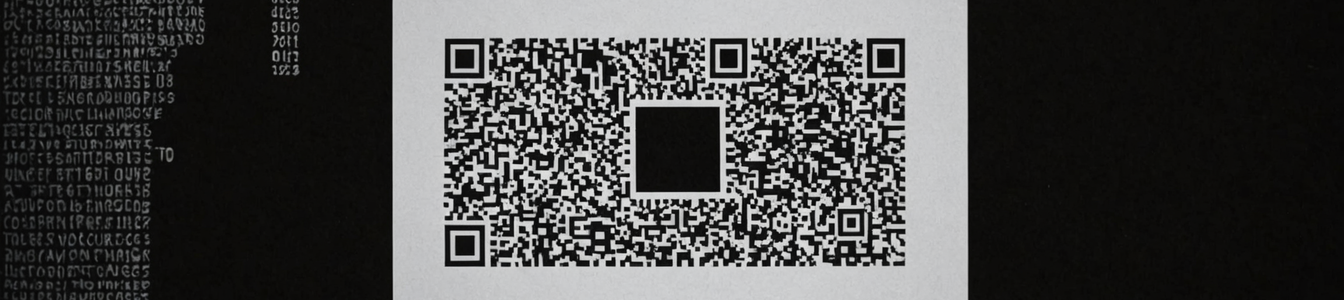
A recent incident involving India's Central Board of Secondary Education (CBSE) board exams has exposed a critical vulnerability at the intersection of physical document security and digital social engineering. The CBSE has been forced to issue a formal advisory clarifying the purpose of QR codes printed on Class 10 and 12 board exam question papers for 2026, following a wave of dangerous misinformation. This case serves as a stark lesson for cybersecurity professionals on how authentication systems, when poorly communicated, can be weaponized to exploit human psychology in high-stakes scenarios.
The core security feature was straightforward: unique QR codes were embedded on genuine exam papers as an anti-counterfeiting and tracking measure. Their sole function was internal authentication—allowing exam authorities to verify the paper's origin, batch, and legitimacy during the distribution and post-exam audit process. They contained no links to external websites, answer keys, or supplementary content. This is a common and logical physical-digital security control.
However, threat actors identified a potent social engineering opportunity. As images of the exam papers circulated online, malicious narratives began to spread across social media platforms and messaging apps like WhatsApp. Students were told that scanning these QR codes would reveal hidden benefits: access to leaked answer keys, solutions to difficult questions, or even entertaining content from celebrities like Rick Astley or Indian socialite Orry. These claims preyed directly on the intense anxiety and pressure felt by millions of students during these career-defining examinations.
The CBSE's advisory labeled this online behavior as "misleading" and explicitly stated the codes are "only for internal authentication." They warned students and parents not to be misled by such false promises. The board's reaction, while necessary, was reactive. The damage from the misinformation campaign—including potential student distraction, loss of trust in the exam process, and the risk of students attempting to scan codes during the exam—had already begun.
Cybersecurity Analysis: The Failure of Context
This incident is not merely about false rumors; it's a textbook case of security design failing to account for the human element and threat actor innovation. From a cybersecurity perspective, several critical failures are evident:
- Security Through Obscurity (in Communication): The purpose of the QR codes was not proactively and clearly communicated to the end-users (students and parents). This created an information vacuum filled by malicious actors. In security, if a feature's purpose is not transparent, users will assign their own—often incorrect—meaning.
- Weaponization of Trusted Symbols: QR codes are broadly associated with instant access to digital information. By placing them on a high-stakes document, the authorities inadvertently created a "call to action." Threat actors simply provided a malicious interpretation of that action.
- Exploitation of High-Pressure Environments: Social engineering is most effective in situations of stress and high reward. Exam settings are perfect targets. The attackers leveraged the emotional state of the victims to increase the plausibility of their claims (e.g., "scan for the answers you desperately need").
- Blurred Lines Between Physical and Digital Attack Vectors: The attack started with the physical document (the paper) but was executed in the digital realm (social media instructions), targeting the user's smartphone behavior. This hybrid vector is increasingly common.
Broader Implications for Enterprise Security
The lessons extend far beyond educational institutions. Any organization embedding authentication mechanisms—QR codes, holograms with digital triggers, NFC chips—into sensitive physical documents must consider this threat model. This includes:
- Financial Services: QR codes on checks, bonds, or high-value transaction documents.
- Legal & Government: Seals, stamps, or codes on legal rulings, contracts, or identity documents.
- Healthcare: Codes on prescriptions or sensitive medical reports.
- Corporate Security: Access badges, verification seals on confidential reports.
Mitigation Strategies for Security Teams
To prevent similar incidents, security architects and communicators should:
- Implement Proactive, Clear Communication: Any security feature visible to an end-user must have its purpose explicitly and repeatedly communicated through official channels before deployment.
- Design with Misinterpretation in Mind: Conduct threat modeling that asks, "How could a malicious actor misrepresent this feature's purpose to our users?"
- Use Distinctive Visual Design: Authentication QR codes for internal use should be visually distinct from consumer-facing "scan-for-info" codes (e.g., different colors, borders, or accompanying text like "INTERNAL AUTH ONLY").
- Monitor for Misinformation: In the age of social media, monitoring for the weaponization of your security features is as important as monitoring for their technical bypass.
- Consider the User's Emotional Context: Security controls deployed in high-stress user environments require additional safeguards against social engineering.
The CBSE QR code incident is a powerful reminder that in cybersecurity, the technical function of a control is only half the battle. Its perception, interpretation, and potential for malicious reinterpretation by adversaries are equally critical to its success. Failing to manage the narrative around a security feature can transform it from a protective measure into a potent attack vector.
Comentarios 0
Comentando como:
¡Únete a la conversación!
Sé el primero en compartir tu opinión sobre este artículo.
¡Inicia la conversación!
Sé el primero en comentar este artículo.