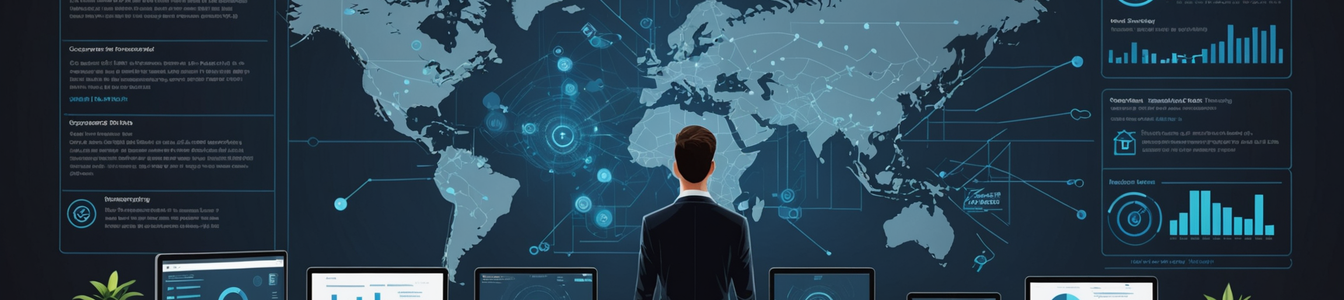
The corporate cybersecurity battleground has shifted beneath our feet. In 2025, ransomware operators are no longer just breaking down digital doors; they're walking through the front entrance using keys stolen from management. A sophisticated new attack methodology, pioneered by groups like Crazy ransomware, is exploiting the very tools organizations deploy to ensure productivity and IT support: employee monitoring software and remote administration utilities. This represents a paradigm shift in enterprise attack vectors, blending insider threat techniques with external criminal enterprise to devastating effect.
The Legitimate Tool Turned Threat Vector
The attack chain is deceptively simple and alarmingly effective. Threat actors first gain initial access through conventional means, such as phishing or exploitation of public-facing applications. Once inside, instead of deploying noisy malware, they seek out and compromise legitimate software already present on the network. Targets include employee productivity monitoring applications—tools like Teramind, ActivTrak, or Hubstaff—and remote support platforms such as AnyDesk, TeamViewer, or ConnectWise Control.
These applications typically operate with elevated privileges to perform their functions, are often configured to persist across reboots, and, crucially, are trusted by endpoint detection and response (EDR) systems and network security tools. By hijacking these legitimate processes, attackers achieve what security professionals call 'living-off-the-land' at an application level. They can move laterally, exfiltrate data, and maintain persistence without triggering the alerts that traditional malware would. The Crazy ransomware group has weaponized this technique to deploy its payloads silently, often remaining undetected for weeks or months before initiating encryption and launching ransom demands.
An Ecosystem in Hypergrowth
This innovation in technique is occurring against the backdrop of a ransomware ecosystem that has exploded in size and aggression. 2025 has seen the number of active ransomware groups reach an all-time high, with the victim growth rate doubling compared to 2024 metrics. The landscape has become increasingly crowded and competitive, driving groups to develop novel methods to bypass improved corporate defenses.
Dominating this crowded field is the Qilin ransomware operation (also tracked by some researchers as 'Kilin'). Qilin has distinguished itself through a ruthless combination of aggressive double-extortion tactics—stealing data before encrypting systems—and a ransomware-as-a-service (RaaS) model that has attracted a large network of affiliates. Their dominance underscores a fragmented but highly active threat environment where innovation is key to standing out. The emergence of techniques like the abuse of monitoring tools is a direct response to this competitive pressure and to the widespread adoption of more robust baseline security measures by enterprises.
The Enterprise Security Implications
This convergence of trends creates a perfect storm for security teams. The traditional security model, built on distinguishing 'bad' (malware) from 'good' (legitimate software), is fundamentally challenged when the good becomes the carrier for the bad. Signature-based detection is largely useless, and behavioral analytics must now account for legitimate tools behaving maliciously—a far more subtle anomaly to detect.
The risks extend beyond initial infection. Employee monitoring tools, by their nature, have extensive access to sensitive data: keystrokes, screen captures, application usage, and communication logs. When compromised, they become a goldmine for espionage and data theft, often fulfilling the 'data exfiltration' phase of a double-extortion attack before the ransomware is even deployed. Furthermore, the persistence mechanisms of these tools ensure that attackers retain access even if some malware components are discovered and removed.
Reconstructing Business Continuity and Defense
This new reality demands a fundamental reevaluation of both defensive postures and business continuity plans (BCPs). A BCP designed for a conventional ransomware attack may fail when the threat persists within trusted administrative tools. Incident response playbooks must now include scenarios where the compromise vector is a whitelisted application.
Defensively, a multi-layered strategy is essential:
- Application Allow-Listing & Hardening: Move beyond simple inventory to rigorous assessment. Does every endpoint need a remote support tool? Does the monitoring software require all its privileges? Implement principle of least privilege for these applications as rigorously as for user accounts.
- Enhanced Behavioral Monitoring: Security operations must develop baselines for normal administrative and monitoring tool behavior. Unusual process spawning, network connections to unexpected destinations, or file access patterns from these tools should trigger high-fidelity alerts.
- Network Segmentation & Egress Filtering: Treat the networks hosting IT management and monitoring systems as high-value targets. Segment them from critical data stores and strictly control outbound communications to hinder command-and-control and data exfiltration.
- Vendor Risk Management: Scrutinize the security practices of vendors providing monitoring and remote access solutions. Require transparency about their own security postures, patch schedules, and breach notification processes.
- User Awareness & Alternative Oversight: Educate employees on the existence and purpose of monitoring tools—transparency can sometimes deter misuse and helps in identifying social engineering attempts to manipulate these tools. Consider whether the productivity benefits of pervasive monitoring outweigh the massive new attack surface it creates.
The shift to abusing legitimate tools is more than just a new tactic; it's a strategic evolution in the ransomware business model. It lowers the cost of attacks by leveraging existing software, increases success rates by evading detection, and extends dwell time for greater impact. For the cybersecurity community, the message is clear: the perimeter is no longer just at the network edge or the email gateway. It exists within every piece of trusted software that has the power to observe and control our digital environments. In 2025, defending the enterprise means defending the tools used to manage it.
Comentarios 0
Comentando como:
¡Únete a la conversación!
Sé el primero en compartir tu opinión sobre este artículo.
¡Inicia la conversación!
Sé el primero en comentar este artículo.