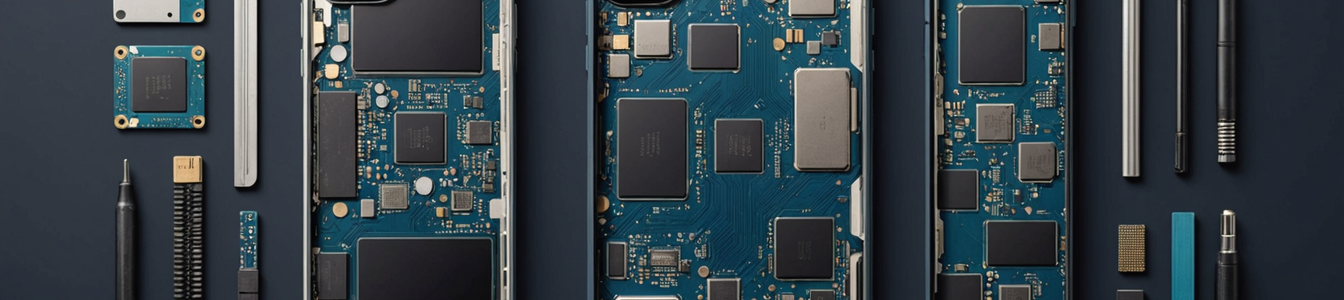
The mobile device market is experiencing a paradoxical security moment. While manufacturers like REDMAGIC push technological boundaries with innovations like the industry's first liquid-cooled gaming tablet—a device that promises enhanced performance through advanced thermal management—the secondary market is flooding with deeply discounted refurbished smartphones that pose significant, often overlooked, cybersecurity threats. Major European retailers are currently offering Huawei P30 Lite devices for under €140, refurbished iPhone 14 units in excellent condition below €285, and older Samsung Galaxy models at approximately €190 as the company clears inventory for newer releases. Google Pixel devices are also seeing dramatic price reductions. This market dynamic, driven by inventory liquidation and competitive pricing, creates a perfect storm for security vulnerabilities that target budget-conscious consumers and enterprises alike.
The Hidden Risks in Refurbished Hardware
The core security issue with refurbished devices lies in the chain of custody and the integrity of the reset process. A device sold as 'wiped' or 'factory reset' may still contain residual data in flash memory, or worse, may have compromised firmware installed during the refurbishment process. The economic pressure to rapidly clear inventory—as seen with Samsung's aggressive discounting of older models following the Galaxy 26 launch—creates incentives for third-party refurbishers to shortcut proper data sanitization protocols. Security researchers have documented cases where 'refurbished' devices contained previous owners' authentication tokens, corporate email credentials, and even financial application data due to incomplete wipes.
Furthermore, the supply chain for refurbished components is notoriously opaque. Displays, batteries, and logic boards sourced from multiple decommissioned devices can be assembled into a single unit, potentially introducing hardware-level backdoors. A camera module or sensor harvested from a compromised device could theoretically be used to create a persistent surveillance capability. The lack of verifiable hardware provenance makes risk assessment nearly impossible for security teams.
Software Vulnerabilities and Patch Gaps
Refurbished devices, particularly older models like the heavily discounted Huawei P30 Lite or previous-generation Samsung Galaxies, often run outdated operating systems that no longer receive security updates. A device sold at a steep discount today may have reached its end-of-life for software support yesterday. Users purchasing these affordable alternatives frequently remain unaware of their exposure to known, unpatched vulnerabilities. This creates a large population of vulnerable nodes in both consumer and bring-your-own-device (BYOD) enterprise environments.
The situation is exacerbated when devices are sold through unofficial channels or third-party marketplaces that may flash modified, 'debloated,' or region-specific firmware versions. These custom builds often remove manufacturer security services, disable automatic update mechanisms, and may contain pre-installed malware masquerading as legitimate system applications.
The New Technology Vector: Advanced Cooling Systems
While the secondary market presents clear risks, new device categories introduce novel attack surfaces. REDMAGIC's development of a gaming tablet with integrated liquid cooling represents a technological advancement primarily aimed at sustaining peak processor performance. However, from a security perspective, any new thermal management system represents a complex subsystem with its own firmware and potential interfaces to core hardware.
Advanced cooling systems could be exploited in several ways: malicious firmware could manipulate fan speeds or pump controls to cause physical damage through overheating, or more subtly, to create a thermal side-channel. By monitoring the cooling system's activity—how hard it works to dissipate heat from specific components—an attacker might infer computational workloads and potentially extract cryptographic keys. While this remains a theoretical concern for now, the integration of such systems into mobile devices expands the attack surface that security researchers and threat actors alike will probe.
Enterprise Implications and Mitigation Strategies
For enterprise security teams, the proliferation of discounted refurbished devices complicates mobile device management (MDM) and BYOD policies. Employees attracted by low-cost iPhone 14 or Pixel devices may inadvertently introduce non-compliant hardware into corporate networks. These devices may lack critical security features, run unsupported OS versions, or contain residual data partitions that evade standard MDM checks.
Organizations should consider the following mitigation steps:
- Update Acceptable Use Policies: Explicitly address refurbished and secondary-market devices, defining minimum security requirements for any device accessing corporate resources.
- Enhance MDM Capabilities: Implement tools that can verify not just software integrity, but also detect signs of hardware tampering or non-original components through performance benchmarks and component identification.
- Employee Education: Train staff on the risks associated with refurbished devices, emphasizing the importance of purchasing from certified refurbishers and verifying update status before connecting to enterprise networks.
- Network Segmentation: Treat devices with unknown provenance or outdated patch levels with greater suspicion, limiting their network access through strict segmentation policies.
- Vendor Management: For organizations that purchase refurbished devices in bulk for corporate use, establish stringent vendor requirements for data sanitization certificates and hardware provenance documentation.
The Broader Ecosystem Challenge
The current market trend highlights a fundamental tension between accessibility and security. Affordable technology enables broader digital inclusion, but the security shortcuts often taken to achieve those price points create systemic risk. Regulatory frameworks have been slow to address the refurbished device market, leaving consumers with little protection against poorly sanitized hardware.
Security researchers advocate for industry-wide standards for device refurbishment, including cryptographically verifiable wipe certificates and standardized hardware component tracking. Some manufacturers have begun 'official' refurbishment programs with warranty support, but these represent a small fraction of the secondary market.
As the mobile ecosystem bifurcates into cutting-edge devices with novel subsystems like liquid cooling and a vast secondary market of discounted legacy hardware, the cybersecurity community must develop nuanced defenses that address both the persistence of old vulnerabilities and the emergence of new attack vectors. The discounted smartphone may save money today, but the hidden security costs could be substantial tomorrow.
Comentarios 0
Comentando como:
¡Únete a la conversación!
Sé el primero en compartir tu opinión sobre este artículo.
¡Inicia la conversación!
Sé el primero en comentar este artículo.