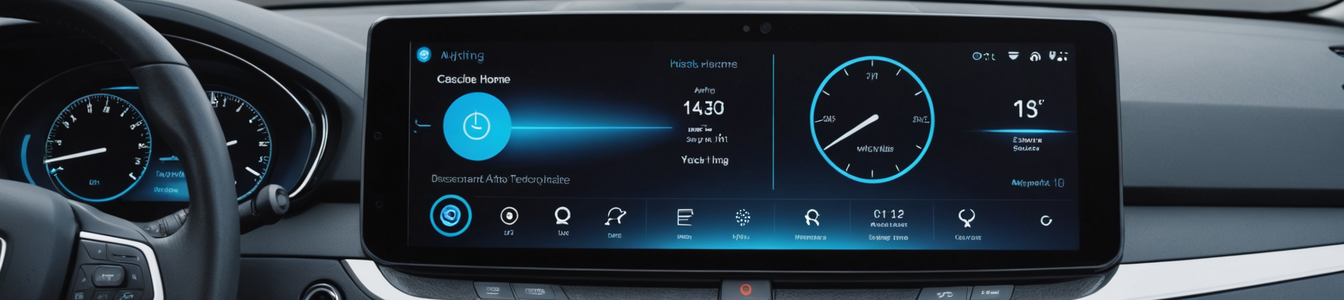
The automotive industry's accelerating integration with smart home ecosystems is creating a new frontier in cybersecurity threats, with Samsung's upcoming Car-to-Home feature representing a particularly concerning convergence point. By embedding SmartThings functionality directly into vehicle dashboards, Samsung effectively transforms cars into mobile command centers capable of controlling residential IoT devices while traveling at highway speeds. This technological convenience comes with significant security implications that demand immediate attention from cybersecurity professionals.
The Convergence Challenge
Traditional IoT security has operated within relatively contained domains—home networks, enterprise environments, and automotive systems developed with distinct security postures. Samsung's integration shatters these boundaries, creating a bidirectional bridge between two critical infrastructure elements: transportation and residential environments. A vehicle's infotainment system, historically vulnerable to various exploits, now becomes a potential entry point to home security cameras, smart locks, climate control systems, and appliances.
Security researchers identify three primary risk vectors in this convergence: authentication chain vulnerabilities, network protocol bridging weaknesses, and physical safety implications. The authentication challenge is particularly acute—how does a system verify that vehicle access truly corresponds to legitimate home control privileges, especially in cases of vehicle theft or unauthorized access? The traditional two-factor authentication models used in smart home applications may prove cumbersome or unsafe when implemented in moving vehicles.
Expanding Attack Surface at Velocity
The most distinctive aspect of this threat landscape is its mobility. Unlike stationary smart home hubs, a vehicle-based command center operates across multiple networks (cellular, Wi-Fi, Bluetooth) while physically traversing different geographic areas. This creates what security analysts term a "hyper-mobile attack surface"—a constantly shifting point of vulnerability that interacts with both public infrastructure and private residential systems.
At 60+ MPH, security incidents could escalate rapidly. Consider a scenario where compromised vehicle systems trigger false "break-in" alerts at a home security system while the legitimate homeowner is driving, potentially dispatching law enforcement to an empty residence. Alternatively, malicious actors could exploit the connection to manipulate home environments—disabling security systems ahead of physical intrusions or creating hazardous conditions through appliance manipulation.
The Human Factor: Convenience Versus Security
This technological development arrives alongside research indicating that families managing increasingly complex smart home environments are actively seeking simplified control mechanisms. The appeal of managing home systems while commuting—adjusting thermostats before arrival, preheating ovens, or checking security cameras—represents significant convenience value. However, this convenience-driven adoption may outpace security considerations, particularly among consumers less familiar with IoT security best practices.
The parallel trend of repurposing old tablets as stationary smart home command centers highlights this tension between accessibility and security. While stationary hubs present their own risks, they operate within contained environments rather than bridging multiple high-risk domains.
Security Framework Requirements
Addressing these convergence risks requires developing new security frameworks specifically designed for cross-domain IoT integration. Key considerations include:
- Context-Aware Authentication: Systems must verify not only user identity but also contextual factors—vehicle location, movement status, and typical usage patterns—before permitting sensitive home control operations.
- Segmented Permission Architecture: Home control privileges should be granularly segmented based on vehicle state. Critical security functions might be disabled while the vehicle is in motion or outside geofenced areas.
- Real-Time Anomaly Detection: Monitoring systems must identify unusual patterns across both automotive and residential domains, such as simultaneous vehicle operation and home access attempts from different locations.
- Emergency Isolation Protocols: Automated systems to sever vehicle-home connections during detected security incidents, with clear manual override capabilities for legitimate users.
- Standardized Security Protocols: Industry-wide standards for cross-domain IoT communication that address encryption, authentication, and intrusion detection specific to automotive-residential bridges.
Industry Implications and Forward Outlook
Samsung's implementation likely represents just the beginning of automotive-smart home convergence. As vehicle manufacturers increasingly position cars as "third living spaces," similar integrations will proliferate across the industry. The cybersecurity community must engage proactively with automotive and IoT developers to establish security-by-design principles before these technologies achieve widespread adoption.
Regulatory bodies may need to develop new frameworks addressing this unique intersection of transportation safety and residential security. Insurance providers will likely develop specialized policies covering convergence-related incidents, potentially creating new cybersecurity assessment requirements for connected vehicles.
For cybersecurity professionals, this convergence demands expanded expertise spanning automotive systems, residential IoT, and mobile network security. Incident response plans must now consider scenarios where attacks originate from or propagate through vehicle systems, requiring coordination between traditionally separate security teams.
The promise of seamlessly connected environments—where vehicles, homes, and personal devices operate as integrated ecosystems—offers undeniable convenience benefits. However, realizing this promise safely requires acknowledging and addressing the novel security challenges created when our cars become command centers for our homes. As this technology accelerates toward mainstream adoption, the cybersecurity community's response will determine whether this convergence represents a step forward in connected living or a dangerous expansion of vulnerable attack surfaces.
Comentarios 0
Comentando como:
¡Únete a la conversación!
Sé el primero en compartir tu opinión sobre este artículo.
¡Inicia la conversación!
Sé el primero en comentar este artículo.