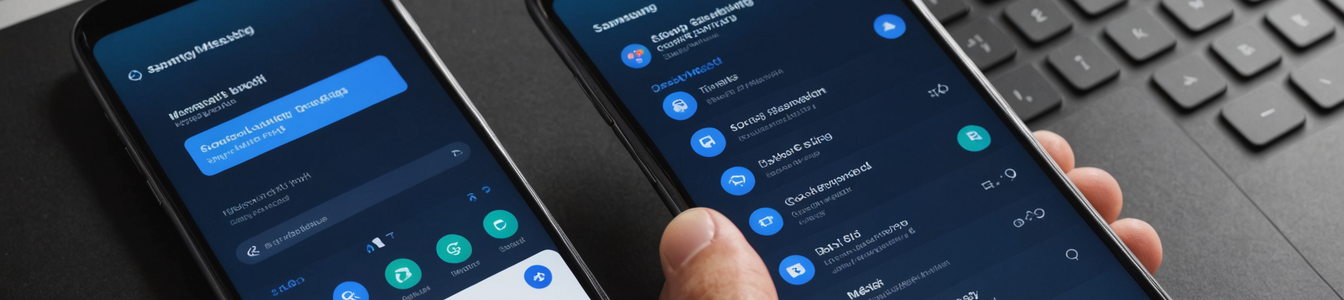
Samsung has confirmed the official retirement of its proprietary Messages application, marking the end of a decade-long presence on its Android devices. According to announcements, the company will begin transitioning users to Google Messages in the coming weeks, with the process mandated for completion by July 2026. This move signifies more than a simple app swap; it is a strategic consolidation that fundamentally alters the Android security landscape, concentrating critical communication security responsibilities squarely on Google.
The End of an Era and the Rise of a Monoculture
For years, Samsung Messages served as a pre-installed alternative to Google's messaging solution, offering deep integration with the Samsung One UI and the company's Knox security platform. Its removal eliminates a layer of competitive diversity within the Android ecosystem. From a security perspective, diversity in software implementations can be a double-edged sword. While it fragments the attack surface, making widespread exploits harder, it also means security patches and vulnerability management depend on multiple vendors. Samsung's retreat simplifies the model but creates a powerful monoculture. Hundreds of millions of devices will now rely on a single codebase for core SMS, MMS, and RCS (Rich Communication Services) functions. A critical vulnerability in Google Messages could, in theory, impact a vastly larger population simultaneously.
Security Implications of the Forced Migration
The migration process itself presents immediate security concerns. Users, particularly less tech-savvy individuals, may not understand the automatic transition, leading to confusion. This confusion could result in the installation of unverified third-party messaging apps from unofficial stores, significantly increasing the risk of malware. Samsung and Google must ensure a seamless, transparent migration that preserves message history, backup settings, and security configurations. Any failure in this data transfer could lead to sensitive information loss or misconfiguration of security features like spam filtering and encryption.
Furthermore, the shift transfers full responsibility for message protocol security to Google. This includes the security of the evolving RCS standard, which promises end-to-end encryption in one-on-one chats. While Google has made strides in hardening RCS, its universal implementation across all Samsung devices means Google's security team, its update cadence, and its threat detection models become the primary line of defense. Organizations using Samsung devices managed via Knox must now reconcile how Google's update cycle—often decoupled from Samsung's firmware updates—integrates with their Mobile Device Management (MDM) and compliance policies.
The Knox Factor and Enterprise Security
A critical question for enterprise security teams is the future of integration between Google Messages and Samsung Knox. Knox provides hardware-backed security, secure folders, and granular IT management controls. Historically, Samsung Messages could leverage these Knox APIs. The depth of Google Messages' integration with Knox's real-time kernel protection and management frameworks is now paramount. Will enterprise IT retain the same level of policy enforcement, logging, and security oversight for the messaging app? A superficial integration could create a security gap within otherwise secured devices.
Broader Trend: Ecosystem Consolidation and Risk Concentration
This move is not isolated. It reflects a broader trend of consolidation within the Android ecosystem, where Google increasingly provides core services. This reduces fragmentation but centralizes risk. The cybersecurity community must analyze this through the lens of supply chain security. Google's messaging infrastructure becomes a Tier-1 critical component for a massive segment of the global mobile market. Its security practices, from code audit to incident response, will have unprecedented downstream effects.
Recommendations for Security Professionals
- Audit Enterprise Fleets: Identify all managed Samsung devices and plan for the app transition. Update MDM profiles to ensure Google Messages is properly configured and that insecure alternatives are blocked.
- Review Compliance Settings: Verify that message retention, logging, and encryption settings required for compliance (e.g., in finance or healthcare) are maintained or reconfigured in Google Messages.
- Monitor Integration Depth: Engage with Samsung and Google enterprise channels to understand the technical specifics of the Knox-Google Messages integration and any new APIs provided for management.
- User Awareness Training: Proactively communicate this change to end-users to prevent them from seeking insecure alternatives. Educate them on verifying the legitimacy of the migration prompts.
- Update Threat Models: Reassess organizational threat models to account for the new dependency on Google's messaging security posture and its implications for enterprise communication.
The sunset of Samsung Messages is a pivotal moment in mobile security. It promises a more unified and potentially faster-updated messaging experience but at the cost of reduced ecosystem diversity and increased reliance on a single vendor's security competency. For cybersecurity practitioners, vigilance is key—not only during the migration but in the long-term assessment of how this consolidation shapes the attack surface of the world's most popular mobile operating system.
Comentarios 0
Comentando como:
¡Únete a la conversación!
Sé el primero en compartir tu opinión sobre este artículo.
¡Inicia la conversación!
Sé el primero en comentar este artículo.