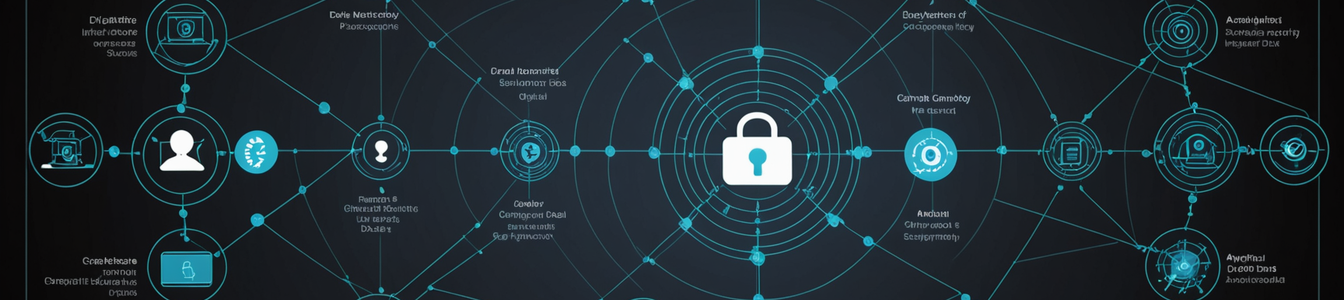
The security landscape is undergoing a fundamental transformation. For decades, physical security—guarding gates, monitoring cameras, managing badges—operated in a separate universe from cybersecurity, which focused on firewalls, endpoints, and network traffic. This division created operational silos, inconsistent policies, and dangerous blind spots. Today, that paradigm is collapsing. A new wave of platforms is emerging, explicitly designed to unify security operations across the physical and digital worlds, enabling a level of situational awareness and coordinated response previously unattainable.
The End of Silos: StoneConnect™ Unifies Physical Systems
Leading the charge in physical system integration is Stone Security with its newly launched StoneConnect™ platform. The core premise is simple yet powerful: disparate physical security systems should not operate as isolated islands. StoneConnect™ functions as a unifying ecosystem, bringing together video surveillance feeds, access control logs, intrusion detection sensors, and other physical security data streams into a single, cohesive operational dashboard.
For security teams, this integration is transformative. Instead of toggling between multiple proprietary interfaces for video management, door controls, and alarm panels, operators gain a unified view. An alert from a motion sensor in a restricted area can automatically trigger the nearest camera to pop up on the main screen, while simultaneously pulling access logs to show who last entered that zone. This context-rich environment drastically reduces mean time to understand (MTTU) an incident, allowing personnel to assess situations faster and more accurately.
AI-Powered Convergence: LevelBlue and SentinelOne Deepen Ties
While StoneConnect™ focuses on unifying the physical layer, the convergence trend extends deeply into the cyber domain. LevelBlue, a prominent managed security services provider (MSSP), has significantly expanded its strategic global partnership with AI cybersecurity leader SentinelOne. This enhanced collaboration aims to deliver more sophisticated, AI-powered managed security operations and incident response services.
The strategic value for convergence is clear. By integrating SentinelOne's cutting-edge endpoint detection and response (EDR) and extended detection and response (XDR) capabilities into its service stack, LevelBlue can now offer clients a more holistic threat management service. The AI engines can analyze cyber threats—like a ransomware outbreak on corporate workstations—and correlate them with physical security data. For instance, an unusual spike in data exfiltration from a server room could be cross-referenced with after-hours access card swipes to that same location, potentially identifying an insider threat or a physical breach that enabled digital theft.
The Rise of the Holistic Security Command Center
The moves by Stone Security and LevelBlue are not isolated events; they are indicators of a broader market shift toward converged security operations centers (SOCs). The modern threat actor does not respect the boundary between physical and digital. A sophisticated attack might involve social engineering to gain a physical foothold (tailgating into a building), followed by plugging a malicious device into an internal network port.
Traditional, siloed defenses are ill-equipped to handle these hybrid attacks. A physical security team might see a "door forced open" alert but have no visibility into the malicious network activity originating from that room minutes later. Conversely, the cybersecurity SOC might detect anomalous network traffic but lack the context that a person was just seen on camera in that server closet without authorization.
New platforms that bridge this gap enable the creation of true security command centers. These centers leverage shared data lakes, common alerting frameworks, and integrated workflows. A single security analyst can see the full picture: a badge access attempt, the live camera feed, the associated user's network activity, and the threat intelligence on related malware signatures. This allows for real-time, coordinated responses, such as automatically locking down network segments in a specific area while directing on-site guards to investigate.
Implications for Security Leaders and Practitioners
For Chief Information Security Officers (CISOs) and Chief Security Officers (CSOs), this convergence presents both a challenge and an opportunity. The challenge lies in breaking down long-standing organizational and budgetary barriers between departments. It requires new skill sets—security personnel who understand both IT network principles and physical security protocols—and investments in interoperable technology.
The opportunity, however, is immense. A converged security strategy leads to:
- Enhanced Situational Awareness: A unified view of all security telemetry eliminates blind spots.
- Faster, More Effective Response: Coordinated playbooks that engage both physical and digital containment measures.
- Improved Risk Management: A holistic understanding of how physical and digital vulnerabilities can compound each other.
- Operational Efficiency: Reduced tool sprawl and streamlined processes for monitoring and investigation.
The Road Ahead
The launch of StoneConnect™ and the expanded LevelBlue-SentinelOne partnership are significant milestones on the path to physical-digital convergence. The future of enterprise security is not in separate fortresses for data and facilities, but in an intelligent, interconnected mesh. As AI and automation continue to advance, we can expect these platforms to become even more proactive, predicting potential breach vectors that exploit the seam between the physical and virtual worlds and recommending pre-emptive actions. For organizations aiming to build resilient defenses, investing in a converged security architecture is rapidly transitioning from a forward-thinking option to a strategic imperative.
Comentarios 0
Comentando como:
¡Únete a la conversación!
Sé el primero en compartir tu opinión sobre este artículo.
¡Inicia la conversación!
Sé el primero en comentar este artículo.