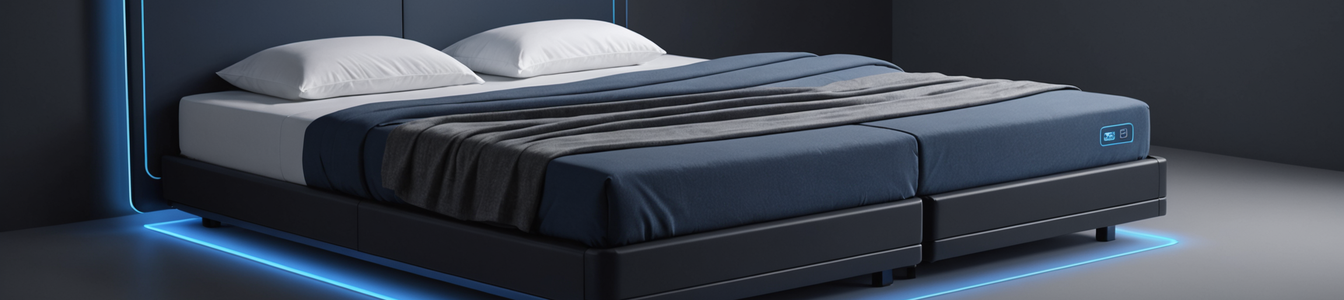
The smart home revolution promised convenience and comfort, but a recent tragedy in a Delhi bedroom reveals a darker reality: when IoT-enabled furniture fails, it can fail lethally. The electrocution of a 45-year-old man by his electric adjustable bed has sent shockwaves through both consumer safety and cybersecurity communities, exposing a critical blind spot in the rush to connect everyday objects to the internet.
The Delhi Incident: A Case Study in Systemic Failure
While specific details of the Tri Nagar incident remain under investigation, preliminary reports indicate a catastrophic failure of the bed's electrical systems. Unlike traditional furniture, smart beds incorporate motors, control boards, sensors, and often wireless connectivity modules—all requiring power and creating multiple potential points of failure. The incident wasn't a software hack or data breach, but a fundamental physical safety failure in a connected device. This distinction is crucial for cybersecurity professionals to understand: the threat surface of IoT extends beyond data integrity to encompass direct physical harm.
The Expanding Attack Surface of Consumer IoT
Smart furniture represents a particularly concerning category within consumer IoT. These devices often blend high-power electrical components with low-cost microcontrollers and connectivity chips, manufactured by companies with limited expertise in either robust electrical engineering or cybersecurity. The bed in question likely contained an AC motor for adjustment, a control circuit, a power supply, and potentially a Bluetooth or Wi-Fi module for smartphone control. Any fault in insulation, grounding, or component failure could bridge low-voltage control circuits with mains power, turning the entire metal frame into a lethal conductor.
This incident connects to a broader, alarming trend. As highlighted by market analyses, smart home features are no longer luxury add-ons but expected standards in certain real estate segments. By 2026, premium properties are anticipated to include integrated smart systems as a baseline requirement. This market pressure drives rapid product development and cost-cutting, often at the expense of rigorous safety testing. Devices are rushed to market to capitalize on the "smart" label, with security and safety treated as afterthoughts rather than foundational requirements.
Beyond Software: The Physical Layer Cybersecurity Gap
The cybersecurity conversation around IoT has predominantly focused on network security, data privacy, and preventing unauthorized access. The Delhi fatality forces a necessary expansion of this scope to include electrical safety as a cybersecurity concern. A compromised or poorly designed device can cause physical damage without a single malicious packet being sent. Vulnerabilities can exist in:
- Inadequate Isolation: Failure to properly isolate low-voltage DC control systems from high-voltage AC power components.
- Grounding Faults: Improper or absent grounding, a basic electrical safety measure often overlooked in compact IoT designs.
- Component Quality: Use of substandard capacitors, transformers, or wiring that can fail and short circuit.
- Thermal Management: Poor design leading to overheating of power components, degrading insulation and creating fire or shock risks.
These are not traditional CVEs (Common Vulnerabilities and Exposures), but they represent vulnerabilities with potentially higher severity scores when human life is at stake.
Regulatory Void and the Illusion of Certification
Many consumer IoT devices, including smart furniture, operate in a regulatory gray area. They may carry basic electrical safety certifications for their power supplies but lack holistic evaluation as integrated systems. A bed's motor might be certified, its control board might be CE marked, but the assembled product's behavior under fault conditions remains untested. There is no universal standard for "IoT safety" that encompasses both cyber and electrical integrity.
Furthermore, the software update mechanisms—often touted as a solution for security flaws—are useless against hardware design flaws. You cannot patch a missing ground wire or insufficient creepage distance between circuits via an OTA update.
A Call for Integrated Safety-by-Design
For cybersecurity professionals, this tragedy underscores several urgent actions:
- Expand Threat Modeling: Include physical safety consequences in IoT device threat models. Ask not only "can this device be hacked?" but "if this device fails, can it kill or injure?"
- Advocate for Converged Standards: Push for new safety standards that merge IEC 62368 (audio/video and IT equipment safety) with cybersecurity frameworks like IEC 62443, creating requirements for "cyber-physical safety."
- Supply Chain Scrutiny: Security assessments must extend to the hardware supply chain, auditing component quality and manufacturing processes of contract manufacturers.
- Consumer and Corporate Education: Inform buyers that "smart" features carry inherent risk. Enterprise procurement for smart offices or hospitality must demand safety attestations beyond software penetration test reports.
The Path Forward: Responsibility in a Connected World
The innovation showcased at events like the North East Science Fair, where young developers create promising IoT solutions, must be balanced with an unwavering commitment to safety. The next generation of innovators must be educated on these risks from the outset.
The death in Delhi is a preventable tragedy and a stark warning. As the line between the digital and physical worlds blurs in our bedrooms, living rooms, and workplaces, the cybersecurity community has a pivotal role to play. We must lead the charge in demanding that safety—both cyber and electrical—be engineered into the very fabric of the Internet of Things. The alternative is a future where our connected comforts harbor silent, and sometimes deadly, flaws.
Comentarios 0
Comentando como:
¡Únete a la conversación!
Sé el primero en compartir tu opinión sobre este artículo.
¡Inicia la conversación!
Sé el primero en comentar este artículo.