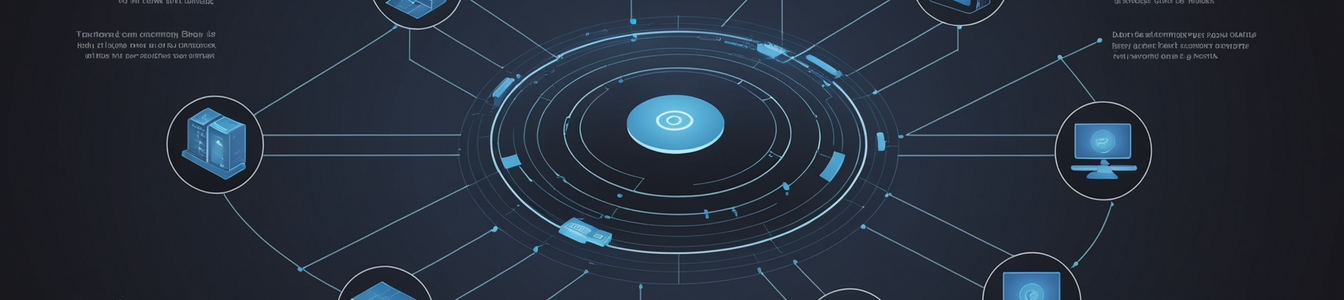
The vision of the truly integrated smart building is rapidly materializing, driven by a new class of hardware: the unified IoT gateway. Marketed as the ultimate solution for interoperability headaches, devices like the recently launched Milesight EG71 consolidate communication between legacy building management systems (BMS) and modern IoT sensors onto a single platform. They translate between proprietary protocols like BACnet, Modbus, KNX, and MQTT, creating a unified data layer for analytics and control. For facility managers and smart city planners, this is a breakthrough, promising optimized energy use, predictive maintenance, and seamless automation. For cybersecurity teams, however, it represents one of the most significant and underappreciated systemic risks to critical infrastructure today.
The Convergence Gamble: Efficiency vs. Security
The technical promise is compelling. Traditionally, a building's subsystems—heating, ventilation, and air conditioning (HVAC), lighting, elevators, fire alarms, and physical access controls—operated in isolated silos. Integrating them required complex, custom middleware. Unified gateways eliminate this complexity, offering a plug-and-play hub. The Milesight EG71, touted as an industry first, exemplifies this trend by offering deep integration capabilities right out of the box. This convergence is a key enabler for smart city initiatives aimed at solving urban congestion and inefficiency, as highlighted in forward-looking 2026 guides. By streamlining building operations, these gateways contribute to broader urban optimization goals.
Yet, this architectural shift fundamentally alters the threat model. Cybersecurity's core tenet of segmentation—limiting the blast radius of a breach—is deliberately dismantled. The gateway becomes a 'Grand Central Station' for all operational technology (OT) and IoT data flows. A vulnerability in its firmware, a weak credential on its admin interface, or a flaw in one of its many protocol parsers is no longer an isolated issue. It is a master key to the kingdom.
The Expanded Attack Surface: From IT to Physical World
The attack surface of a unified gateway is multidimensional. First, there is the network surface: these devices are inherently network-connected for remote management and cloud integration, exposing them to standard IP-based attacks. Second, and more critically, is the protocol surface. Each supported industrial protocol (Modbus, BACnet/IP, KNXnet/IP) introduces its own legacy vulnerabilities and unauthenticated command structures. The gateway must parse and process all of them, creating multiple potential injection points for malicious packets. An attacker crafting a malformed BACnet packet could potentially exploit a buffer overflow in the gateway's protocol stack to gain code execution.
Once compromised, the gateway acts as a powerful pivot point. An attacker can move laterally in ways previously impossible. They can:
- Manipulate Environmental Controls: Override HVAC setpoints to cause equipment failure, create unsafe conditions, or simply incur massive energy costs.
- Disable Critical Safety Systems: Interfere with fire alarm panels or emergency lighting systems.
- Breach Physical Security: Unlock doors, disable electronic access logs, or manipulate elevator controls.
- Deploy Ransomware on OT Networks: Use the gateway as a bridge to deploy malware that cripples building operations, leading to highly disruptive and potentially dangerous ransomware scenarios where lives, not just data, are at stake.
The Supply Chain and Lifecycle Challenge
The risk is compounded by supply chain and lifecycle factors. Many of these gateways are developed by OT or IoT companies whose primary expertise is in hardware integration and software functionality, not secure-by-design development. Security audits, regular patch cycles, and vulnerability management programs may be immature. Furthermore, these devices are deployed with expected lifespans of 10-15 years, often in hard-to-access locations, making software updates and security maintenance a persistent challenge. The long lifecycle virtually guarantees that unpatched vulnerabilities will exist in the wild for years.
Mitigating the Systemic Risk: A Call to Action for Security Pros
Ignoring this trend is not an option, as adoption is accelerating. Cybersecurity leaders must engage early in procurement and deployment cycles. Key mitigation strategies include:
- Architectural Compensating Controls: Even with a unified gateway, enforce network segmentation behind the device. Use internal firewalls or VLANs to restrict traffic between critical subsystems (e.g., prevent HVAC commands from originating from the access control network segment).
- Rigorous Device Hardening: Before deployment, disable unused services and protocols, enforce strong authentication (multi-factor where possible), and change all default credentials. Ensure management interfaces are not exposed to the public internet.
- Continuous Monitoring and Anomaly Detection: Deploy network detection and response (NDR) solutions capable of understanding OT/IoT protocols. Monitor for anomalous commands—like a temperature setpoint change from an unfamiliar IP address or a door unlock command at 3 AM.
- Vendor Security Assessment: Scrutinize vendor security practices during procurement. Demand clear vulnerability disclosure policies, committed support lifecycles, and evidence of secure development practices (e.g., adherence to IEC 62443 standards).
- Incident Response Planning: Update incident response playbooks to include scenarios where building control systems are compromised. Include facilities teams in tabletop exercises. Define clear procedures for manual override and system isolation.
Conclusion: Security as a Foundational Pillar
The unified gateway is here to stay, driven by undeniable operational and economic benefits. However, the cybersecurity community must treat it not as a simple networking component, but as a critical piece of cyber-physical infrastructure. The gamble of convergence does not have to be a losing one. By applying rigorous security principles—zero-trust segmentation, robust device management, and proactive threat hunting—organizations can harness the power of deep integration without surrendering to systemic vulnerability. The security of our smart buildings, and by extension our smart cities, depends on making this architectural choice with eyes wide open to the risks, and with a comprehensive plan to defend the new, centralized nerve center of the built environment.
Comentarios 0
Comentando como:
¡Únete a la conversación!
Sé el primero en compartir tu opinión sobre este artículo.
¡Inicia la conversación!
Sé el primero en comentar este artículo.