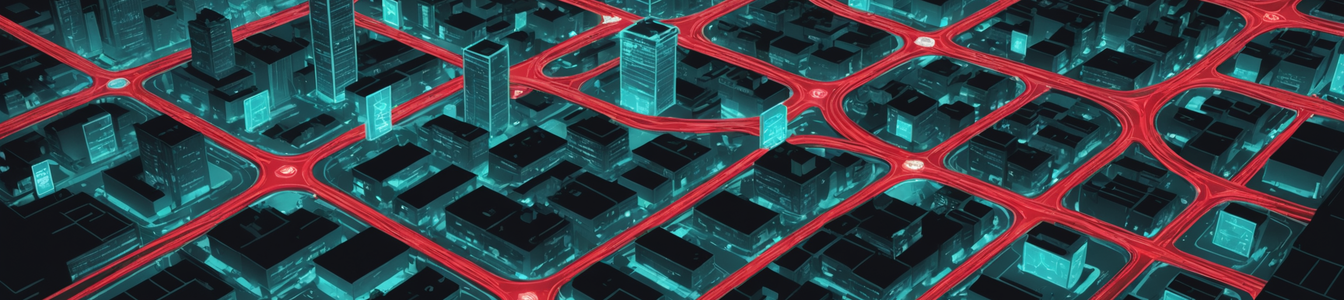
The global push for Transit-Oriented Development (TOD) is creating a new frontier in security challenges that demand immediate attention from cybersecurity professionals. As urban centers worldwide accelerate their TOD implementations, the convergence of digital and physical infrastructure presents unprecedented attack surfaces that traditional security frameworks are ill-equipped to handle.
Recent developments in Delhi exemplify this trend, with the city preparing to launch a revamped TOD policy within the next month. The policy focuses on connecting metro systems with high-footfall areas through integrated walkways and pedestrian infrastructure. While this urban planning approach promises improved mobility and reduced congestion, it simultaneously creates complex security interdependencies between transportation systems, public spaces, and the digital infrastructure that supports them.
The security implications extend beyond traditional physical security concerns. The integration of smart city technologies, IoT sensors, and digital payment systems within TOD environments creates multiple vectors for cyber-physical attacks. Security teams must now consider how compromised digital systems could impact physical safety in crowded transit hubs, or how data breaches could expose sensitive movement patterns of entire urban populations.
Parallel developments in other regions highlight additional dimensions of this challenge. In Kerala, the implementation of Malayalam-speaking AI assistants in local governance demonstrates how artificial intelligence is becoming embedded in public infrastructure. These AI systems, while improving accessibility and service delivery, introduce new vulnerabilities including potential manipulation of public information systems, privacy concerns around voice data collection, and the risk of AI model poisoning affecting critical urban services.
The acceleration of development processes, as seen in Sonoma County's efforts to streamline permit approvals, creates additional pressure on security implementation timelines. When urban development moves at an accelerated pace, security considerations often become afterthoughts rather than integrated components of the design process. This approach risks building security vulnerabilities directly into critical urban infrastructure from the outset.
Cybersecurity professionals must develop new frameworks that address several key challenges unique to TOD environments. First, the integration of operational technology (OT) and information technology (IT) systems requires security approaches that understand both domains. Second, the public nature of these systems means they must be resilient against both targeted attacks and opportunistic exploitation. Third, the scale of these implementations means that vulnerabilities could affect millions of citizens simultaneously.
Data protection emerges as a critical concern in these interconnected environments. TOD systems typically collect vast amounts of data about citizen movements, preferences, and behaviors. Ensuring this data remains secure while maintaining system functionality requires sophisticated data governance approaches that balance utility with protection.
The physical-digital convergence also raises questions about system availability and resilience. Attacks that disrupt transportation systems could have cascading effects throughout urban economies, while manipulation of digital navigation or scheduling systems could create physical congestion and safety hazards.
Looking forward, security teams must collaborate with urban planners, transportation authorities, and technology providers to build security into TOD projects from their inception. This requires developing new standards, conducting comprehensive threat modeling exercises, and establishing incident response protocols that account for both digital and physical consequences.
The emergence of TOD as a global urban development strategy represents both an opportunity and a challenge for the cybersecurity community. By addressing these converging security needs proactively, we can help build urban environments that are not only efficient and sustainable but also secure and resilient against emerging threats.
Comentarios 0
Comentando como:
¡Únete a la conversación!
Sé el primero en compartir tu opinión sobre este artículo.
¡Inicia la conversación!
Sé el primero en comentar este artículo.