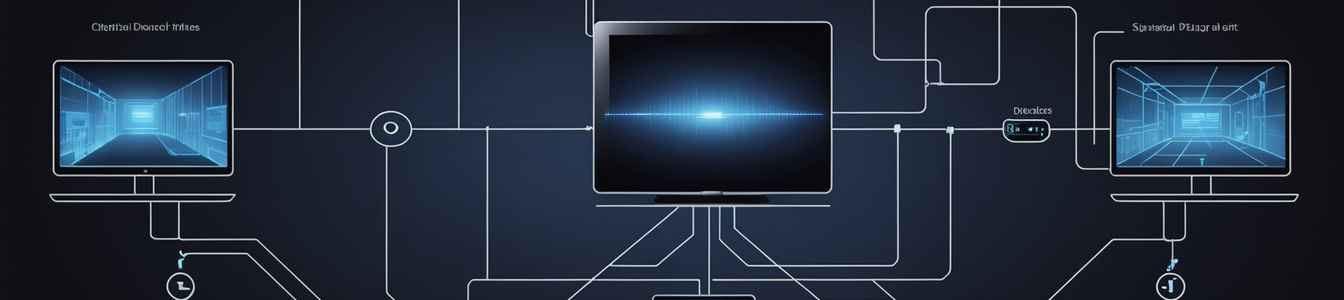
The promise of a secure, private smart home is facing a formidable challenge—not from external hackers, but from the very devices meant to enable it. A technical uprising is brewing in home networks worldwide, as users implementing custom DNS servers (like Pi-hole, NextDNS, or AdGuard Home) and sophisticated firewall rules are discovering that their smart TVs, streaming devices, voice assistants, and even smartphones are actively working to bypass these protections. This silent 'DNS rebellion' marks a pivotal moment in consumer network security, forcing a reevaluation of who truly controls the modern home network.
At the heart of the issue is the Domain Name System (DNS), the internet's phonebook. By controlling DNS, users can filter out ads, block tracking domains, and prevent devices from communicating with malicious or unwanted servers. However, manufacturers are increasingly hard-coding DNS servers (like Google's 8.8.8.8 or Cloudflare's 1.1.1.1) into device firmware or, more insidiously, implementing encrypted DNS protocols such as DNS-over-HTTPS (DoH) or DNS-over-TLS (DoT). These encrypted methods, while enhancing privacy in transit, allow devices to completely ignore the local DNS server specified by the home router, rendering user-configured content filtering and monitoring tools useless.
The community's response has been both ingenious and determined. On forums and technical subreddits, users are sharing advanced firewall configurations designed to force all network traffic, regardless of destination port, through the designated gateway. One popular method involves creating a firewall rule that blocks all outbound traffic on port 53 (standard DNS) and port 853 (DoT), except that originating from the user's own DNS resolver. For DoH, which uses port 443 (standard HTTPS), the challenge is greater, requiring Deep Packet Inspection (DPI) or the blocking of known DoH provider IP addresses. This technical arms race turns the home router into a battleground, where each new device may require its own specific containment strategy.
This struggle for control coincides with significant evolution in the broader consumer cybersecurity landscape, offering both new tools and new complexities. VPN providers, for instance, are enhancing their offerings to meet user demands for stability and performance. Proton VPN has recently addressed a key pain point by releasing an update promising significantly better stability for its Linux application, a platform historically underserved by commercial VPN clients. This move acknowledges the growing segment of privacy-conscious users who manage their home networks from Linux-based systems.
Simultaneously, the underlying technology of VPNs is undergoing a revolution. Surfshark's introduction of the 'Dausos' protocol claims to be a game-changer, purportedly offering faster speeds and improved reliability by fundamentally rethinking how VPN tunnels are established and managed. While independent verification is pending, such innovations highlight the industry's push to reduce the performance penalty often associated with strong encryption, making robust privacy tools more palatable for everyday use, including always-on VPNs for entire home networks.
The market is also becoming fiercely competitive on price. Established security suites like Bitdefender Total Security are now being offered at subscription prices comparable to a monthly coffee order, covering up to five devices. This commoditization of core antivirus and firewall protection lowers the barrier to entry for comprehensive security. Furthermore, the rise of low-cost, high-privacy VPN services—with some reputable options now available for as little as $2 per month—democratizes access to tools that can encrypt all traffic leaving the home, adding another layer of defense against both eavesdroppers and device telemetry sent to manufacturers.
The implications for cybersecurity professionals and informed consumers are profound. First, it underscores that network security is no longer a 'set-and-forget' proposition. The home network is a dynamic ecosystem where device behavior can change with a firmware update. Second, it blurs the line between security and privacy. A device bypassing local DNS to use encrypted DNS may improve its own privacy from the Internet Service Provider (ISP) but simultaneously erodes the user's ability to enforce security and content policies within their own network. Finally, it creates a new dimension of risk: devices that cannot be monitored or filtered may inadvertently call home to compromised servers or download malicious content unseen.
Moving forward, the trend suggests a future where home network security requires a layered, defense-in-depth approach. This likely combines:
- Gateway Enforcement: Advanced routers or firewall appliances (like OPNsense/pfSense) capable of stateful packet inspection and application-layer filtering.
- VLAN Segmentation: Isolating untrustworthy IoT devices on separate network segments with strict outbound rules.
- Encrypted DNS Management: Either by blocking all external encrypted DNS and providing a local, trusted DoH/DoT resolver, or by using firewall techniques to intercept and redirect such traffic.
- VPN Integration: Using a reliable, always-on VPN for the entire network or specific device segments to encrypt data and mask collective traffic patterns.
The great DNS rebellion is more than a technical nuisance; it is a symptom of a larger conflict over digital autonomy. As devices grow smarter, the fight for the soul of the home network intensifies. The solutions emerging from this community-driven struggle are not just workarounds—they are the blueprints for the next generation of consumer-grade network security, where control is taken, not given.
Comentarios 0
Comentando como:
¡Únete a la conversación!
Sé el primero en compartir tu opinión sobre este artículo.
¡Inicia la conversación!
Sé el primero en comentar este artículo.