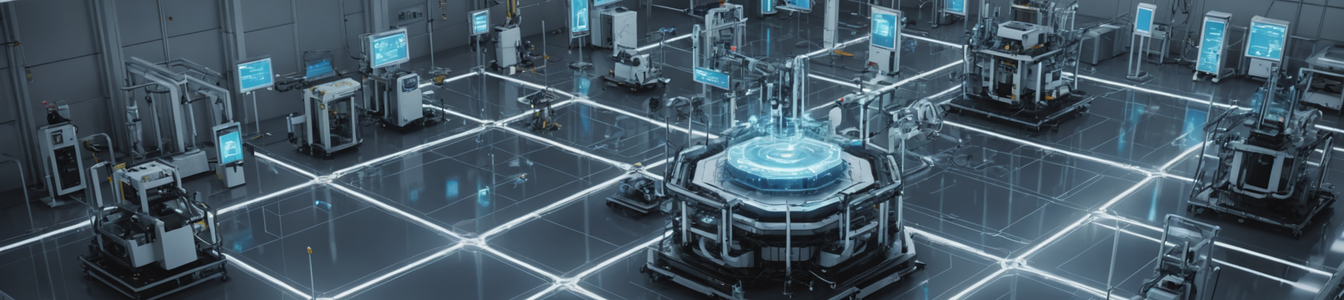
The narrative dominating MWC 2026 for the industrial sector is one of seamless, boundless connectivity. Huawei's release of its "Fully Connected Industrial Networks" report champions a future where every machine, sensor, and control system in a smart factory is interlinked via 5G and pervasive wireless networks, promising unprecedented efficiency and predictive maintenance. This vision is being rapidly materialized by a wave of new technologies showcased at the event, from Quectel's long-range, low-power Wi-Fi HaLow modules for massive sensor deployments to STMicroelectronics' secure wireless and sensing solutions. However, beneath this glossy surface of operational technology (OT) and information technology (IT) convergence lies a burgeoning and systemic cybersecurity crisis. The drive for a "fully connected" industrial IoT (IIoT) backbone is creating invisible, interdependent vulnerabilities that threaten the very core of critical manufacturing infrastructure.
The architectural shift is profound. The traditional air-gapped or segmented industrial control system (ICS) is being dismantled in favor of a distributed mesh. Quectel's FGH200M Wi-Fi HaLow module, designed for connecting thousands of low-power sensors over kilometers, exemplifies this. It enables the massive data collection essential for AI-driven analytics but also exponentially expands the attack surface. Each of these long-range, low-power endpoints becomes a potential entry point into a network that may eventually bridge to a safety-critical programmable logic controller (PLC) or robotic arm. The security protocols for such constrained devices are often minimal, creating a soft underbelly for attackers seeking a foothold.
Simultaneously, the data from these myriad sensors is not just being collected; it's being processed and stored in radically new ways. The partnership announcement between Rakuten and Google at MWC 2026, integrating Rakuten's cloud-native storage directly into Google Distributed Cloud Connected servers, highlights the move of critical data functions to the edge. This means storage and analytics platforms, built on cloud-native principles like containers and microservices, are now embedded within the factory floor's network perimeter. While this reduces latency and enables real-time insights, it injects the complex security challenges of cloud infrastructure—misconfigurations, vulnerable container images, API weaknesses—directly into the OT environment. A misconfigured access policy in a cloud-native storage node at the edge could expose real-time production data or, worse, provide a pivot point to operational systems.
This creates a perfect storm of systemic risk. The vulnerability is no longer confined to a single device or system. It resides in the complex data pathways and trust relationships between them. Huawei's vision of fully connected networks relies on the seamless flow of data from a STMicroelectronics vibration sensor on a turbine, across a Quectel HaLow network, to an edge analytics pod running on Google-Rakuten infrastructure, and finally to a central AI that decides to shut down the line. An attacker who compromises the integrity of the sensor data (a spoofed vibration signal indicating failure) or gains control of the edge analytics pod can trigger catastrophic physical decisions—premature shutdowns, equipment damage, or masking of actual failures that lead to safety incidents.
For cybersecurity teams in manufacturing, this demands a fundamental paradigm shift. Defense can no longer focus solely on hardening endpoints or building stronger perimeter walls. The attack surface is now the entire data flow and the software-defined interactions between components. Security must be designed into the architecture from the outset:
- Zero-Trust for the OT/IT Mesh: Implementing strict identity and access management for every device, application, and data flow, regardless of location (sensor, edge server, cloud). The "trust but verify" model of traditional OT is obsolete.
- Secure-by-Design Hardware: Pressing suppliers like Quectel and STMicroelectronics for hardware-rooted security in even the most constrained devices—secure boot, hardware-based cryptographic keys, and tamper resistance.
- Cloud-Native Security at the Edge: Extending cloud security posture management (CSPM) and workload protection platforms to the edge deployments, ensuring container security, secret management, and configuration hygiene for systems like the integrated Rakuten-Google storage.
- Behavioral Anomaly Detection: Deploying AI not just for optimization, but to monitor the entire digital-physical system for subtle anomalies in data flows or device behavior that indicate compromise, recognizing that attacks may aim to manipulate physical processes, not just steal data.
The ambition of the fully connected smart factory is not inherently flawed; its potential benefits are immense. However, the cybersecurity community must sound the alarm that the current trajectory, as evidenced by the MWC 2026 announcements, is building systemic fragility into our critical manufacturing backbone. The race for connectivity and efficiency is outpacing the integration of foundational security principles. Without a concerted effort to make security as invisible and pervasive as the connectivity it aims to protect, the next major industrial disruption may not come from a natural disaster or mechanical failure, but from a silent, digital cascade through the invisible backbone we are so eagerly constructing.
Comentarios 0
Comentando como:
¡Únete a la conversación!
Sé el primero en compartir tu opinión sobre este artículo.
¡Inicia la conversación!
Sé el primero en comentar este artículo.