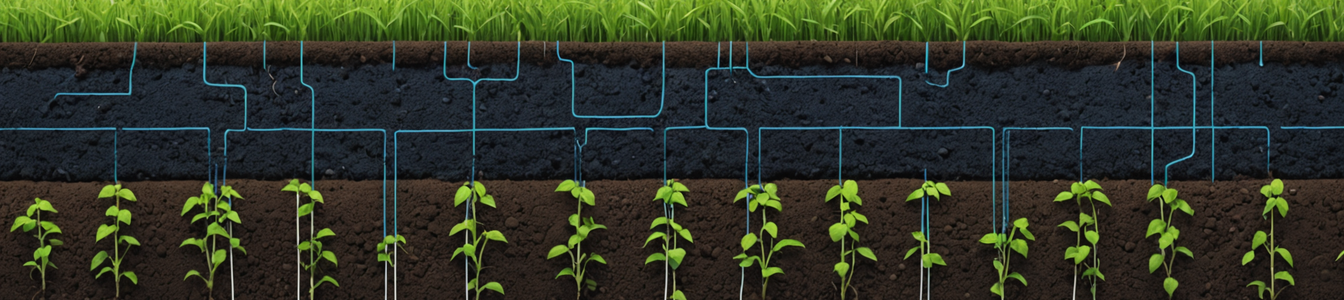
The agricultural landscape is undergoing a silent technological revolution, driven by a flood of new patents for Internet of Things (IoT) devices designed to optimize water usage and monitor soil health. From universities in India to agritech startups worldwide, innovators are racing to deploy low-cost sensors and automated irrigation controllers. While these advancements promise unprecedented efficiency and sustainability for the global farming community, cybersecurity professionals are sounding the alarm about the critical vulnerabilities being sown alongside the seeds of innovation. The rapid integration of digital systems into physical food production is creating a new and perilous frontier in critical infrastructure security.
The Patent Surge and the Promise of Precision Agriculture
Recent developments highlight the pace of this change. A notable example comes from Jharkhand Central University, where a professor's research team secured a patent for a novel, low-cost IoT soil moisture monitoring device. Designed to be affordable for small-scale farmers, the device transmits real-time soil data to a cloud platform, enabling precise, automated irrigation control. This patent is emblematic of a broader trend: the democratization of smart farming technology. The stated goal is to boost crop yields and conserve vital water resources by moving from scheduled or guesswork-based watering to data-driven decision-making.
These systems typically consist of a network of wireless sensors embedded in fields, communicating with a local gateway or directly to a cloud-based management console. Farmers can then monitor conditions and control irrigation valves via smartphone applications. The economic and environmental appeal is undeniable, leading to rapid adoption. However, this very appeal is driving a market where time-to-market and cost considerations often completely overshadow security-by-design principles.
The Expanding Attack Surface: From Sensor to Cloud
Each new patented device deployed in a field represents a potential entry point for malicious actors. The cybersecurity community is analyzing this emerging attack surface, which spans multiple layers:
- Device & Hardware Layer: Many agricultural IoT devices are built with minimal processing power and memory, leaving no room for robust security features. They often ship with hard-coded, default credentials that are rarely changed. Physical security in an open field is virtually non-existent, making devices susceptible to tampering or malicious replacement.
- Communication Layer: Protocols like LoRaWAN, Zigbee, or cellular NB-IoT are common but are frequently implemented without encryption or with weak, proprietary encryption schemes. This allows for eavesdropping, data manipulation, and replay attacks. An attacker could intercept a "soil dry" signal and replace it with a "soil wet" signal, preventing crucial irrigation.
- Application & Cloud Layer: The web dashboards and mobile apps used for management are often developed with standard web vulnerabilities (SQL injection, cross-site scripting). Compromising a single farmer's cloud account could give an attacker control over their entire irrigation system.
- Supply Chain & Update Mechanism: The firmware update process for these devices is rarely secure, lacking cryptographic signature verification. An attacker could compromise the manufacturer's update server or distribute malicious firmware masquerading as a legitimate update, creating a botnet of agricultural devices.
Threat Scenarios with High Impact
The potential consequences of these vulnerabilities extend far beyond data theft. They enable attacks with direct physical and economic damage:
- Crop Manipulation & Sabotage: An attacker could systematically over-water or under-water crops at critical growth stages, leading to massive yield loss or total crop failure for a targeted farm or region.
- Resource Theft & Ransomware: Attackers could take control of irrigation systems and demand a ransom to restore functionality, or simply open valves to drain water reservoirs, a critical resource in arid regions.
- Supply Chain Disruption: By targeting large agribusinesses or cooperatives, attackers could disrupt the production of key commodities (e.g., wheat, corn, soy), causing price volatility and potential shortages.
- Data Integrity Attacks: Poisoning the soil and yield data used to train broader agricultural AI models could degrade the performance of these systems on a global scale, leading to poor recommendations for thousands of farmers.
- Botnet Recruitment: Insecure devices could be co-opted into large botnets for launching DDoS attacks against other critical infrastructure targets.
A Call to Action for the Cybersecurity Community
The agricultural sector cannot be expected to solve this alone. It lacks the inherent cybersecurity culture and resources found in finance or traditional IT. Therefore, the responsibility falls on the cybersecurity industry, researchers, and policymakers to bridge this gap.
- Develop Agricultural IoT Security Frameworks: Existing industrial control system (ICS) security standards (like IEC 62443) need to be adapted for the unique constraints of agriculture—remote locations, limited power, and low-bandwidth connectivity.
- Promote Security-by-Design for Agritech Startups: Venture capital firms and incubators should mandate basic security assessments as a condition for funding. Tools and libraries need to be created to make secure development easier for small engineering teams.
- Farmer Education and Awareness: Simple guidance on changing default passwords, securing Wi-Fi networks, and monitoring for unusual system behavior must be translated into accessible formats for the farming community.
- Government and Regulatory Involvement: As food production is a matter of national security, governments may need to establish minimum security baselines for IoT devices used in critical agricultural infrastructure, similar to efforts for consumer IoT.
Conclusion: Securing the Next Harvest
The patent for a low-cost soil sensor is more than an engineering achievement; it is a symbol of the digital transformation sweeping one of humanity's oldest industries. This transformation brings immense benefits but also introduces systemic risk. The cybersecurity community must now turn its attention to the fields and farms, working collaboratively with agronomists and engineers to build resilience into the very foundation of our food systems. Protecting the smart farm is no longer a niche concern—it is a critical imperative for global stability. The next frontier in cybersecurity is quite literally growing in the soil beneath our feet.
Comentarios 0
Comentando como:
¡Únete a la conversación!
Sé el primero en compartir tu opinión sobre este artículo.
¡Inicia la conversación!
Sé el primero en comentar este artículo.