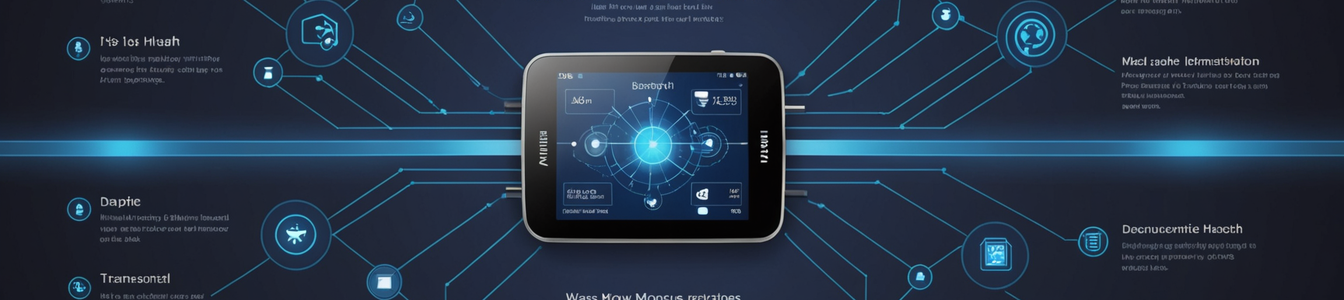
The Internet of Things is getting personal. Deeply, physiologically personal. We are witnessing the emergence of what can be termed the 'Intimate IoT'—a wave of always-on, deeply embedded devices that monitor, analyze, and sometimes even intervene in our most private biological processes. From smart wound dressings that wirelessly report on tissue health to next-generation wearables offering AI-powered health coaching, this fusion of biology and connectivity promises revolutionary benefits. Yet, for every leap in medical and wellness technology, a parallel and often more complex challenge emerges in the realm of cybersecurity. The very intimacy of these devices creates a security paradox: the more valuable they are to our health, the more vulnerable they become as targets and the more catastrophic the consequences of a breach.
The New Frontier: Biosensors and AI at the Edge
The articles highlight two converging trends. First, medical-grade IoT is becoming minimally invasive and continuous. Specialized wound dressings equipped with pH sensors represent a significant advancement for managing chronic conditions like diabetic ulcers. These dressings provide real-time, objective data on wound status, moving beyond visual inspection to chemical monitoring. This is not a fitness tracker; it's a diagnostic tool attached to the body, transmitting sensitive health data that could indicate infection or healing progress.
Second, consumer wearables are evolving into advanced health platforms. Major updates to devices like Garmin watches introduce sophisticated new metrics for sleep, training readiness, and recovery. These features rely on a constant stream of biometric data—heart rate variability, pulse ox, stress levels—processed through increasingly complex algorithms. Furthermore, the interview with Vishnu Vardhan Reddy Yeruva, creator of Sahayi AI, points to the future where generative AI operates at the 'mobile edge.' This means AI models that can analyze personal health data directly on the device or a nearby gateway, enabling real-time insights without always needing to send raw data to the cloud. While this enhances privacy and speed, it also decentralizes the attack surface, placing critical AI models and sensitive data on billions of potentially insecure endpoints.
The Cybersecurity Implications of Intimate Data
The security challenges introduced by the Intimate IoT are multifaceted and severe:
- Data Sensitivity and Privacy Catastrophes: A breached email reveals correspondence; a breached intimate IoT device reveals your body's inner workings. Data from a smart wound dressing could indicate a vulnerable health condition. Fitness data can reveal sleep disorders, stress patterns, and underlying cardiac issues. This is data that, if exposed, could be used for discrimination, blackmail, or targeted social engineering. The privacy stakes are incomparably higher.
- Expanded and Physical Attack Surfaces: Each intimate IoT device is a new endpoint. A smart dressing, a watch, future smart contact lenses or implantables—each has its own firmware, communication stack (Bluetooth, NFC, proprietary RF), and potential vulnerabilities. An attack could move laterally from a compromised wearable to a home network, or directly target the device to falsify data. Imagine a threat actor subtly altering the pH readings from a wound sensor to delay treatment or cause unnecessary alarm.
- Life-Safety and Integrity Risks: As these devices trend toward closed-loop systems (e.g., a sensor informing an insulin pump), integrity becomes as critical as confidentiality. A manipulated heart rate reading could cause a fitness app to recommend dangerously intense exercise. In a future scenario, corrupted data from a biosensor could lead to inappropriate automated therapeutic interventions. The threat model shifts from data theft to potential physical harm.
- The Sovereignty and Governance Challenge: Where does intimate health data reside, and who controls it? With edge AI processing, data might never leave the device, complicating traditional cloud-centric security and compliance models. However, the AI models themselves become high-value targets. Furthermore, data flows between devices, smartphones, edge nodes, and cloud analytics create a complex web that challenges data protection regulations like HIPAA, GDPR, and their global equivalents. Ensuring informed consent for such continuous, pervasive data collection is another monumental hurdle.
A Call to Action for the Security Community
Securing the Intimate IoT requires a paradigm shift. Security can no longer be an afterthought bolted onto a consumer gadget; it must be a foundational design principle from the silicon up.
- Zero-Trust for the Body: Implement strict device identity management, mutual authentication, and encrypted data channels for all communications, even on-device between sensor and processor.
- Secure by Design and Default: Manufacturers must adopt secure development lifecycles, ensure regular, secure firmware update mechanisms, and minimize the attack surface by disabling unnecessary services.
- Advanced Threat Modeling: Security teams must model threats that include physical-cyber interactions, data integrity attacks, and supply chain risks for biosensor components.
- Transparency and User Agency: Users must have clear, granular control over what data is collected, where it is processed, and how it is shared. They need understandable security indicators, not just battery life.
- Evolving Regulations: Policymakers and standards bodies must work alongside technologists to create agile frameworks that protect individuals without stifling innovation. Security certifications for medical and wellness IoT will become crucial.
The weave of sensors into the fabric of daily life is inevitable and holds immense promise. But each thread in that weave—each data point from our bodies—must be protected with the utmost rigor. The cybersecurity community's task is to ensure that as our technology becomes more intimate, our defenses become more resilient, building a future where we can trust the devices that know us best.
Comentarios 0
Comentando como:
¡Únete a la conversación!
Sé el primero en compartir tu opinión sobre este artículo.
¡Inicia la conversación!
Sé el primero en comentar este artículo.