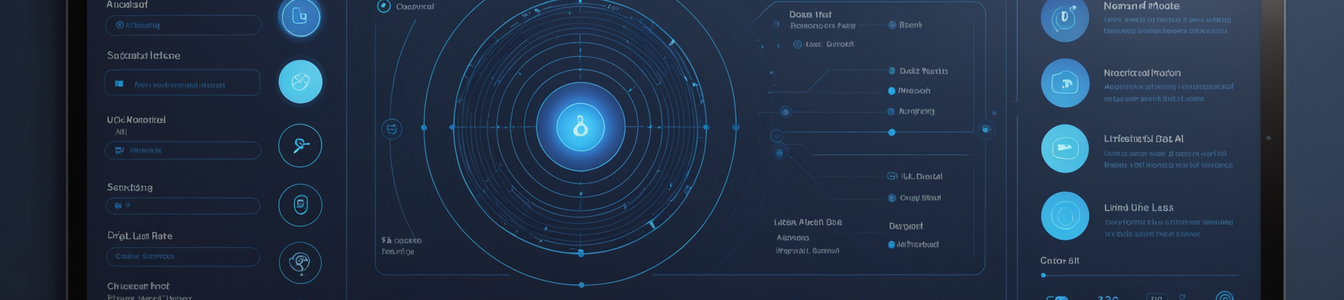
The smart home is undergoing a radical transformation, moving beyond the era of simple voice commands into a complex landscape of autonomous local AI agents and interactive touchscreens. While these advancements promise greater convenience and responsiveness, cybersecurity professionals are sounding the alarm about the dramatically expanded and nuanced attack surface they create. This new generation of devices, often marketed as seamless hubs for domestic life, introduces vulnerabilities that could compromise not just data, but physical security and personal safety.
The Rise of the Local AI Agent: A Double-Edged Sword
The recent launch of SwitchBot's AI Hub, touted as the world's first local home AI agent supporting the OpenClaw ecosystem, marks a significant industry shift. By processing commands and data locally instead of relying solely on cloud servers, these devices aim to reduce latency and enhance privacy. However, this architecture shifts the security burden onto the device itself. Complex local firmware, the need for secure local storage of potentially sensitive data (like access patterns and voice prints), and the agent's ability to execute physical actions (like locking doors or adjusting thermostats) create a high-value target. A compromise of such a local hub could give an attacker persistent, low-latency control over a home's entire IoT ecosystem, bypassing cloud-based security monitoring that many vendors rely on for anomaly detection.
Touchscreen Interfaces: A New Vector for User Confusion and Exploitation
Parallel to the AI shift, devices like the advanced touchscreen smart speaker highlighted in recent reviews are becoming central home controllers. These interfaces move control from abstract voice commands to tangible, graphical interactions. While intuitive, they present unique risks. Touchscreens can display deceptive interfaces, fake login prompts, or malicious overlays if compromised. They also centralize control for multiple services and devices, meaning a single interface exploit could yield access to a broad array of connected systems, from security cameras to smart locks. The user experience (UX) complexity on these small screens can also lead to security misconfigurations, with users accidentally granting excessive permissions or failing to enable available security features due to confusing menus.
The Fragmented Patch Problem and 'Dodgy Boxes'
The urgency underscored by warnings to immediately update applications like the Apple Home app is symptomatic of a larger issue: critical security in the smart home often relies on timely user action within a fragmented update ecosystem. As noted by cybersecurity analysts at firms like Grant Thornton, the market is flooded with inexpensive, off-brand smart home devices—'dodgy boxes'—that may never receive a single security patch after purchase. These devices frequently form the backbone of ad-hoc home networks, and when integrated with a powerful local AI hub or touchscreen controller, their vulnerabilities become gateways to the entire network. The local AI agent, designed to interoperate with various devices, inadvertently becomes a conduit for exploiting the weakest link in the chain.
Converging Risks: The Perfect Storm for Home Network Breaches
The convergence of these trends creates a perfect storm. A local AI hub with high-level system permissions interacts with a mix of patched and unpatched devices via a touchscreen interface that may itself be vulnerable to input manipulation or session hijacking. The attack surface is no longer just about exploiting a single cloud API; it now includes the hub's local API, its firmware, the integrity of the touchscreen's display and input systems, and the security posture of every connected sub-device. Attackers can pursue lateral movement from a vulnerable smart plug to the AI hub, potentially gaining the ability to issue legitimate-seeming commands to door locks, alarm systems, and cameras.
Recommendations for Security Professionals and Consumers
For the cybersecurity community, this evolution demands a shift in focus:
- Device Vetting: Security assessments must now prioritize the security model of local AI processors and the isolation of critical functions within hubs.
- Network Segmentation: Stronger advocacy for segmenting IoT networks is crucial. A local AI hub should not reside on the same network segment as personal computers or mobile devices.
- Vendor Accountability: Pressure must be applied on manufacturers to provide long-term, transparent firmware update commitments, especially for devices acting as central controllers.
- User Education: Security guidance needs to evolve beyond 'use strong passwords' to include understanding local vs. cloud processing, the importance of physical interface security, and the risks of integrating unvetted devices into a central hub.
The promise of a truly intelligent, responsive home is compelling. However, without a proactive and sophisticated approach to security that matches the complexity of these new systems, the next generation of smart home technology may inadvertently make our homes more vulnerable than ever. The industry's hubris in pushing complexity without uniformly elevating security standards is the primary vulnerability to address.
Comentarios 0
Comentando como:
¡Únete a la conversación!
Sé el primero en compartir tu opinión sobre este artículo.
¡Inicia la conversación!
Sé el primero en comentar este artículo.