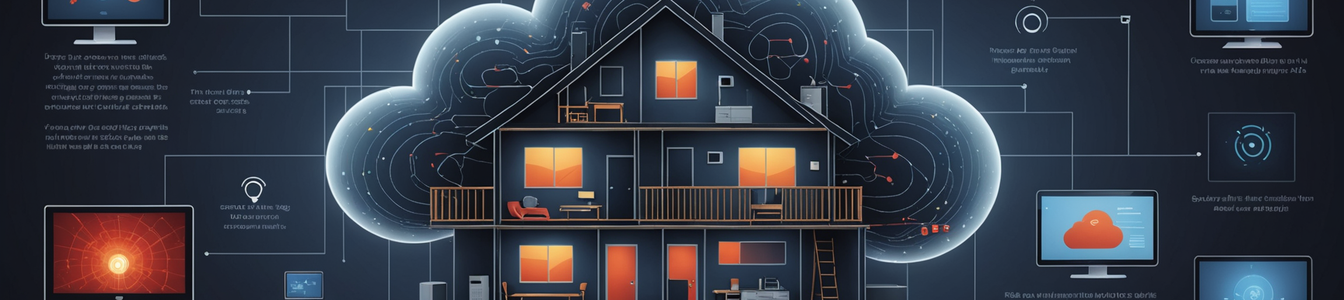
The smart home landscape, once a frontier of futuristic convenience, is facing a reckoning. The foundational model of cloud-dependent devices is increasingly viewed not as a feature, but as a critical vulnerability. Dubbed 'The Great Bricking' by industry observers, this phenomenon highlights how the very architecture meant to make homes smarter is instead making them slower, less secure, and alarmingly fragile. For cybersecurity professionals, this shift represents a fundamental challenge in risk assessment, vendor management, and the protection of physical-digital environments.
The core of the issue lies in the design philosophy of most mainstream smart home products. Instead of robust local processing, devices from doorbell cameras and smart thermostats to connected locks and lighting systems rely on constant communication with remote servers. This cloud-first approach creates immediate performance pitfalls. Latency becomes a built-in feature, not a bug. A command to unlock a door or view a security feed must travel to a vendor's server and back, introducing delays that can range from annoying to dangerous in emergency situations. The 'smart' gear is often slower and less responsive than its dumb counterparts, undermining its primary value proposition.
Beyond mere sluggishness, the cloud-dependency model creates severe single points of failure. The cybersecurity community is acutely aware of the risks associated with vendor lock-in and service discontinuation. When a company decides to sunset a product line or a cloud service—a common occurrence in the fast-moving IoT space—devices that rely on that remote heartbeat simply die. They become expensive 'bricks,' incapable of performing their core functions. This isn't a hypothetical scenario; history is littered with examples of smart home products rendered useless overnight, leaving security systems disabled, climate control inoperable, and users stranded. This operational fragility transforms a consumer convenience issue into a tangible physical security threat.
From a security practitioner's perspective, each cloud connection exponentially expands the attack surface. The device, the home network, the communication pathway, and the vendor's cloud infrastructure all become potential targets. A breach at the vendor level can compromise thousands of homes simultaneously. Furthermore, the reliance on proprietary cloud ecosystems often means security audits are opaque, updates are controlled unilaterally by the vendor, and data flows through potentially unverified channels. This lack of transparency and user control is antithetical to core cybersecurity principles.
In response to these systemic risks, a growing chorus of experts and informed users is advocating for a paradigm shift. The solution lies in planning and architecture that prioritizes local control. Technologies like local hubs (e.g., Home Assistant, Hubitat) that process automation logic within the home network, and the adoption of open, standardized protocols like Matter, Zigbee, or Z-Wave (which can operate locally), are gaining traction. These approaches minimize external dependencies, reduce latency to near-zero, and keep sensitive data within the perimeter of the home. Crucially, they ensure that core functionalities—like locking doors or turning on lights—remain operational even during internet outages.
Strategic planning is now recognized as the first and most critical step in building a resilient smart home. This involves selecting devices based not just on features, but on their ability to function offline, their adherence to open standards, and the vendor's track record of support and transparency. It means architecting a network with segmentation, placing IoT devices on isolated VLANs to limit lateral movement in case of a compromise, and prioritizing products that offer local API access for integration without cloud mandates.
For the cybersecurity industry, 'The Great Bricking' serves as a stark case study in the unintended consequences of convenience-driven design. It underscores the need for security and resilience to be baked into the product lifecycle from the start, not bolted on as an afterthought. As smart homes evolve from novelty to critical infrastructure for daily life, the demand for systems that empower users, protect privacy, and guarantee availability will only intensify. The future of a secure smart home is not in the cloud, but in a balanced, hybrid approach that puts control—and security—back where it belongs: in the hands of the homeowner, supported by robust local processing and open, interoperable standards.
Comentarios 0
Comentando como:
¡Únete a la conversación!
Sé el primero en compartir tu opinión sobre este artículo.
¡Inicia la conversación!
Sé el primero en comentar este artículo.