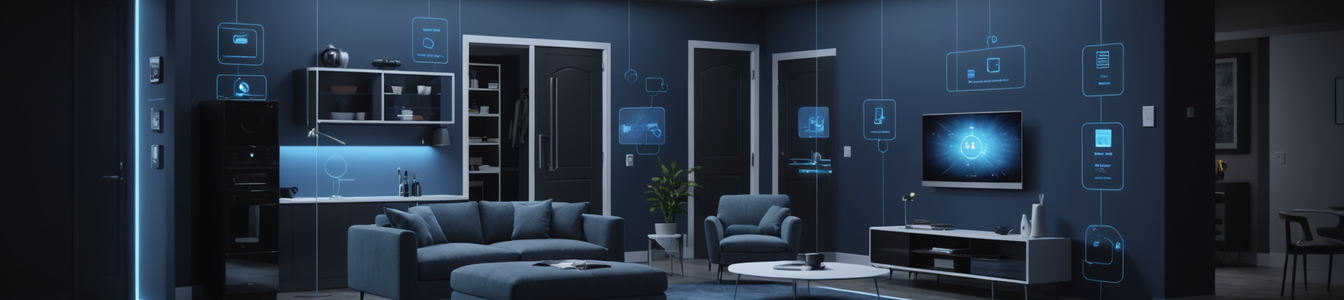
The modern smart home represents a technological marvel—and a cybersecurity nightmare. As consumers eagerly adopt connected thermostats, voice-activated assistants, intelligent locks, and automated lighting, they are often unwittingly constructing a digital fortress with doors left wide open. This is the core of the smart home security paradox: devices purchased to enhance safety, efficiency, and convenience are systematically eroding the very security they promise to uphold.
The Expanding Attack Surface of Convenience
The fundamental issue lies in the architecture of consumer IoT. Each smart plug, camera, or doorbell represents a new network endpoint, often running a lightweight operating system with minimal security considerations. Manufacturers, racing to market with the latest gadget, frequently prioritize user experience and cost over robust security protocols. The result is a landscape populated by devices with hard-coded default credentials, unencrypted data transmissions, and firmware that rarely, if ever, receives security updates. These vulnerabilities transform benign gadgets into ideal recruits for massive botnets like Mirai, which can harness their collective power to launch devastating Distributed Denial-of-Service (DDoS) attacks.
Beyond botnets, the risks are profoundly personal. A compromised smart camera or voice assistant becomes a live surveillance tool inside the home. A hacked smart lock can facilitate physical intrusion. Even seemingly innocuous devices like connected refrigerators or washing machines can serve as pivot points within the network, allowing attackers to move laterally from a low-security device to more sensitive systems like personal computers or network-attached storage drives containing financial documents and personal data.
From Inconvenience to Intrusion: Real-World Consequences
The threats are not theoretical. Security researchers have documented cases where entire smart home ecosystems were held hostage by ransomware, locking residents out of climate control, lighting, and even basic plumbing controls—a stark scenario where homeowners found themselves 'unable to flush their own toilets' due to a cyberattack. Other incidents involve threat actors using baby monitor feeds for extortion or manipulating smart thermostats to cause excessive energy bills or system failures during extreme weather.
These incidents highlight a critical flaw: the deep interconnection of systems. A vulnerability in a single, low-cost smart bulb can be exploited to gain a foothold on the home Wi-Fi network. From there, an attacker can probe other connected devices, exploiting chain vulnerabilities to escalate privileges and access critical controls. The industry's push for seamless interoperability often comes at the expense of segmentation and isolation, creating a 'domino effect' of compromise.
Bridging the Gap: Strategies for a Secure Smart Home
For cybersecurity professionals advising clients or the general public, and for consumers themselves, a paradigm shift is required. Security must be integrated into the smart home lifecycle from purchase to configuration to daily use.
- Pre-Purchase Scrutiny: The first line of defense is informed buying. Consumers should prioritize devices from manufacturers with a public track record of issuing regular security patches and transparency about their vulnerability disclosure policies. Checking for independent security certifications can be a valuable indicator.
- Network Segmentation: The most effective technical control is network segmentation. Smart home devices should be placed on a dedicated Wi-Fi network (a guest network is often perfect for this), isolated from primary networks containing laptops, phones, and sensitive data. This contains any breach and prevents lateral movement.
- Rigorous Configuration Hygiene: Immediately change all default usernames and passwords to strong, unique credentials. Disable any unnecessary features, especially Universal Plug and Play (UPnP) on the router and devices, which can be exploited to open ports to the internet without user consent. Implement strong, unique passwords for the Wi-Fi network itself.
- Proactive Maintenance: Enable automatic updates for device firmware whenever possible. Regularly check manufacturer websites or apps for patches for devices that do not update automatically. The lifecycle of the device should include a plan for its secure decommissioning.
- Principle of Least Functionality: Critically evaluate the necessity of each connected device. Does the coffee maker truly need to be online? Often, a 'dumb' alternative for non-critical functions reduces the attack surface without sacrificing meaningful convenience.
- Continuous Monitoring: Utilize router features that allow monitoring of connected devices. Unexpected devices or unusual outbound traffic can be an early indicator of compromise.
The Path Forward: Demanding Better Standards
The long-term solution requires industry and regulatory action. Cybersecurity advocates are pushing for mandatory security baselines for consumer IoT, similar to the evolving standards in the UK and California. These include banning universal default passwords, mandating vulnerability disclosure policies, and requiring clear information on the duration of security support for each product.
Until such standards are universal, the responsibility is shared. Manufacturers must design with security as a core feature, not an afterthought. Consumers must educate themselves and adopt secure practices. And cybersecurity professionals play a crucial role in translating complex risks into actionable guidance, helping navigate the paradox where the pursuit of a smarter home must not come at the cost of a safer one. The goal is not to abandon innovation, but to build a future where convenience and security are fundamentally aligned, ensuring that the connected home is a resilient one.
Comentarios 0
Comentando como:
¡Únete a la conversación!
Sé el primero en compartir tu opinión sobre este artículo.
¡Inicia la conversación!
Sé el primero en comentar este artículo.