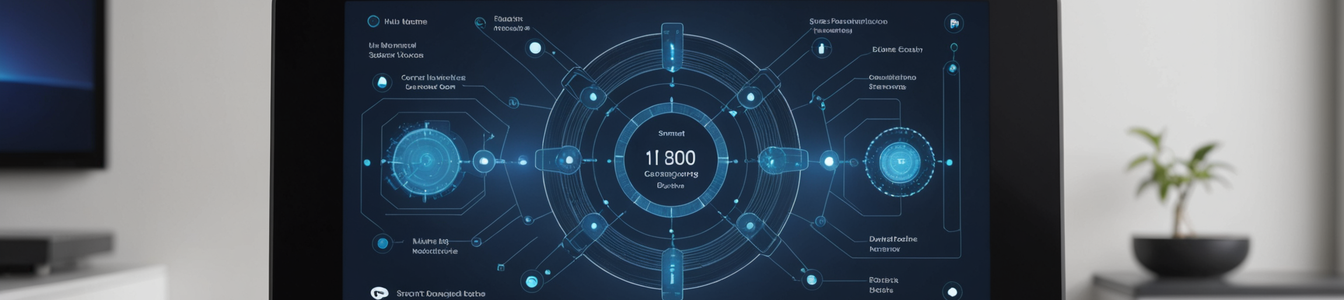
The smart home landscape is undergoing a silent but profound transformation. Driven by market competition and the pursuit of customer lock-in, manufacturers are no longer content with selling isolated devices. Instead, they are engaged in a strategic race to turn their products into the central nervous system of the modern home. This trend, which we term 'hubification,' sees companies embedding gateway functionalities into everyday appliances—from thermostats to light bulbs—creating powerful, multi-purpose control points. While promising unparalleled convenience, this convergence is creating a perfect storm of cybersecurity risks, concentrating critical attack surfaces into single, often under-secured, devices.
From Single-Purpose to Multi-Function Hubs
The latest product launches exemplify this shift. Aqara, a major player in smart home sensors, recently unveiled a thermostat that doubles as a full-fledged smart home hub. This device no longer merely regulates temperature; it now also manages Zigbee and Thread-based accessories like door sensors, leak detectors, and smart plugs. Similarly, security camera giant Reolink announced deep integration with the Homey automation platform. This move transforms Reolink cameras from passive surveillance tools into active triggers for complex automation routines—locking doors, turning on lights, or sending alerts based on visual detection. Meanwhile, IKEA's continued expansion of its Matter-compatible DIRIGERA hub and affordable sensor lineup demonstrates how a retail giant is building a vast, interoperable ecosystem, quietly positioning its hardware as a central, trusted node in the home network.
The Concentrated Risk: A Single Point of Catastrophic Failure
From a security perspective, hubification represents a dangerous consolidation of risk. Traditionally, a vulnerability in a smart lock might compromise the lock; a flaw in a camera might affect only that camera. Now, a successful exploit against a multi-role hub—like a thermostat-hybrid—can serve as a beachhead to pivot to every connected device in the home. An attacker gaining control of such a hub could potentially:
- Disable security systems (cameras, alarms, sensors).
- Manipulate physical access (smart locks, garage doors).
- Engage in privacy invasion (accessing camera feeds, microphone data).
- Launch lateral attacks against other devices on the home Wi-Fi network.
- Deploy ransomware that literally locks homeowners out of their own home's critical functions.
The attack surface expands exponentially as these hubs process more protocols (Zigbee, Thread, Z-Wave, proprietary RF), handle more data streams, and execute more complex logic. The firmware becomes more intricate, increasing the likelihood of vulnerabilities. Furthermore, consumer trust is often misplaced; users might diligently update their computer's OS but neglect the firmware of their 'dumb' smart thermostat that now secretly acts as a network gateway.
The Protocol Paradox and Vendor Lock-In Vulnerabilities
The push for interoperability through standards like Matter is a double-edged sword. While promising to reduce fragmentation, it also creates common dependencies. A critical vulnerability in the Matter protocol implementation across multiple vendors' hubs could lead to widespread, simultaneous compromises. Moreover, hubification often comes with subtle vendor lock-in. Aqara's thermostat-hub works best with Aqara's own sensors; IKEA's ecosystem encourages staying within its affordable hardware range. This lock-in can delay security updates if a vendor decides to end support for a 'legacy' hub device to push new hardware, leaving a critical network component perpetually vulnerable.
The Path Forward: Security in an Age of Convergence
The industry's rush to hubify cannot come at the expense of security. Several critical measures are needed:
- Security by Design, Not as an Afterthought: Hub devices must be built with the assumption that they will be targeted. This includes secure boot, hardware-based trusted execution environments, mandatory regular firmware updates, and minimal, hardened software stacks.
- Network Segmentation as a Default: These hubs should facilitate, not hinder, network segmentation. They should support features that allow critical security devices (locks, alarms) to be logically separated from less critical entertainment or convenience devices.
- Transparent Security Posturing: Manufacturers must provide clear, accessible security documentation, vulnerability disclosure policies, and guaranteed support timelines for their hub products.
- Consumer and Professional Awareness: Homeowners and professional installers must be educated to treat these converged devices as critical infrastructure, applying the same scrutiny to their placement, configuration, and updating as they would to a network router.
The smart home hub wars are fundamentally reshaping residential network architecture. The prize for manufacturers is market dominance and recurring revenue. The cost of inadequate security in this new paradigm, however, will be paid by consumers in the form of privacy breaches, physical security failures, and financial loss. As our thermostats and light bulbs aspire to be security systems, the cybersecurity community must demand that they first and foremost become bastions of security themselves.
Comentarios 0
Comentando como:
¡Únete a la conversación!
Sé el primero en compartir tu opinión sobre este artículo.
¡Inicia la conversación!
Sé el primero en comentar este artículo.