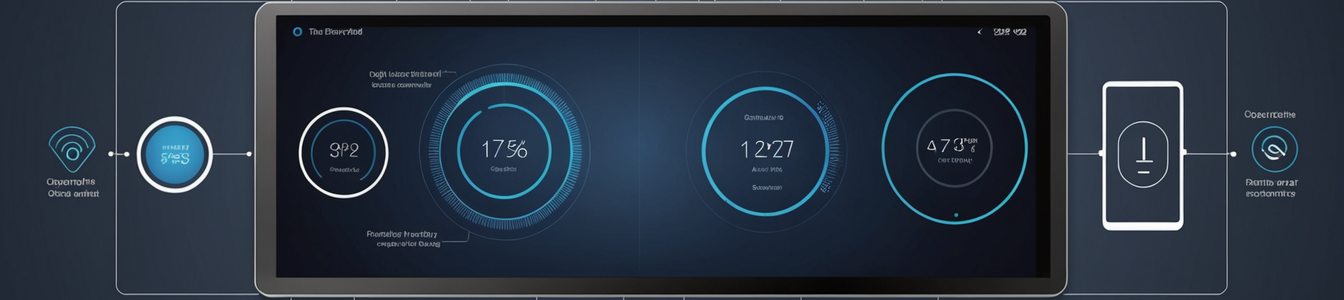
The landscape of smart home control is shifting beneath our feet. No longer confined to simple voice assistants or brand-locked apps, the central nervous system of the connected home is evolving into a complex battleground. This conflict isn't just about features or price; it's a fundamental struggle between proprietary convenience and open-standard security, with profound implications for the cybersecurity architecture of millions of homes. Recent developments, including new hardware launches and deeper software integrations, are bringing this conflict into sharp focus, forcing consumers and security professionals to make critical choices about control, privacy, and resilience.
The Hardware Front: Expanding the Attack Surface
The battle is being fought on multiple fronts, starting with hardware. Major players are launching increasingly sophisticated control hubs that aim to be the central command post. Xiaomi's upcoming Home Screen 11, for instance, is more than just a tablet; it's a wall-mounted control center running HyperOS 3, designed to manage a wide array of smart home devices. This move signifies a push towards integrated, touch-centric control interfaces that consolidate management into a single, always-on device. Similarly, Amazon's refreshed Echo Dot Max, now featuring a built-in smart home hub, represents a strategy to embed control deeper into popular voice-activated ecosystems, often at aggressive price points to drive adoption.
From a security perspective, each new hardware hub expands the potential attack surface. These devices are persistent network endpoints with significant permissions. A vulnerability in Xiaomi's HyperOS 3 or in the Zigbee/Matter stack of an Echo Dot Max hub could grant an attacker a foothold with control over lights, locks, and sensors. The security of these hubs hinges entirely on the vendor's commitment to timely patches, the transparency of their security processes, and the robustness of their built-in protections—factors often obscured in closed ecosystems.
The Integration Dilemma: Silos vs. Bridges
This hardware proliferation exacerbates the classic smart home problem: fragmentation. The article highlighting brands that integrate seamlessly with Home Assistant underscores a growing consumer and expert preference for interoperability. Platforms like Home Assistant act as universal translators and central controllers, aggregating devices from brands like Philips Hue, TP-Link, and others into a single, cohesive dashboard. This approach breaks down security and operational silos.
The cybersecurity benefit of such integration is substantial. A unified platform allows for consistent security policy enforcement, centralized logging, and holistic monitoring of network traffic across all connected devices. Instead of managing separate apps with varying security postures, users can implement network segmentation, automate alerts for anomalous behavior, and apply updates from a single pane of glass. This reduces complexity, a key enemy of security.
The Command Layer: Simplification as a Double-Edged Sword
Beyond hardware and integration lies the user interface—the command layer. Guides on simplifying Alexa routines, for example, highlight the drive towards usability. Creating macro-commands like "Good Night" to lock doors, turn off lights, and arm security systems is a staple of modern smart homes. However, this simplification has a security shadow. Overly complex or poorly secured routines can become attack vectors. If a voice assistant's authentication is compromised, a single command could trigger a cascade of actions, potentially disarming a home's security posture. The security of these automated workflows depends on the underlying platform's authentication strength and its resilience against command injection or spoofing attacks.
Open Standards: The Transparency Advantage
This is where the open-standard philosophy, championed by Home Assistant and standards like Matter, presents a compelling security argument. Open-source platforms offer transparency. Their code can be audited by the community, vulnerabilities are often identified and patched rapidly, and there is no black box. Users have greater control over data flow, often with the option to keep everything local, eliminating dependency on cloud services that can be breached or become unavailable.
However, this power comes with responsibility. The open-source model shifts the security burden towards the user or the implementing organization. It requires technical expertise to set up securely, maintain, and harden. An improperly configured Home Assistant instance could be more vulnerable than a locked-down, if opaque, proprietary system. The choice becomes one of trading the risk of vendor negligence for the risk of user error.
Security Implications and the Road Ahead
For cybersecurity professionals, this evolving landscape demands a nuanced approach. Risk assessments for smart home environments must now consider:
- Hub Security Posture: Evaluating the security history of hub vendors, their patch management cadence, and the isolation of hub processes on the network.
- Integration Architecture: Determining whether a siloed or unified control model presents less risk for a specific user profile, considering their technical ability.
- Data Sovereignty: Assessing where data (voice recordings, device states, usage patterns) is processed and stored—on-device, in a private cloud, or in a vendor's cloud—and under what jurisdiction.
- Supply Chain Trust: Understanding the software bill of materials for these hubs, especially as they consolidate control over critical functions.
In conclusion, the smart home hub wars are not merely a consumer convenience battle. They are defining the fundamental security architecture of our personal spaces. The trend towards more powerful, integrated hardware from vendors like Xiaomi and Amazon makes the home's digital point of failure more concentrated. Simultaneously, the rise of open standards and platforms like Home Assistant offers a path toward more transparent, user-empowered, and potentially resilient security models. The ultimate victor in these wars may not be a single brand, but the security paradigm that best balances powerful control with provable safety. Professionals must guide users toward this balance, emphasizing that the choice of a smart home ecosystem is, first and foremost, a critical security decision.
Comentarios 0
Comentando como:
¡Únete a la conversación!
Sé el primero en compartir tu opinión sobre este artículo.
¡Inicia la conversación!
Sé el primero en comentar este artículo.