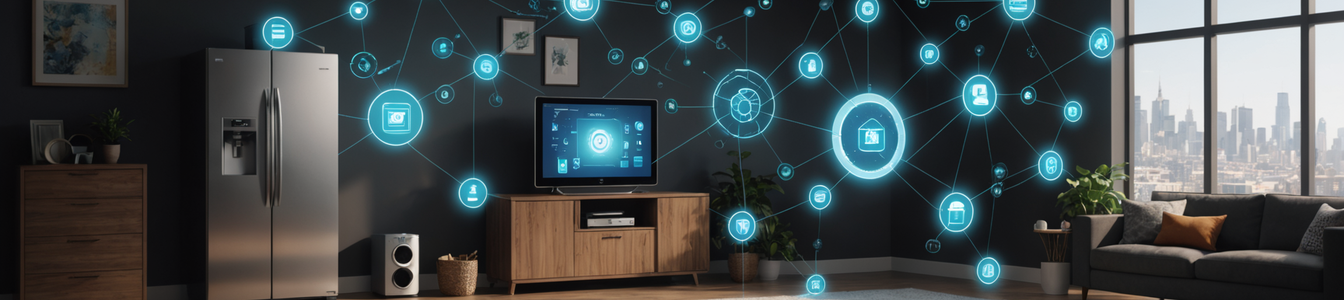
The landscape of the connected home is undergoing a fundamental power shift. No longer content with selling individual smart refrigerators or air conditioners, global appliance giants like Haier, TCL, and Hisense are engaged in a high-stakes race to build comprehensive, proprietary Internet of Things (IoT) ecosystems. This strategic pivot, from product-centric to platform-centric business models, aims to lock consumers into branded universes where every device communicates through a single, closed ecosystem. While marketed as seamless convenience and "emotional connection," this trend poses profound and systemic cybersecurity challenges that extend far beyond the vulnerability of a single device.
Recent moves by these manufacturers underscore the intensity of this competition. Haier chose a glamorous event in Paris to unveil its latest smart home portfolio, emphasizing a holistic, interconnected vision for the home. Simultaneously, TCL showcased its newest integrated home solutions at a major center in Mandaluyong, Philippines, pushing its ecosystem into key growth markets. Perhaps most telling is Haier's financial commitment: a planned share buyback of up to 6 billion yuan, a move analysts interpret as a signal of confidence in its long-term platform strategy and a bid to stabilize investor sentiment during this capital-intensive expansion.
The core of this strategy is the creation of a "walled garden." Instead of using open standards like Matter or robust local APIs, these ecosystems are designed to work best—or exclusively—with other devices from the same brand, managed through a central proprietary app or AI agent. Hisense, for example, is promoting an "AI Agent Suite" designed to add "connection and emotional value," a narrative that frames vendor lock-in as a personalized, empathetic experience. This closed architecture has significant security implications.
First, it creates systemic risk through complex interdependencies. In an open, standards-based environment, a vulnerability in a smart light bulb is largely contained. In a tightly integrated proprietary ecosystem, a compromise in a lesser-secured device—like a smart coffee maker—could provide a pivot point to access more critical systems, such as home security cameras or network routers, all sharing the same underlying platform and communication protocols. The attack surface becomes the entire ecosystem, not the sum of its parts.
Second, cloud dependency becomes a critical single point of failure and a privacy nightmare. These ecosystems heavily rely on manufacturer-controlled cloud servers for device coordination, AI processing, and user interaction. This architecture exposes users to service outages, introduces latency in critical commands (like locking a door), and creates vast, centralized data repositories ripe for targeted attacks. The manufacturer's cloud security posture becomes the user's home security posture.
Third, vendor lock-in severely hampers security maintenance. If a manufacturer is slow to patch vulnerabilities, discontinues support for a device, or goes out of business, the user has no recourse. They cannot easily migrate to a different vendor's hub or management system. This leads to scenarios where entire homes are filled with permanently vulnerable, un-patchable devices. The long lifecycle of major appliances (10-15 years for a refrigerator) clashes dramatically with the rapid update cycles of software security.
For cybersecurity professionals, this trend demands a new approach to risk assessment. Threat modeling must now consider the ecosystem as a monolithic entity. Incident response plans need to account for cascading failures across multiple device categories. Supply chain security reviews must extend to the ecosystem provider's software development lifecycle, cloud infrastructure, and third-party integration policies.
The push by Haier, TCL, and Hisense is just the beginning. As the battle for the smart home intensifies, security cannot be an afterthought. The industry needs a concerted push for greater transparency, adherence to emerging security standards, and architectures that prioritize local control and interoperability without sacrificing security. Until then, the convenience of a unified smart home may come at the cost of a consolidated, and potentially catastrophic, risk profile. Consumers and corporate security teams alike must scrutinize not just the security of a single smart device, but the resilience and philosophy of the entire walled garden they are being invited to enter.
Comentarios 0
Comentando como:
¡Únete a la conversación!
Sé el primero en compartir tu opinión sobre este artículo.
¡Inicia la conversación!
Sé el primero en comentar este artículo.