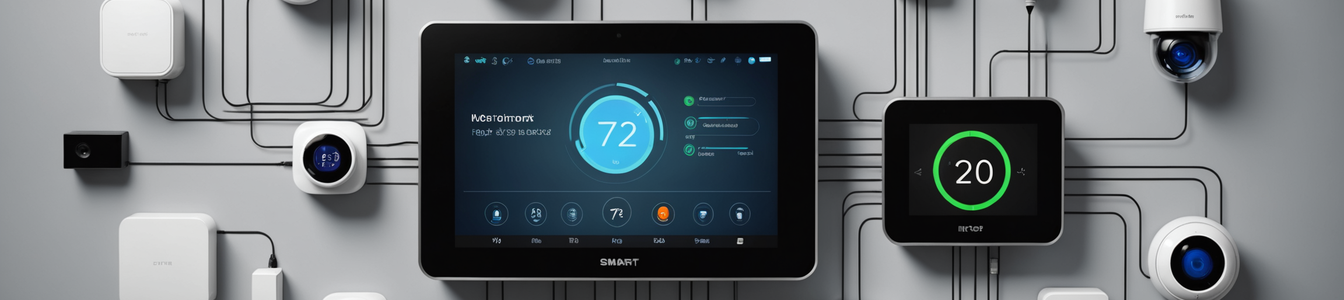
The smart home industry stands at a crossroads. For years, the dominant model has been the "walled garden"—proprietary ecosystems where devices from a single manufacturer communicate seamlessly with each other but remain largely isolated from competitors' products. Now, a new strategy is emerging: the open platform approach, where companies intentionally open their systems to third-party developers and external smart home ecosystems. This shift, exemplified by robotics company Yarbo's recent announcement of an open platform strategy for its yard maintenance systems, represents both tremendous opportunity and unprecedented security risk for consumer IoT environments.
Yarbo's decision to open its robotics platform to external developers marks a significant departure from traditional IoT business models. The company, known for its modular robotic system capable of snow removal, lawn mowing, and leaf blowing, is betting that interoperability will drive faster innovation and broader market adoption. By providing APIs and development tools, Yarbo aims to transform its single-purpose robots into multifunctional platforms that can integrate with everything from smart irrigation systems to security cameras and voice assistants.
This strategic pivot reflects a broader trend in consumer IoT. As noted in recent smart home planning guides, forward-thinking consumers and installers are increasingly prioritizing flexibility and future-proofing over immediate convenience. The ability to integrate devices from multiple manufacturers through open standards like Matter has become a key consideration in smart home design. This planning-centric approach acknowledges that today's specialized device might need to interact with tomorrow's emerging technology—a requirement that closed systems struggle to meet.
However, the security implications of this open garden approach are profound. Each new integration point represents a potential vulnerability in what security professionals call the "attack surface." When a robotic lawn mower can receive commands from a third-party weather app, share data with a smart irrigation system, and be controlled via multiple voice assistants, the number of potential entry points for attackers multiplies exponentially.
The primary security concerns fall into several categories:
- Authentication and Authorization Complexity: In a closed system, authentication occurs within a controlled environment. Open platforms must manage authentication across multiple third-party services, each with potentially different security postures. Weak implementation of OAuth or similar protocols could allow attackers to gain unauthorized control of physical devices.
- API Security Vulnerabilities: The APIs that enable interoperability become critical attack vectors. Inadequate input validation, insufficient rate limiting, or improper error handling could expose sensitive device functions or user data. The 2023 OWASP API Security Top 10 highlights how commonly APIs are targeted in interconnected systems.
- Supply Chain Risks: Third-party developers may introduce vulnerabilities through poorly coded integrations or malicious intent. The recent surge in software supply chain attacks demonstrates how trust in external code can be exploited. A vulnerable Easter-themed smart home "trick"—like those circulating in enthusiast communities—could theoretically provide backdoor access to an entire home network if integrated with an open robotics platform.
- Data Privacy and Cross-System Exposure: Interoperability requires data sharing between systems. A robotic yard system sharing its location data with a smart lighting system might inadvertently reveal when a home is unoccupied. The aggregation of data across multiple platforms creates privacy risks that individual device manufacturers might not anticipate.
- Update and Patch Management Fragmentation: In walled gardens, manufacturers control the update process for all components. In open ecosystems, security patches must be coordinated across multiple independent developers, creating windows of vulnerability when one component is updated before others.
Security professionals emphasize that the technical implementation details will determine whether open platforms can be secured effectively. "The devil is in the architecture," notes cybersecurity consultant Maria Rodriguez. "Properly implemented, an open platform can have stronger security through standardized protocols and community scrutiny. Implemented poorly, it becomes a hacker's playground."
Critical security measures for open IoT platforms include:
- Mandatory Security Certification: Third-party integrations should undergo security review before being allowed in official marketplaces.
- Granular Permission Systems: Users should control exactly what data and functions each integration can access, following the principle of least privilege.
- Network Segmentation: IoT devices should operate on isolated network segments with strict firewall rules governing external communications.
- Behavioral Monitoring: AI-driven anomaly detection can identify unusual patterns that might indicate a compromised integration.
- Transparent Security Disclosures: Platforms should provide clear information about the security practices of third-party integrations.
The regulatory landscape is beginning to address these concerns. The European Union's Cyber Resilience Act and similar legislation worldwide are establishing baseline security requirements for connected devices. However, the rapid evolution of open platforms may outpace regulatory frameworks.
For cybersecurity teams in organizations adopting these technologies, several best practices emerge:
- Assume Breach Mentality: Design systems with the assumption that some components will be compromised, implementing defense-in-depth strategies.
- Zero-Trust Architecture: Apply zero-trust principles to IoT ecosystems, verifying every request regardless of origin.
- Continuous Security Testing: Regularly test both official and third-party integrations for vulnerabilities.
- User Education: Help consumers understand the security implications of adding new integrations to their smart home systems.
As the industry moves toward greater interoperability, the security community faces a dual challenge: enabling the innovation that open platforms promise while protecting consumers from the inevitable increase in attack vectors. The success of companies like Yarbo will depend not just on the functionality of their open ecosystems, but on their ability to implement security that evolves as rapidly as their expanding integration possibilities.
The open garden gamble represents a fundamental shift in how we think about IoT security. No longer can security be an afterthought added to finished products; it must be woven into the architecture of interoperability from the ground up. As one industry observer noted, "The smart homes of the future will be judged not by what they can do, but by how securely they can do it."
Comentarios 0
Comentando como:
¡Únete a la conversación!
Sé el primero en compartir tu opinión sobre este artículo.
¡Inicia la conversación!
Sé el primero en comentar este artículo.