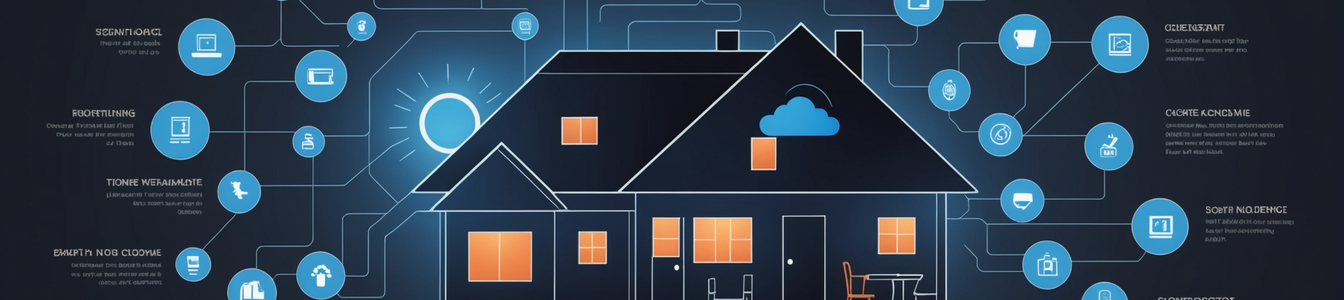
For years, the dominant architecture for smart homes has been cloud-first. A light switch in your living room would send a signal to a server halfway across the globe, which would then send a command back to the bulb in your ceiling. This model, while convenient for manufacturers and enabling remote access, has created a fragile, privacy-invasive, and security-compromised ecosystem. Today, a powerful counter-movement is gaining momentum: the shift to local network control. This isn't just a niche hobbyist trend; it's a fundamental re-architecting of smart home security and reliability, with profound implications for cybersecurity professionals, manufacturers, and consumers alike.
The core vulnerability of the cloud-dependent model is its inherent single point of failure. When the cloud goes down—whether due to a provider outage, a DDoS attack, or a service discontinuation—smart devices become disconnected and often useless. This fragility contradicts the very promise of automation and control. Furthermore, this architecture creates a massive data privacy problem. Every command, sensor reading, and routine is transmitted to and stored on third-party servers, creating honeypots of behavioral data attractive to hackers and often opaque to users.
The local-first alternative keeps all communication and processing within the home's local area network (LAN). Devices talk directly to a local hub or to each other using standards like Zigbee, Z-Wave, or Thread. Automation logic runs on a local server, such as a Raspberry Pi running Home Assistant, or on dedicated hubs designed for offline operation. The result is a system that remains fully functional even when the internet connection is severed. Lights, thermostats, and security sensors continue to operate based on pre-set rules and local triggers.
A critical technical hurdle for local systems has been secure remote access. Traditionally, accessing a home network from the outside required port forwarding—a significant security risk that opens a direct pathway into the private network for potential attackers. Modern solutions have elegantly solved this. Techniques like VPNs (Virtual Private Networks), Tailscale, or cloud tunnels (where a secure, outbound-only connection is established to a relay) now allow users to securely reach their local hub without exposing the entire network. As one practitioner noted, running a whole smart home without port forwarding is not only possible but has become surprisingly straightforward, dramatically shrinking the external attack surface.
The emergence and adoption of the Matter standard, championed by the Connectivity Standards Alliance (CSA), is a major accelerator for this trend. Matter is designed to be IP-based and local-first. While it can use the cloud for setup and optional remote features, its core communication is mandated to occur over the local network via Thread, Wi-Fi, or Ethernet. This built-in preference for local control is a game-changer, forcing interoperability and reducing vendor lock-in. Platforms like Homey are leveraging this by acting as sophisticated Matter bridges, bringing a wider array of legacy and proprietary devices into a unified, locally controlled ecosystem accessible through interfaces like Apple HomeKit.
For cybersecurity professionals, this shift presents several key considerations:
- Reduced Attack Surface: Eliminating constant cloud communication removes a major vector for man-in-the-middle attacks and reduces the number of external endpoints that can be targeted.
- Data Sovereignty & Privacy: Sensitive data—when someone is home, their daily routines, security camera footage—stays within the physical boundaries of the home. This aligns with stringent data protection regulations like GDPR and CCPA by design.
- Resilience Against Supply-Chain Attacks: A local system is less vulnerable to the cascading effects of a breach at a major cloud provider or the shutdown of a vendor's services.
- Shifting Security Responsibilities: Security postures must evolve. The focus moves from securing cloud APIs to hardening local network devices, ensuring strong local authentication, and securely managing remote access tools like VPNs.
- Incident Response & Forensics: Logs and event data are contained on-premises, which can simplify forensic analysis in the event of a local breach but requires users or integrators to have robust local logging practices.
The market is responding. A growing list of devices—from smart plugs and lighting to sensors and locks—now advertise local control as a primary feature. Platforms like Home Assistant, Hubitat, and Homey are seeing rapid adoption. This movement is more than a technical preference; it's a demand for digital self-determination in the home. It represents a maturation of the smart home market, where consumers and professionals are prioritizing security, privacy, and reliability over the convenience of an always-on cloud tether.
In conclusion, the lifeline for the future smart home is unequivocally local. The convergence of user demand for privacy, robust new standards like Matter, and secure networking techniques is dismantling the old cloud-centric model. For the cybersecurity community, this is a welcome development that replaces opaque, centralized risks with transparent, decentralized control—a foundational step toward building truly secure and resilient smart environments.
Comentarios 0
Comentando como:
¡Únete a la conversación!
Sé el primero en compartir tu opinión sobre este artículo.
¡Inicia la conversación!
Sé el primero en comentar este artículo.