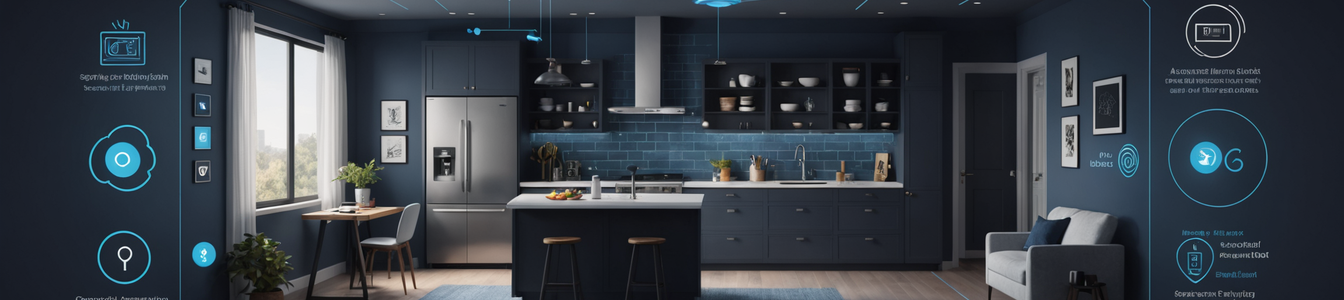
The smart home industry stands at a crossroads, caught between a vendor-driven vision of AI-powered central command and a consumer reality that prioritizes simplicity and reliability. This fundamental disconnect isn't just a market misalignment—it's brewing a perfect storm for cybersecurity vulnerabilities in millions of homes.
The Premium AI Hub Push
Manufacturers are doubling down on the concept of the smart home hub as an all-knowing, premium centerpiece. Xiaomi's recent launch of the Home Screen 11 exemplifies this trend. Marketed as a device that "finally looks premium," it represents the industry's bet on consumers wanting sophisticated, centralized control interfaces with integrated AI capabilities. These hubs are designed to be the brain of the smart home, processing data from various sensors and devices to make intelligent decisions. They typically feature powerful processors, expansive touchscreens, and complex software stacks to manage everything from lighting to security systems.
From an engineering perspective, these devices are marvels of integration. However, from a security standpoint, they represent concentrated risk. A single compromised hub can potentially grant an attacker access to every connected device in a home network. The complexity of their AI-driven software creates a large attack surface, with multiple services, APIs, and data processing routines that must all be secured.
The Consumer Reality: AI Ranks Last
Contrasting sharply with this vendor enthusiasm is sobering market research. According to a recent comprehensive report, when homebuyers and smart home adopters list their priorities, artificial intelligence features consistently rank absolutely last. The top concerns are far more fundamental: robust security, unwavering reliability, straightforward ease of use, and genuine interoperability between devices from different manufacturers.
This isn't merely a preference—it's a rejection of complexity for complexity's sake. Consumers are signaling that they don't want "smart" devices that require advanced technical knowledge to configure or that promise intelligence they don't perceive as valuable. They want devices that work consistently, protect their privacy, and simplify their lives through reliable automation, not through opaque AI decisions.
The Security Implications of the Disconnect
This divergence between supply and demand creates multiple layers of security risk that cybersecurity professionals should monitor closely:
- Attack Surface Expansion Without Clear Value: Vendors are adding complex AI features that expand the device's attack surface—more code, more services, more external connections to cloud AI processors. If consumers aren't using these features, this represents pure security liability without corresponding user benefit. Unused code paths can become forgotten vulnerabilities.
- Poor Security Hygiene Through Disengagement: When consumers purchase premium-priced devices marketed primarily on AI capabilities they don't value, they may become disengaged from proper security maintenance. If the core value proposition doesn't resonate, users are less likely to diligently apply firmware updates, configure security settings properly, or monitor device behavior—all critical security practices.
- Interoperability Gaps and Workaround Risks: The report indicates consumers prioritize devices that work well together across brands. However, when the market pushes proprietary AI ecosystems, interoperability often suffers. Users frustrated by compatibility issues may implement insecure workarounds, like using less-secure third-party bridges or exposing devices directly to the internet to enable cross-platform automation.
- Data Privacy Concerns with Underutilized AI: Many AI features require extensive data collection for training and operation. If consumers aren't actively using these AI capabilities but cannot disable the underlying data collection, this creates privacy risks without perceived benefits. This misalignment can lead to regulatory compliance issues under frameworks like GDPR or CCPA.
The Path Forward: Security-Centric Design
Industry analysts and cybersecurity experts suggest the solution lies in realigning product development with actual consumer needs. Rather than focusing on "AI" as a buzzword, manufacturers should prioritize:
- Reliable, Transparent Automation: Building systems that execute simple "if this, then that" rules with 100% reliability, rather than opaque AI decisions that may fail unpredictably.
- Security by Default and Design: Implementing zero-trust architectures within smart home ecosystems, where devices verify each connection regardless of network position, and ensuring all data transmissions are encrypted end-to-end.
- Modular Security Updates: Creating systems where security patches can be applied seamlessly to individual components without requiring full system reboots or complex user intervention.
- User-Centric Privacy Controls: Giving users clear, granular control over what data is collected and how it's used, with easy-to-understand interfaces that don't require technical expertise.
Conclusion: Recalibrating Risk in the Smart Home
The smart home's identity crisis represents more than just a marketing challenge—it's a cybersecurity inflection point. As manufacturers continue to launch increasingly complex AI hubs like Xiaomi's Home Screen 11, while consumers increasingly demand simplicity and reliability, the security gap widens.
For cybersecurity professionals, this trend necessitates increased scrutiny of consumer IoT devices, particularly those with expansive AI capabilities. Security assessments should consider not just technical vulnerabilities but also the likelihood of proper user maintenance given the device's value proposition. The industry must pivot from selling "intelligence" to delivering trustworthy automation, or risk creating an ecosystem where security vulnerabilities multiply in devices that fail to solve real user problems.
The homes of the future need to be secure first, smart second. Until manufacturers align with this priority order, cybersecurity risks will continue to grow alongside disused AI features in premium-priced hubs.
Comentarios 0
Comentando como:
¡Únete a la conversación!
Sé el primero en compartir tu opinión sobre este artículo.
¡Inicia la conversación!
Sé el primero en comentar este artículo.