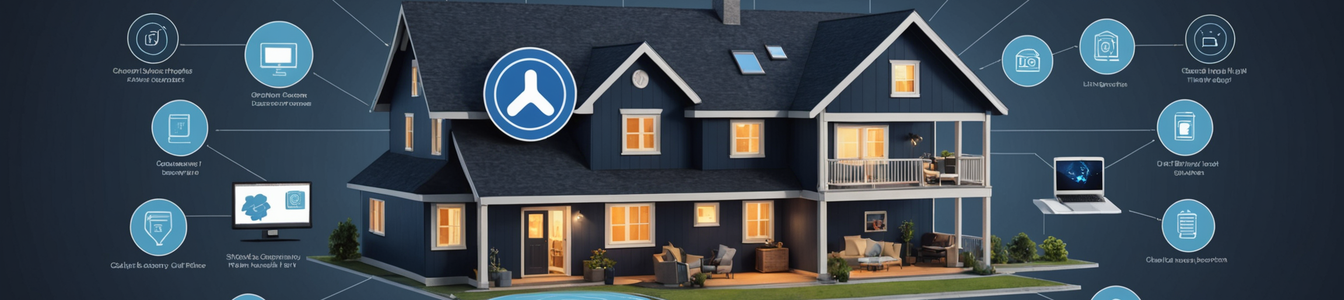
The smart home revolution is no longer creeping in; it's being ushered in with open wallets. A convergence of government policy, corporate sales strategy, and technological interoperability is creating an unprecedented surge in Internet of Things (IoT) device adoption within residential spaces. However, this rapid expansion is occurring on a foundation of inconsistent and often inadequate security standards, raising critical concerns for cybersecurity professionals about the integrity of national network infrastructure. The drive for connectivity and energy efficiency is, paradoxically, subsidizing the creation of a vast, distributed attack surface.
Policy-Driven Adoption: The Italian Case and Beyond
Initiatives like Italy's "Bonus Domotica 2026" exemplify a growing trend where governments use tax incentives to promote smart home technology for energy savings and modernization. These policies effectively lower the financial barrier for consumers, accelerating the installation of connected devices—from smart thermostats and lighting to advanced security systems. While the goals of energy efficiency and technological advancement are laudable, such subsidy programs rarely, if ever, mandate minimum cybersecurity requirements for eligible devices. The result is a policy-induced market flood of devices whose primary design focus is functionality and cost, not security resilience. This creates a scenario where national incentives could inadvertently fund the proliferation of vulnerable endpoints.
Market Acceleration: Sales, Interoperability, and AI
Simultaneously, the commercial market is pushing adoption through other channels. Amazon's Big Spring Sale, featuring record-low prices on flagship devices like the Echo Show 15, makes sophisticated hubs with built-in Fire TV and camera capabilities accessible to a mass audience. Price is a powerful adoption driver, but security is seldom a highlighted feature in these consumer promotions.
Furthermore, the push for interoperability, championed by the Matter standard, is a double-edged sword. Ikea's launch of its Matter-compatible Varmblixt smart lamp in the US is a sign of the standard gaining mainstream traction. Matter aims to solve compatibility chaos, allowing devices from different brands to communicate seamlessly. For cybersecurity, a unified standard can improve security if it is robustly designed and consistently implemented. However, it also creates a common protocol that, if compromised, could affect a wider ecosystem of devices. The security assurances of Matter depend entirely on the implementation by each manufacturer, a variable that consumers and subsidy programs are ill-equipped to assess.
Adding another layer of complexity is the rollout of more powerful, interconnected AI. The launch of "Alexa+" in the UK, promising a smarter and more connected experience, signifies a move towards AI assistants that don't just respond to commands but proactively manage the smart home ecosystem. This increases the centralization of control and data flow, making the hub device a high-value target. A breach here could yield control over the entire connected home.
The Cybersecurity Implications: A Distributed National Vulnerability
For cybersecurity experts, this trend represents a paradigm shift in risk management. The traditional corporate network perimeter has dissolved into millions of home offices and remote endpoints. Each subsidized smart plug, discounted smart display, or new Matter-compatible sensor represents a potential entry point.
- Botnet Recruitment: Insecure IoT devices are prime candidates for conscription into botnets like Mirai, which can be used for large-scale DDoS attacks against critical infrastructure.
- Data Exfiltration and Privacy Erosion: Devices with cameras, microphones, and sensors collect vast amounts of personal data. Insecure devices can turn homes into surveillance outposts.
- Network Pivoting: A vulnerable smart device can serve as a beachhead into a home network, allowing attackers to pivot to more sensitive devices like laptops, phones, or home office equipment. In an era of widespread remote work, this directly threatens corporate assets.
- Supply Chain Attacks: The rush to market, fueled by incentives and sales, pressures supply chains. This can lead to shortcuts, including the use of vulnerable third-party components or firmware that is rarely, if ever, updated.
The Path Forward: Integrating Security into Incentives
Addressing this systemic risk requires a multi-stakeholder approach. Policymakers must evolve subsidy programs to include basic cybersecurity hygiene as a condition for incentives. This could mean requiring devices to have unique passwords, guarantee a minimum period of security updates, or carry a simple security certification.
Industry groups and standards bodies like the Connectivity Standards Alliance (behind Matter) must continue to strengthen and enforce security provisions within their specifications, moving beyond interoperability to guarantee a baseline of security.
For cybersecurity professionals, the mandate is clear: expand threat models to include the IoT ecosystem. Security awareness training for employees must now cover the risks of smart home devices, especially those used in home offices. Network monitoring tools may need to adapt to identify anomalous traffic from a growing array of non-traditional endpoints.
The subsidized smart home presents a critical juncture. The benefits of connected technology are real, but the current path of incentivizing adoption without equally incentivizing security is building a future of pervasive vulnerability. The cybersecurity community must engage with policymakers, retailers, and standards bodies to ensure that as homes get smarter, they don't become softer targets. The security of our national digital infrastructure may well depend on the security of the humble smart light bulb.
Comentarios 0
Comentando como:
¡Únete a la conversación!
Sé el primero en compartir tu opinión sobre este artículo.
¡Inicia la conversación!
Sé el primero en comentar este artículo.