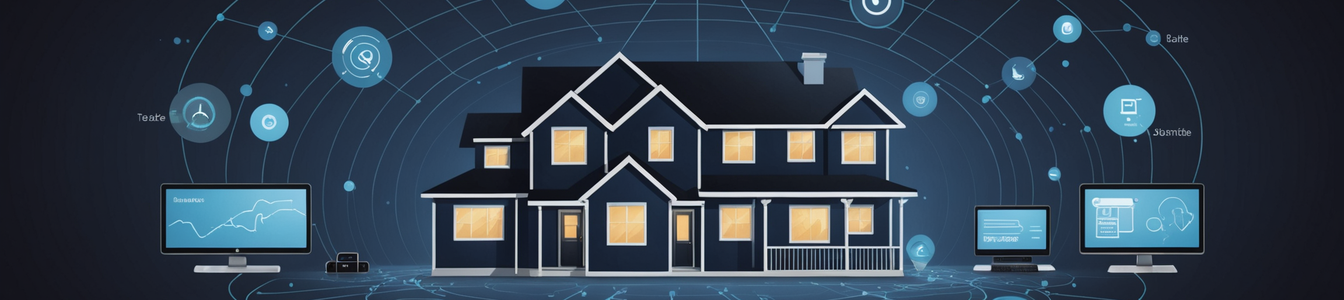
The smart home security landscape is shifting from concerns about individual device vulnerabilities to systemic risks embedded within platform ecosystems. Recent developments across major technology providers reveal a troubling pattern: as platforms evolve through updates, partnerships, and feature expansions, they create fragile dependency chains that introduce new security gaps through complexity and forced migrations.
The Legacy Protocol Sunset Problem
Apple's recent final warning to Home app users represents a critical case study in platform evolution security risks. The company is discontinuing support for legacy smart home protocols, forcing users to migrate to newer standards. While presented as a necessary security upgrade, these forced migrations create immediate vulnerabilities during transition periods. Devices that cannot be updated become security liabilities overnight, while the migration process itself often requires reconfiguration that can introduce misconfigurations or temporary security downgrades. This pattern isn't unique to Apple—similar forced migrations have occurred across the industry whenever platforms deprecate older protocols in favor of newer standards like Matter or Thread.
The Integration Expansion Challenge
Google's expansion of smart button support in Google Home illustrates another dimension of the integration trap. While increased compatibility is marketed as a consumer benefit, each new device type integration expands the attack surface of the entire ecosystem. Smart buttons, which serve as physical triggers for automated routines, create new dependency chains between physical interfaces and digital actions. The security implications are significant: compromised smart buttons could trigger unauthorized routines, manipulate home automation, or serve as entry points to more sensitive systems. As platforms race to support more device categories, they often prioritize compatibility over security auditing, creating integration points that haven't undergone rigorous security testing.
The Third-Party Partnership Risk
The Fermax and Telefónica Tech partnership for IoT-connected video intercoms across Spain, France, and Portugal demonstrates how security responsibilities become fragmented in modern smart home ecosystems. When a hardware manufacturer (Fermax) partners with a connectivity provider (Telefónica Tech), security becomes a shared responsibility with often unclear boundaries. Who is responsible for firmware updates? Who manages cloud security? Who handles vulnerability disclosure? These partnerships, while commercially strategic, create multi-vendor environments where security gaps can emerge in the handoffs between different providers' systems. The European expansion of this partnership means that security vulnerabilities could affect multiple countries simultaneously, creating regional-scale risks.
The Complexity Security Debt
These developments collectively contribute to what security professionals are calling "smart home complexity debt." Each new integration, partnership, or platform update adds layers of complexity that make comprehensive security auditing increasingly difficult. The attack surface expands not just horizontally (more devices) but vertically (more integration layers, more cloud services, more mobile apps, more third-party dependencies).
Traditional security models that focus on perimeter defense or individual device hardening are inadequate for these interconnected environments. A vulnerability in Telefónica's IoT connectivity platform could compromise Fermax video intercoms across three countries. A security flaw in Google's smart button integration could affect thousands of automated routines. A failed migration from Apple's legacy protocols could leave devices in a vulnerable state indefinitely.
Recommendations for Security Professionals
- Map Dependency Chains: Document all integration points, third-party services, and protocol dependencies in smart home deployments
- Establish Migration Protocols: Develop security-first procedures for platform migrations that include security validation at each step
- Audit Integration Points: Treat new device type integrations as potential attack vectors requiring specific security assessment
- Clarify Responsibility Matrices: In multi-vendor environments, establish clear security responsibility agreements with all partners
- Monitor Ecosystem Updates: Track platform announcements for upcoming changes that might force migrations or introduce new risks
The Future of Smart Home Security
As platforms continue to evolve through partnerships like Fermax-Telefónica and feature expansions like Google's smart button support, the security community must shift from device-centric to ecosystem-centric security models. This requires new tools for mapping dependency chains, new frameworks for assessing integration risks, and new approaches to vulnerability management in constantly evolving environments.
The smart home integration trap isn't about any single vulnerability—it's about how the entire system becomes more fragile as it becomes more connected. Security professionals must now consider not just whether individual devices are secure, but whether the connections between them create emergent vulnerabilities that didn't exist in isolation. In an ecosystem where a video intercom partnership in Europe, a protocol migration in California, and a button integration in Mountain View can all interact to create security gaps, the old rules of cybersecurity no longer apply.
Comentarios 0
Comentando como:
¡Únete a la conversación!
Sé el primero en compartir tu opinión sobre este artículo.
¡Inicia la conversación!
Sé el primero en comentar este artículo.