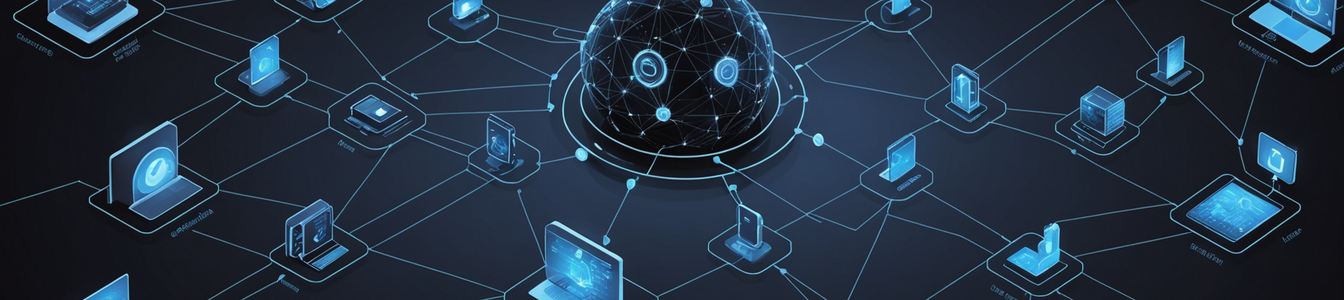
The smart home industry is undergoing a fundamental transformation as technology giants abandon their proprietary approaches in favor of interoperability and cross-platform compatibility. Recent announcements reveal a strategic realignment that could reshape the connected home landscape for years to come.
Breaking Down the Walls: Apple and Samsung's Historic Partnership
The most significant development comes from the unexpected collaboration between Apple and Samsung, two longtime rivals in the consumer electronics space. The integration between Apple's Siri voice assistant and Samsung's SmartThings platform marks a watershed moment for smart home interoperability. For the first time, iPhone users can control their SmartThings-compatible devices using Siri commands, while Samsung device owners can access Apple HomeKit-enabled products through their existing SmartThings interface.
This cross-platform compatibility enables users to create sophisticated automation scenarios that were previously impossible. Imagine telling Siri to activate your Samsung smart oven while checking your LG refrigerator's status through the same voice command. The integration supports five key use cases: unified device control, cross-platform automation, voice-activated scenes, multi-ecosystem security monitoring, and energy management across different manufacturer ecosystems.
Matter Over Thread: The Technical Foundation
Underpinning these interoperability breakthroughs is the Matter standard, which has gained substantial momentum throughout 2025. Quectel's recent announcement of advanced Matter-over-Thread modules demonstrates how hardware manufacturers are embracing this unified approach. These modules provide manufacturers with plug-and-play solutions for Matter compliance, significantly reducing development time and costs while ensuring interoperability across different ecosystems.
The Thread protocol, which forms the networking layer for Matter, offers distinct advantages for smart home security. Unlike traditional Wi-Fi networks, Thread creates mesh networks where each device can act as a router, enhancing both reliability and security through distributed architecture. This approach minimizes single points of failure and creates more resilient networks against cyber attacks.
Aqara's Innovation: Battery-Efficient Presence Sensing
Complementing these software and protocol developments, Aqara's new FP300 Presence Sensor represents a significant advancement in smart home hardware. The device's most impressive feature is its three-year battery life, achieved through sophisticated power management and efficient sensor technology. This extended lifespan addresses one of the major practical barriers to widespread smart home adoption: maintenance overhead.
The FP300 supports both Matter and Zigbee protocols, providing flexibility for integration into existing smart home setups. Its presence detection capabilities go beyond simple motion sensing, using millimeter-wave radar technology to detect subtle movements and even breathing patterns in some configurations. For security professionals, this technology offers enhanced monitoring capabilities while raising important privacy considerations that must be addressed through proper configuration and user education.
Cybersecurity Implications and Challenges
The move toward interoperability presents both opportunities and challenges for cybersecurity professionals. On the positive side, standardized protocols like Matter allow for more consistent security implementations and easier vulnerability management. Security patches can be developed and deployed more efficiently when dealing with unified standards rather than proprietary systems.
However, the interconnected nature of these ecosystems also creates larger attack surfaces. A vulnerability in one manufacturer's implementation could potentially affect devices across multiple platforms. The security community must develop new frameworks for assessing and mitigating risks in these complex, multi-vendor environments.
Privacy concerns also escalate as data flows more freely between different platforms and manufacturers. The industry needs robust data governance frameworks that ensure user privacy while enabling the convenience of cross-platform functionality.
The Future of Smart Home Security
As the smart home wars evolve from ecosystem battles to interoperability competitions, security must remain a foundational consideration. The industry is moving toward a model where security is built into the standards themselves rather than bolted on as an afterthought.
Manufacturers that prioritize security in their Matter implementations will gain competitive advantages as consumers become more aware of cybersecurity risks. The next frontier will likely involve AI-driven security monitoring that can detect anomalous behavior across entire smart home ecosystems, regardless of the manufacturers involved.
For cybersecurity professionals, this shift requires developing expertise in multi-platform security assessment and developing new tools for monitoring complex, interconnected environments. The era of walled gardens may be ending, but the need for robust security has never been greater.
Comentarios 0
Comentando como:
¡Únete a la conversación!
Sé el primero en compartir tu opinión sobre este artículo.
¡Inicia la conversación!
Sé el primero en comentar este artículo.