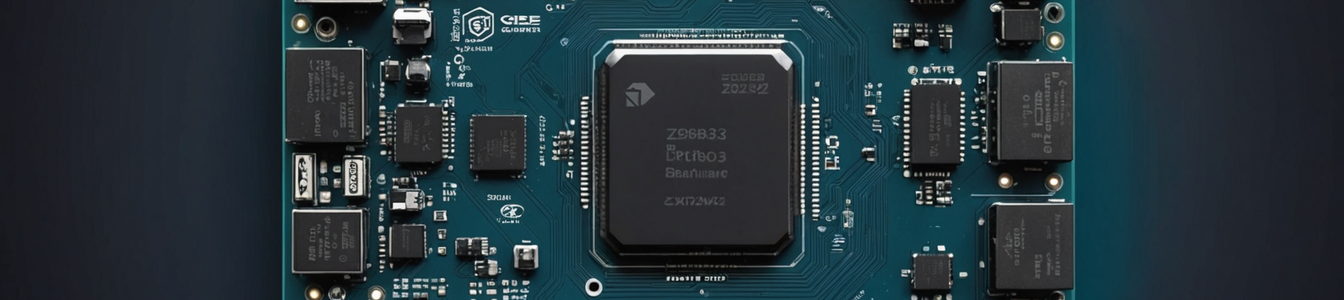
The democratization of smart home technology has reached a new milestone with the advent of ultra-low-cost development boards capable of unifying major wireless protocols. A prominent example is a recently highlighted $5 ESP32-based board that natively supports Zigbee, Thread, Wi-Fi, and the emerging Matter standard. This convergence hardware represents a powerful tool for DIY enthusiasts and prototype developers, enabling the creation of custom bridges, sensors, and controllers that seamlessly integrate disparate smart home ecosystems. However, from a cybersecurity perspective, this leap in accessibility and capability introduces a complex array of new risks that extend far beyond the individual device.
The Allure and Power of Convergence Hardware
The technical promise of such a board is profound. Traditionally, creating interoperable devices required multiple radio chips or expensive System-on-Chip (SoC) solutions. This new generation of affordable hardware collapses these barriers. A single, programmable device can now act as a Thread border router, a Zigbee coordinator, a Wi-Fi client, and a Matter endpoint. For the maker community, this unlocks unprecedented creative potential: custom environmental sensors that report via Thread, legacy device integrations via Zigbee, and unified control through Matter-over-Wi-Fi—all from one cheap, hackable platform.
The Security Paradox: Accessibility vs. Resilience
This is where the security paradox emerges. The features that empower legitimate users—low cost, open programmability, and multi-protocol bridging—are the same features that can be weaponized. The primary risk is no longer just about a vulnerable smart bulb; it's about a vulnerable device that sits at the intersection of multiple network layers. A compromised $5 board can become a Swiss Army knife for an attacker.
Novel Attack Vectors Amplified
- The Super-Bridge Attack Vector: If compromised, this device can act as a malicious bridge. It could intercept, manipulate, or exfiltrate data flowing between different protocol networks (e.g., Zigbee sensor data to the Wi-Fi cloud). It could also be used to inject malicious commands from a Wi-Fi network into a supposedly more isolated Thread or Zigbee mesh.
- Physical Access Exploitation: At $5, these devices are practically disposable. This low cost, coupled with their small form factor, makes them ideal candidates for physical 'drop-and-forget' attacks. A malicious device could be physically placed within range of a home network to establish a covert foothold.
- Firmware and Supply Chain Risks: The DIY nature often involves flashing custom firmware from community repositories. Without rigorous code audits and secure boot mechanisms, these devices can easily run compromised or poorly secured firmware. The supply chain for the boards themselves may also lack verification, risking hardware backdoors.
- Undermining Network Segmentation: Many security-conscious users attempt to segment IoT devices onto separate VLANs or networks. A device that inherently bridges Zigbee/Thread (often considered more secure, low-power networks) with Wi-Fi (the primary internet-facing network) can unintentionally pierce these carefully constructed security boundaries.
- Exploiting the Matter Transition: The Matter standard promises improved security by design. However, during the long transition period, legacy devices and new Matter devices will coexist through bridges. A malicious or vulnerable universal bridge could undermine the security guarantees of the entire Matter ecosystem it's meant to serve.
Mitigation Strategies for the Security-Conscious Community
The solution is not to stifle innovation but to promote secure practices within the DIY and development community:
- Secure Development as a Default: Makers should adopt basic security hygiene: change default credentials, disable unused services, and use secure communication (TLS) where possible, even in prototypes.
- Firmware Vigilance: Source firmware only from trusted, reputable repositories. Implement secure boot if the hardware supports it, to prevent unauthorized firmware execution.
- Network Architecture Awareness: Be acutely aware of the network topology. If a device bridges protocols, understand that a compromise in one domain (Wi-Fi) can lead to a compromise in the other (Zigbee). Consider the risk before deploying a universal bridge in a sensitive environment.
- Physical Security Considerations: Treat these devices with the same physical security concern as any other network device. Be wary of unknown devices appearing on your networks.
- Advocacy for Better Base Security: The community should pressure hardware manufacturers to include basic hardware security features (like secure element slots or enabled secure boot) even on these low-cost boards, making security the easier default path.
Broader Implications for IoT Security
This trend signals a need to evolve security frameworks. Traditional consumer IoT security often focuses on sealed, vendor-locked devices. The rise of powerful, open, and affordable multi-protocol hardware blurs the lines between consumer product, development tool, and network infrastructure. Security assessments must now consider the "meta-risk" of devices designed explicitly for integration and bridging.
Penetration testers and red teams will need to include such universal bridges in their attack surface enumeration. Blue teams and home security architects must develop strategies to monitor and control the proliferation of these devices within their networks. The $5 board is a symbol of a larger shift: the attack surface of the smart home is becoming more powerful, more interconnected, and more accessible to both creators and attackers alike. The responsibility for security is increasingly distributed, falling not just on manufacturers, but on the developers and enthusiasts who wield these powerful new tools.
Comentarios 0
Comentando como:
¡Únete a la conversación!
Sé el primero en compartir tu opinión sobre este artículo.
¡Inicia la conversación!
Sé el primero en comentar este artículo.