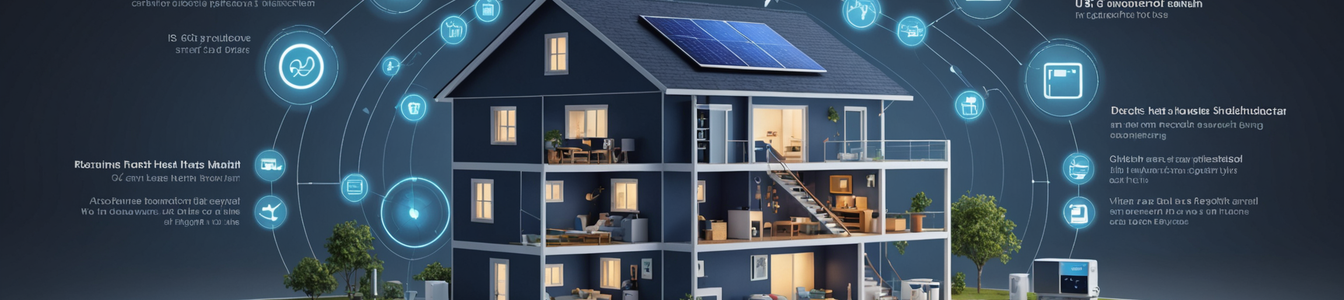
The smart home revolution, once heralded as the pinnacle of convenience and efficiency, is revealing unexpected financial and technical consequences that extend far beyond initial security concerns. As households accumulate Internet of Things (IoT) devices, from smart speakers to connected appliances, the hidden costs are becoming increasingly apparent in both electricity bills and network performance.
Recent analyses indicate that the average smart home with multiple connected devices consumes significantly more electricity than traditional households. The constant connectivity requirements, cloud communication, and always-on standby modes create a persistent energy drain that accumulates over time. Unlike conventional appliances that operate intermittently, smart devices maintain continuous network connections and background processes, contributing to what energy experts call 'phantom load' or 'vampire power' consumption.
This energy impact is compounded by the aggressive market strategies of major technology companies. Amazon's approach of selling Echo Dot devices at near-cost prices exemplifies the industry's push to establish market dominance through accessible entry points. While consumers benefit from lower upfront costs, the long-term operational expenses—including increased electricity consumption and potential need for network upgrades—represent a significant financial burden that often goes uncalculated during purchase decisions.
Network infrastructure represents another critical area of concern. The proliferation of smart devices is overwhelming conventional home Wi-Fi systems, with typical households now supporting 20-30 connected devices simultaneously. This device density creates network congestion, reduces bandwidth availability for essential applications, and introduces new security vulnerabilities. Many IoT devices operate on outdated network protocols or lack proper security implementations, making them potential entry points for cyber attacks.
From a cybersecurity perspective, the situation presents multiple challenges. Security professionals must now consider not only device-level vulnerabilities but also the broader infrastructure implications. Overloaded networks can mask malicious activity, while energy consumption patterns could potentially reveal sensitive information about household behaviors and occupancy.
The technical limitations of many smart home devices exacerbate these issues. Limited processing power often prevents robust security implementations, and the focus on cost reduction frequently comes at the expense of security features. Additionally, the heterogeneous nature of smart home ecosystems—with devices from multiple manufacturers operating on different standards—creates compatibility issues and security gaps that are difficult to manage comprehensively.
Addressing these challenges requires a multi-faceted approach. Energy efficiency standards need updating to account for the operational costs of connected devices. Network management tools must evolve to handle the density of modern smart homes while maintaining security visibility. Manufacturers should be encouraged to implement power-saving features and more efficient connectivity protocols without compromising security.
For cybersecurity professionals, this means expanding risk assessments to include infrastructure impacts and operational costs. Security frameworks should incorporate energy consumption monitoring as a potential indicator of compromise, while network segmentation strategies must account for the unique characteristics of IoT devices.
The smart home ecosystem's growth shows no signs of slowing, making it imperative that security, efficiency, and infrastructure considerations evolve in tandem. Without comprehensive approaches that address these hidden costs, the convenience of smart homes may come at a price that exceeds their apparent value.
Comentarios 0
Comentando como:
¡Únete a la conversación!
Sé el primero en compartir tu opinión sobre este artículo.
¡Inicia la conversación!
Sé el primero en comentar este artículo.