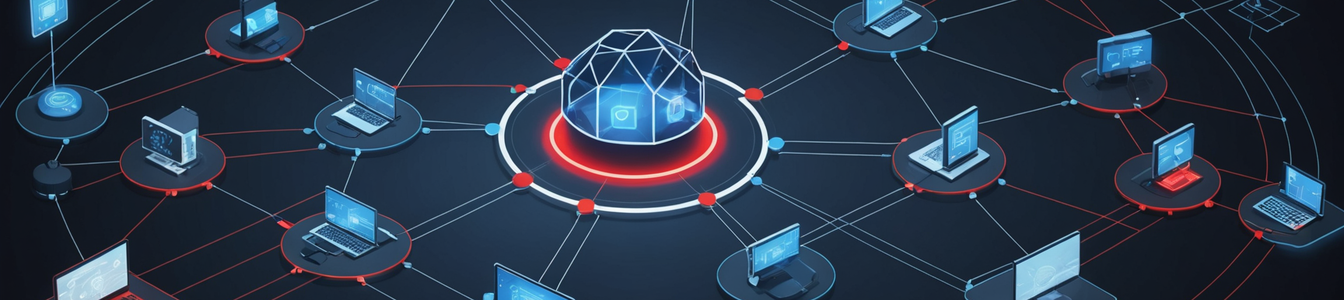
The smart home revolution is accelerating toward enterprise-grade networking capabilities, with 10 Gigabit Ethernet (10 GbE) and enhanced Power over Ethernet++ (PoE++) technologies becoming increasingly common in residential deployments. This infrastructure evolution, while promising unprecedented performance and convenience, introduces complex cybersecurity challenges that security professionals must urgently address.
Recent market developments highlight this trend. Samsung's launch of the SmartThings Hub 2 in the US market represents a significant leap in smart home centralization. The new hub features a faster CPU and native Matter support, creating a more powerful but potentially more attractive target for attackers. The Matter protocol, designed to unify smart home communications across different ecosystems, could paradoxically create single points of failure if not properly secured.
The migration to 10 GbE networks in residential settings enables massive data throughput but also expands the attack surface dramatically. High-speed networks can facilitate faster malware propagation and more efficient lateral movement for attackers who breach perimeter defenses. The increased bandwidth allows for more sophisticated attacks to be executed in shorter timeframes, potentially overwhelming traditional security monitoring systems.
Power over Ethernet++ technology introduces additional security considerations. By delivering both data and power through a single cable, PoE++ creates dependencies that could be exploited. An attacker compromising a PoE++ switch could potentially disrupt both communications and power to multiple critical devices simultaneously, creating cascading failures across the smart home ecosystem.
The centralized nature of next-generation smart home hubs creates concerning security implications. With more processing power and control over connected devices, a compromised hub could grant attackers unprecedented access to the entire home network. The integration of Matter protocol support, while improving interoperability, means that vulnerabilities in the protocol implementation could affect all compatible devices simultaneously.
Network segmentation becomes increasingly challenging in these high-speed environments. The performance benefits of 10 GbE networks often lead to flattened network architectures that contradict security best practices. Security teams must balance performance requirements with the need to isolate critical systems and implement proper access controls.
Firmware security represents another critical concern. The enhanced processing capabilities of new smart home devices require more complex firmware, which in turn increases the potential for vulnerabilities. Regular security updates and patch management become essential but challenging in environments with numerous connected devices from different manufacturers.
The convergence of operational technology (OT) and information technology (IT) in smart homes blurs traditional security boundaries. Devices that control physical systems like lighting, climate control, and security systems now share networks with traditional computing devices, creating potential pathways for attackers to move from digital to physical domain attacks.
Privacy implications cannot be overlooked. The increased data processing capabilities of next-generation smart home infrastructure enable more extensive data collection and analysis. This creates both security and privacy risks, as compromised systems could expose detailed behavioral patterns and personal information.
Security professionals must develop specialized strategies for these evolving environments. This includes implementing zero-trust architectures, conducting regular security assessments of smart home components, establishing incident response plans specific to IoT compromises, and ensuring proper encryption of both data in transit and at rest.
The industry needs standardized security frameworks for high-speed smart home networks. Current security practices often lag behind technological advancements, leaving gaps that attackers can exploit. Collaboration between device manufacturers, network providers, and security researchers is essential to establish comprehensive security standards.
As smart home infrastructure continues to evolve toward enterprise-grade capabilities, the cybersecurity community must proactively address these emerging challenges. The convenience and performance benefits of next-generation networks must not come at the cost of compromised security and privacy.
Comentarios 0
Comentando como:
¡Únete a la conversación!
Sé el primero en compartir tu opinión sobre este artículo.
¡Inicia la conversación!
Sé el primero en comentar este artículo.