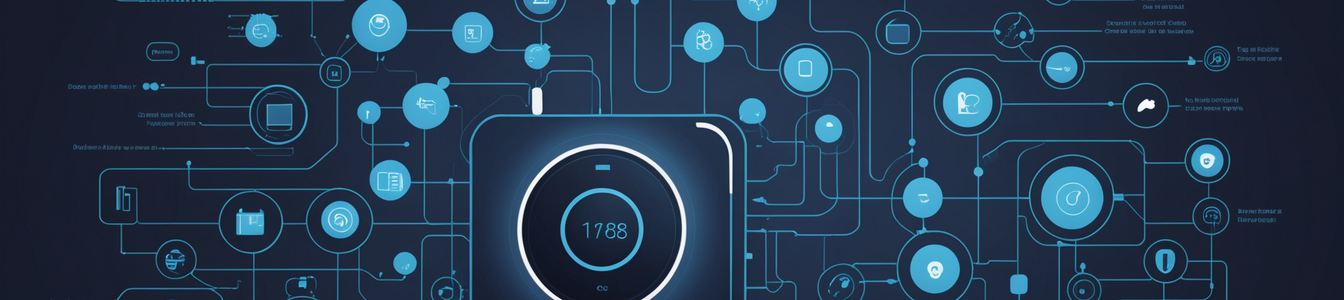
The modern smart home has become a battlefield—not of competing ecosystems, but of wireless signals. As households accumulate dozens of Internet of Things (IoT) devices, from thermostats and security cameras to voice assistants and smart appliances, they're unwittingly creating a perfect storm of network congestion that security experts warn is opening critical security vulnerabilities. This 'Wi-Fi war' represents one of the most overlooked systemic threats in consumer cybersecurity today.
The Congestion Crisis: More Devices, Same Airspace
Most smart home devices operate on the crowded 2.4GHz Wi-Fi band, which offers only three non-overlapping channels in the United States. Unlike traditional computing devices that can efficiently share bandwidth, IoT devices often transmit small but frequent packets of data, creating constant 'chatter' that congests the network. When multiple devices compete for the same channel—a common occurrence in dense smart home environments—packet collisions increase, latency spikes, and devices begin dropping connections.
This congestion isn't merely an inconvenience. From a security perspective, it creates multiple failure points. Devices that lose stable connections may fail to receive critical security updates, revert to less secure communication protocols, or expose management interfaces during reconnection attempts. Security cameras might buffer footage locally instead of encrypting and transmitting it immediately, creating windows of vulnerability. Smart locks could temporarily lose cloud authentication, falling back to less secure local controls.
The Security Implications of Network Instability
The cybersecurity risks extend far beyond simple connectivity issues. When devices struggle to maintain connections, several critical security mechanisms break down:
- Patch Management Failure: IoT devices that can't maintain stable connections often miss security updates. Many devices only check for updates when connected, and interrupted connections can corrupt update processes, leaving devices running vulnerable firmware indefinitely.
- Authentication Breakdown: Cloud-dependent devices like smart thermostats may lose their authentication tokens during disconnections. Some devices, when they reconnect, may use simplified re-authentication processes that are more vulnerable to interception or replay attacks.
- Encryption Gaps: During periods of high congestion, some devices may downgrade their encryption or temporarily store unencrypted data locally. This is particularly concerning for privacy-sensitive devices like cameras and microphones.
- Network Mapping Opportunities: The 'chatter' of congested networks provides attackers with rich data for device fingerprinting. By analyzing traffic patterns even when encrypted, attackers can identify device types, manufacturers, and potentially vulnerable firmware versions.
Common Setup Mistakes That Exacerbate the Problem
Consumer behavior significantly worsens these security risks. Common setup mistakes include:
- Single Network Architecture: Placing all devices—from low-security smart bulbs to high-security cameras—on the same network segment creates a 'flat' network where a compromised low-security device can serve as a pivot point to attack more critical systems.
- Default Channel Settings: Most consumers never change their router's default channel settings, leading to neighborhood-wide congestion on the same channels and making all networks in the area more vulnerable.
- Over-reliance on Cloud Services: Many devices become partially or completely non-functional without internet connections, as highlighted by smart thermostats that lose programming capabilities when offline. This creates pressure to maintain connections at any cost, sometimes at the expense of security.
- Ignoring Device Density Limits: Consumers rarely consider the maximum device capacity of their routers, often exceeding recommended limits and pushing hardware beyond its secure operational parameters.
The AI Management Paradox
Emerging AI-powered smart home management systems promise to optimize energy use and device coordination, but they introduce additional security considerations. These systems require constant device communication and data aggregation, potentially increasing network traffic and creating single points of failure. While AI literacy might help consumers optimize energy savings, it doesn't necessarily translate to security awareness regarding network congestion risks.
Mitigation Strategies for Security Professionals
Addressing this systemic threat requires a multi-layered approach:
- Network Segmentation: Implement VLANs or separate physical networks for different device categories. Isolate high-security devices (cameras, locks) from lower-security devices (lights, plugs).
- Dual-Band Management: Utilize 5GHz networks for high-bandwidth, security-critical devices while reserving 2.4GHz for essential IoT devices only.
- Channel Optimization: Regularly analyze Wi-Fi channel usage and select the least congested channels. Consider enterprise-grade access points with better channel management capabilities for dense deployments.
- Local Control Prioritization: Choose devices that maintain basic functionality without cloud connectivity. Devices with local processing and storage capabilities are less vulnerable to connection-based attacks.
- Consumer Education: Security professionals must educate consumers about the security implications of device density, not just the convenience features.
The Future of Secure Smart Home Networks
The industry needs to move beyond treating smart home networks as simple extensions of traditional computing networks. Future solutions may include:
- IoT-Specific Protocols: Wider adoption of protocols like Thread and Matter that use mesh networking to reduce Wi-Fi congestion.
- Hardware Requirements: Minimum security and network management standards for routers sold as 'smart home ready.'
- Automated Security Monitoring: Built-in network monitoring that alerts users to congestion-related security risks.
Conclusion
The smart home Wi-Fi congestion crisis represents a fundamental design flaw in how we've approached IoT security. By focusing primarily on individual device security while ignoring the systemic risks of network congestion, manufacturers and consumers have created environments where security degrades as convenience increases. For cybersecurity professionals, this represents both a challenge and an opportunity—to redesign smart home security from the network layer up, and to educate consumers that in the smart home, connectivity isn't just about convenience; it's the foundation of security.
As device density continues to increase with the adoption of more IoT products, addressing these congestion-related security blind spots will become increasingly critical. The 'Wi-Fi war' in our homes isn't just slowing our streaming videos—it's quietly undermining the security foundations of our connected lives.
Comentarios 0
Comentando como:
¡Únete a la conversación!
Sé el primero en compartir tu opinión sobre este artículo.
¡Inicia la conversación!
Sé el primero en comentar este artículo.