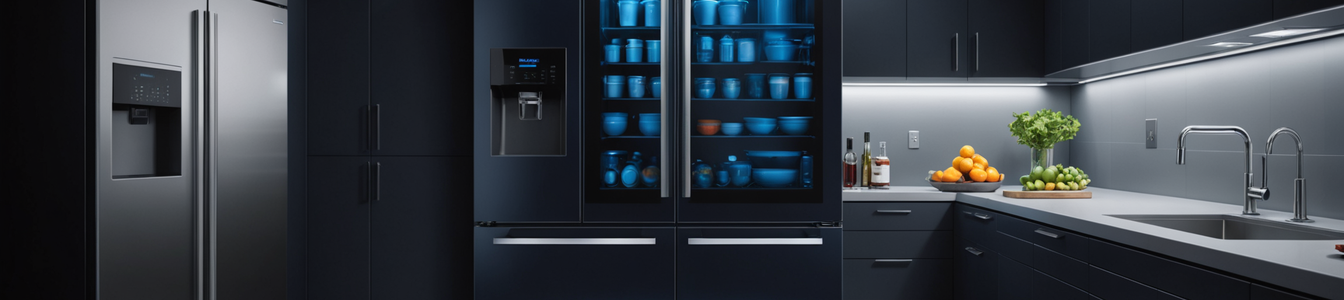
The vision of the future home, prominently displayed at global design fairs like Milan Design Week 2026 and the upcoming CBD Guangzhou 2026, is one of seamless, intelligent integration. No longer confined to living rooms with smart speakers, the new frontier is the kitchen. Here, premium brands are reimagining appliances not as standalone tools, but as the central nervous system of the domestic network. This shift, while offering remarkable lifestyle benefits, introduces profound and often overlooked cybersecurity challenges, effectively turning the kitchen into a high-risk command center.
From Isolated Appliance to Network Hub
The traditional security model for consumer IoT often treated kitchen appliances as low-risk, isolated devices. A smart oven's vulnerability might mean a spoiled dinner, not a compromised network. The next-generation ecosystems showcased in Milan and planned for display in Guangzhou shatter this assumption. Concepts like Miele's 'Designed to Move with You' illustrate a holistic approach where the refrigerator communicates with the oven to suggest recipes based on inventory, the ventilation system syncs with cooktop activity, and the entire suite manages energy consumption in concert with the home's power grid. This requires constant, sophisticated inter-device communication and cloud connectivity, embedding these appliances deep into the home's digital fabric.
The Convergence Vulnerability
This deep integration creates a critical 'convergence vulnerability.' The attack surface expands dramatically. An attacker is no longer targeting a single device but a tightly coupled ecosystem. A vulnerability in the less-secure communication protocol of a smart dishwasher could serve as the initial entry point. Once inside, an attacker can pivot laterally across the integrated kitchen network. Because these appliances are now central hubs, they may have privileged access or trust relationships with other critical systems—home automation controllers, security cameras, or even personal computers connected to the same network for convenience.
The risks are multifaceted. Data Privacy Breaches: These appliances collect vast amounts of sensitive data: eating habits, grocery purchases, daily routines, and even audio/video feeds from smart displays. A compromised ecosystem becomes a treasure trove for profiling. Ransomware and Sabotage: Imagine a ransomware attack that locks not just your computer, but your refrigerator, oven, and coffee maker, demanding payment to restore functionality to your kitchen. Physical Safety Threats: While safety interlocks are paramount, manipulated firmware in an oven or induction cooktop could, in theory, create hazardous conditions. Network Pivoting: The primary concern for cybersecurity professionals is the 'bridge' function. A high-end kitchen hub, with its constant external cloud connections and internal network privileges, is the perfect beachhead for an attacker to move from the IoT domain to the IT domain—infiltrating work laptops, NAS devices, or home servers.
The Security Lag in Design-First Development
The core of the problem lies in the development lifecycle. These products are born on the show floors of Milan and Guangzhou, where aesthetics, user experience, and 'wow factor' integration are the primary drivers. Security is frequently an afterthought, bolted on late in the process. The complex software stacks required for this level of interoperability—often built on open-source components with known vulnerabilities—are not subjected to the same rigorous penetration testing and secure development practices as traditional IT hardware.
Furthermore, the supply chain for these integrated appliances is complex. A single hub may contain components and software from dozens of third-party vendors, each a potential vector for compromise. Patching is another nightmare; convincing a consumer to update the firmware on their refrigerator is harder than updating a smartphone, and coordinated security updates across an entire ecosystem from one manufacturer are virtually unheard of.
Recommendations for the Cybersecurity Community and Consumers
For cybersecurity professionals, this trend necessitates a shift in home security assessments. Network segmentation is no longer a best practice but a critical necessity. High-risk IoT ecosystems, especially converged hubs like smart kitchens, must be placed on isolated VLANs, strictly firewalled from primary work and personal device networks. Intrusion detection systems (IDS) must evolve to recognize anomalous traffic patterns between appliances.
Manufacturers must be pressured to adopt a 'security-by-design' mandate. This includes implementing secure boot, hardware-based Trusted Platform Modules (TPMs) for encryption, regular and automated security updates, and clear vulnerability disclosure programs. The industry needs standards that go beyond basic connectivity (like Matter) to include mandatory security baselines for interconnected appliance suites.
For consumers, awareness is key. Purchasing a connected kitchen system should involve asking about its security features: How are updates delivered? What data is collected, and where is it stored? Can the device's cloud connectivity be disabled for local-only operation? The allure of a fully automated kitchen must be balanced with an understanding of its digital footprint.
The showcases at Milan Design Week 2026 and CBD Guangzhou 2026 are a glimpse into a compelling domestic future. However, without a parallel and urgent focus on cybersecurity resilience, the dream of a connected kitchen hub risks becoming a backdoor into our most private spaces. The industry's race to build the ultimate command center must be matched by a commitment to fortifying its digital walls. The kitchen, the heart of the home, must not become its weakest link.
Comentarios 0
Comentando como:
¡Únete a la conversación!
Sé el primero en compartir tu opinión sobre este artículo.
¡Inicia la conversación!
Sé el primero en comentar este artículo.