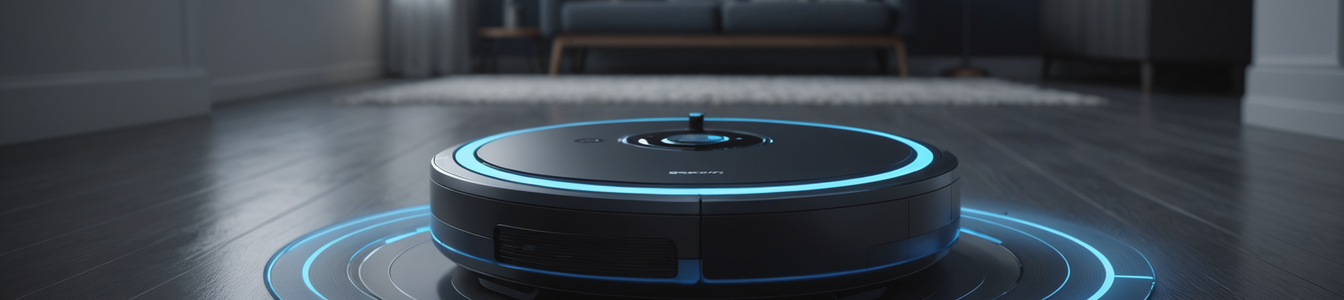
The smart home revolution has ushered in a new era of convenience, with autonomous cleaning robots becoming commonplace in households and businesses. At industry events like Interclean 2026, manufacturers like EZVIZ showcase expansive product lines, promising 'hassle-free solutions' and 'all-scenario smart cleaning' that seamlessly transition from domestic floors to commercial spaces. Simultaneously, companies like Cecotec are diversifying the ecosystem with specialized robots, such as the Conga Windroid 1490 window cleaner, designed to navigate and clean glass surfaces without human intervention. While the marketing focuses on labor-saving benefits, a profound and under-examined shift is occurring within our private spaces: the systematic, silent, and persistent digital mapping of our most intimate environments by these robotic devices.
From Convenience to Cartography: The Data Goldmine
Modern cleaning robots are no longer simple bump-and-go machines. They are sophisticated data-gathering platforms. To navigate efficiently, they employ a suite of sensors including high-resolution cameras, LiDAR (Light Detection and Ranging), ultrasonic sensors, and inertial measurement units. This sensor fusion allows a robot to create a highly accurate, multi-dimensional map of its environment. This map includes not just the layout of rooms and furniture placement but, through advanced computer vision and AI, can infer the type of objects (e.g., a child's toy, a medication bottle, a work laptop), floor materials, and even habitual pathways. The EZVIZ ecosystem's push into 'all-scenario' cleaning means these maps are growing in scope and detail, covering everything from living rooms and bedrooms to office layouts and retail backrooms.
The Cecotec Conga Windroid 1490, while focused on windows, exemplifies another vector. To clean a window effectively, it must understand its boundaries, detect frames, and navigate a vertical plane. The data required to perform this task—a precise map of window sizes, locations, and architectural features—is itself valuable. When aggregated, this information can reveal building layouts, room counts, and even the type of construction.
The Cybersecurity and Privacy Implications: A Silent Observer in Your Home
The core security issue lies in the lifecycle of this mapping data. Where is it stored? How is it transmitted? Who owns it? And how is it protected?
- Data Ownership and Consent Ambiguity: End-user license agreements (EULAs) are often vague. While a user may believe they are simply buying a vacuum, they are often granting permission for the device to collect, transmit, and store a detailed blueprint of their private life. The shift from homes to businesses, as seen with EZVIZ's expansion, compounds this, potentially exposing proprietary commercial layouts.
- Insecure Data Transmission and Storage: Many consumer IoT devices, including early robot vacuums, have been found to use unencrypted or weakly encrypted communication channels between the robot, the user's smartphone app, and the manufacturer's cloud servers. A detailed home map transmitted insecurely is a goldmine for a threat actor. Furthermore, cloud storage of these maps creates a central repository that is a high-value target for cyberattacks or insider threats.
- Secondary Use and Data Sharing: The business model for many IoT companies is not the hardware sale but the data. Anonymized' mapping and behavioral data could be packaged and sold to third parties for purposes ranging from targeted advertising to urban planning or insurance risk assessment. The line between device functionality and data harvesting is dangerously blurred.
- Persistence and Permanence: Unlike a temporary camera feed, a map is a persistent data structure. It remains on the device and in the cloud, often updated but rarely fully deleted. This creates a permanent digital record of a home's interior that could be subpoenaed, hacked, or leaked.
- Expanded Attack Surface: The integration of these robots into broader smart home ecosystems (via Wi-Fi, Bluetooth, or proprietary hubs) creates new attack vectors. A compromised cleaning robot could serve as a pivot point to attack more sensitive devices on the same network, such as security cameras, computers, or smart locks. Its detailed map would provide the attacker with perfect knowledge of the physical environment.
The Path Forward: Demanding Transparency and Security by Design
The cybersecurity community must lead the charge in holding manufacturers accountable. This involves:
- Advocating for Local-Only Processing: Encouraging an industry shift where sensitive mapping data is processed and stored exclusively on the device itself, never leaving the local network unless explicitly encrypted and authorized by the user for a specific purpose (like remote troubleshooting).
- Pushing for Standardized Security Frameworks: Supporting and developing security standards specific to mapping and spatial data in consumer IoT. This includes mandatory strong encryption for data in transit and at rest, secure boot processes, and regular, transparent security patch cycles.
- Promoting Radical Transparency: Demanding that manufacturers provide clear, concise, and accessible privacy policies that explicitly state what data is collected, how it is used, where it is stored, and with whom it is shared. 'Privacy by design' must become a core engineering principle, not a marketing afterthought.
- Conducting Independent Security Audits: Researchers must continue to tear down these devices, analyze their firmware, and test their network traffic to identify vulnerabilities before malicious actors do. Public disclosure of findings pressures companies to improve.
The narrative of 'hassle-free cleaning' is seductive, but it masks a significant transformation in data collection within private spheres. Smart cleaning robots are, by necessity, becoming expert cartographers of our lives. Without urgent and rigorous attention from the cybersecurity industry, regulators, and informed consumers, the convenience of a clean floor may come at the unacceptable cost of a deeply compromised private space. The silent observers must be brought under scrutiny before their maps fall into the wrong hands.
Comentarios 0
Comentando como:
¡Únete a la conversación!
Sé el primero en compartir tu opinión sobre este artículo.
¡Inicia la conversación!
Sé el primero en comentar este artículo.