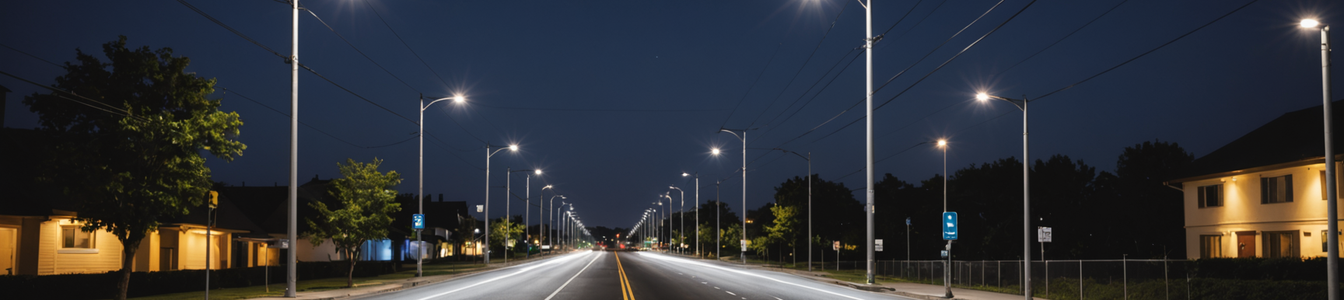
The vision of the smart city is materializing not just in centralized control rooms, but in the very fabric of our streets. A key driver of this transformation is the humble streetlight, reimagined as a networked, solar-powered, multi-sensor platform. Initiatives like Signify's "Har Gaon Roshan" (Every Village Illuminated) in India exemplify how corporate social responsibility is accelerating the deployment of this technology, bringing light and digital connectivity to remote areas. Similarly, municipalities worldwide are adopting smart solar lighting systems as a cornerstone of modern digital infrastructure. However, this rapid proliferation is creating a vast, distributed, and often insecure attack surface that cybersecurity professionals can no longer afford to ignore.
From Light Pole to Data Node: The Anatomy of a Threat
Modern smart streetlights are no longer simple illumination devices. They are converged infrastructure platforms. A single unit typically incorporates:
- Solar Panel & Battery: For energy independence, creating a physically distributed and always-on asset.
- IoT Controller & Connectivity: Using cellular (4G/5G), LPWAN (LoRaWAN, NB-IoT), or mesh networks for remote management and data transmission.
- Sensor Suite: Capabilities can include motion detection, ambient light sensing, environmental monitors (air quality, temperature, humidity), and acoustic sensors.
- Additional Payloads: Integration points for public Wi-Fi access points, CCTV cameras, digital signage, and emergency call buttons.
This convergence is the core of both its utility and its risk. A compromised streetlight is no longer just a darkened street; it can become a listening post, a botnet node, a platform for jamming communications, or a pivot point into broader municipal networks.
The Cybersecurity Threat Landscape for Smart Infrastructure
The attack vectors against these systems are multifaceted and carry high-impact consequences:
- Large-Scale Botnets & DDoS Attacks: Insecure default credentials, unpatched firmware, and vulnerable communication protocols can allow threat actors to hijack thousands of devices. These "thingbots" can be weaponized for massive Distributed Denial-of-Service (DDoS) attacks, leveraging the devices' permanent power supply and network connectivity.
- Privacy Invasion & Mass Surveillance: The integration of cameras and acoustic sensors turns streetlights into potential surveillance assets. Unauthorized access could allow real-time tracking of individuals, harvesting of biometric data, or eavesdropping. The aggregation of environmental and motion data can also reveal patterns of life, occupancy of homes, and daily routines of entire communities.
- Physical Safety & Public Disruption: An attacker gaining control of a lighting grid could orchestrate city-wide blackouts or manipulate lighting patterns to create hazardous conditions, facilitate crime, or cause social panic. Tampering with integrated emergency call buttons or public announcement systems further escalates the physical risk.
- Supply Chain & Lifecycle Vulnerabilities: Many projects are driven by cost-efficiency and rapid deployment. This can lead to the use of OEM devices with hard-coded backdoors, insecure third-party components in the solar controllers or IoT modules, and a lack of secure update mechanisms over their 10-15 year lifespan.
- Network Pivoting to Critical Systems: Often, the lighting network is connected to broader municipal IT or operational technology (OT) networks for management. A breach in the ostensibly low-security lighting system can serve as a beachhead for lateral movement into more sensitive systems controlling traffic lights, water treatment, or power distribution.
Bridging the Governance Gap: A Call to Action
The fundamental challenge lies in a governance gap. These assets are purchased and managed by municipal departments focused on urban planning, sustainability, and public works—not cybersecurity. Security is frequently an afterthought, bolted on via basic network segmentation, if at all.
The cybersecurity community must engage proactively with this new reality:
- Develop Specialized Frameworks: Existing IoT security frameworks need adaptation for the unique scale, longevity, and public safety implications of critical urban IoT. Standards must address solar-powered operation, outdoor resilience, and secure remote management.
- Advocate for Security-by-Design in Procurement: Cybersecurity professionals should influence municipal procurement policies to mandate security requirements: hardware-based root of trust, secure over-the-air (OTA) update capabilities, encrypted communications, and clear vendor support lifecycle commitments.
- Focus on Visibility and Monitoring: Security operations centers (SOCs) must develop capabilities to monitor these assets. Behavioral analytics can detect anomalies like unexpected data exfiltration, firmware change attempts, or devices communicating with malicious command-and-control servers.
- Convergence of IT/OT/IoT Security: Defending smart cities requires breaking down silos. Teams responsible for traditional IT, industrial control systems (OT), and now public IoT must collaborate on shared threat intelligence and incident response plans.
Conclusion: Illuminating the Risks
Programs like "Har Gaon Roshan" highlight the positive societal potential of this technology. However, the security and privacy implications are profound and parallel. As solar-powered smart streetlights become the default for urban and rural development, they weave a digital nervous system into our physical world—one that is currently fragile. The cybersecurity imperative is clear: to secure the foundations of our future cities, we must start by securing the lights above our streets. The convergence of physical infrastructure, renewable energy, and data collection is not just a feature of modern urbanism; it is the new frontline for critical infrastructure defense.
Comentarios 0
Comentando como:
¡Únete a la conversación!
Sé el primero en compartir tu opinión sobre este artículo.
¡Inicia la conversación!
Sé el primero en comentar este artículo.