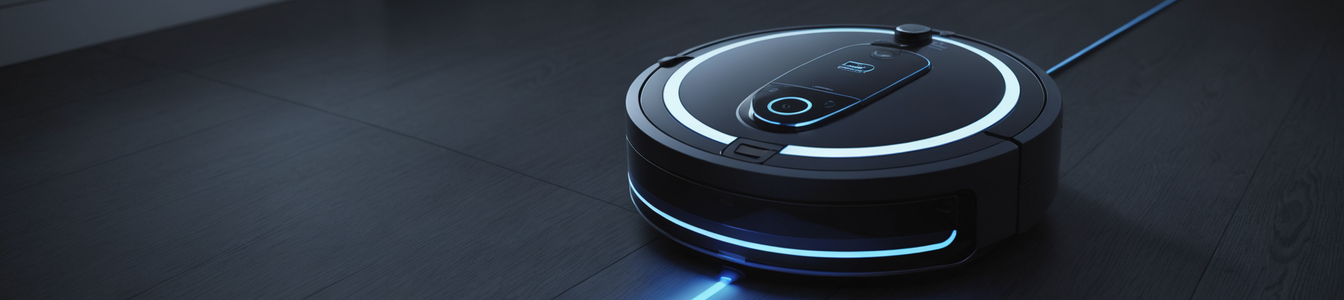
A disturbing demonstration of Internet of Things (IoT) insecurity has emerged from an unlikely source: the humble robot vacuum cleaner. Security researchers have uncovered a critical vulnerability in DJI's Romo smart vacuum that allowed a single individual to remotely access and control approximately 7,000 devices across 24 countries, turning ordinary household appliances into surveillance tools with just a gaming controller.
The incident began when a security researcher, experimenting with network scanning tools, accidentally discovered they could access multiple Romo vacuum cleaners not registered to their account. Using a Sony PlayStation 5 controller connected to their computer, the researcher found they could not only view live camera feeds from the devices but also control their movement, activate microphones, and access stored environmental data about the homes they inhabited.
Technical analysis reveals the vulnerability stemmed from multiple security failures in the Romo's implementation. The devices used unsecured communication protocols that failed to properly authenticate connection requests. More concerningly, the cloud infrastructure supporting the vacuums allowed cross-account access through improperly implemented API endpoints, essentially permitting any authenticated user to access devices registered to other accounts.
'This wasn't a sophisticated attack requiring advanced tools,' explained cybersecurity analyst Mark Richardson. 'The researcher essentially stumbled upon an open door that should have been locked. With basic network scanning software and a standard gaming controller, they gained unprecedented access to private homes across multiple continents.'
The compromised devices provided attackers with several dangerous capabilities:
- Live Video Surveillance: Continuous streaming from the vacuum's built-in navigation cameras
- Audio Monitoring: Access to microphone feeds capable of capturing conversations
- Environmental Intelligence: Data about home layouts, room sizes, and cleaning patterns
- Physical Control: Remote manipulation of vacuum movement throughout homes
This breach represents one of the most significant IoT security failures in recent years due to its scale and the sensitivity of the accessed data. Unlike traditional data breaches that expose financial information, this incident provided real-time visual and auditory access to private living spaces.
'The psychological impact of this breach cannot be overstated,' said Dr. Elena Martinez, a privacy researcher at Stanford University. 'These devices weren't just leaking data; they were providing live windows into people's most private spaces. The potential for blackmail, stalking, or corporate espionage is enormous when you can literally see and hear what's happening inside someone's home.'
The global distribution of affected devices—spanning North America, Europe, Asia, and Australia—highlights how IoT security failures can transcend geographical boundaries. Security logs showed that multiple unauthorized accesses occurred before the vulnerability was discovered, suggesting the flaw may have been exploited by other parties.
DJI has responded to the disclosure by temporarily disabling remote access features while developing a security patch. However, the incident raises broader questions about IoT security practices:
Manufacturer Responsibility: Many IoT manufacturers prioritize convenience and cost over security, implementing minimal authentication and using vulnerable communication protocols.
Consumer Awareness: Most smart device owners lack understanding of the security risks associated with connected appliances, particularly those with cameras and microphones.
Regulatory Gaps: Current regulations often fail to address the unique security challenges posed by IoT devices, especially regarding continuous security updates and vulnerability disclosure.
'The fundamental problem is that we're bringing internet-connected devices with cameras and microphones into our homes without adequate security safeguards,' noted cybersecurity attorney James Wilson. 'Manufacturers treat these as simple appliances when they're actually sophisticated computing devices that happen to clean floors.'
Security professionals recommend several immediate actions for consumers with smart home devices:
- Audit Connected Devices: Inventory all IoT devices in your home and research their security histories
- Segment Networks: Place IoT devices on separate network segments from computers and smartphones
- Disable Unnecessary Features: Turn off cameras, microphones, and remote access when not needed
- Regular Updates: Ensure all devices receive security patches promptly
- Strong Authentication: Use unique, complex passwords for device accounts and enable two-factor authentication where available
For the cybersecurity community, this incident serves as a critical case study in IoT security failure. It demonstrates how seemingly benign devices can become significant threats when security is treated as an afterthought rather than a fundamental design requirement.
'The Romo breach should be a wake-up call for the entire IoT industry,' concluded Richardson. 'We need security-by-design principles, independent security audits, and transparent vulnerability disclosure processes. Until then, every connected device in our homes represents a potential entry point for intruders.'
As smart home adoption continues to accelerate, balancing convenience with security will remain one of the most pressing challenges in consumer technology. This incident makes clear that the stakes extend far beyond stolen data to include fundamental violations of physical privacy and personal security.
Comentarios 0
Comentando como:
¡Únete a la conversación!
Sé el primero en compartir tu opinión sobre este artículo.
¡Inicia la conversación!
Sé el primero en comentar este artículo.