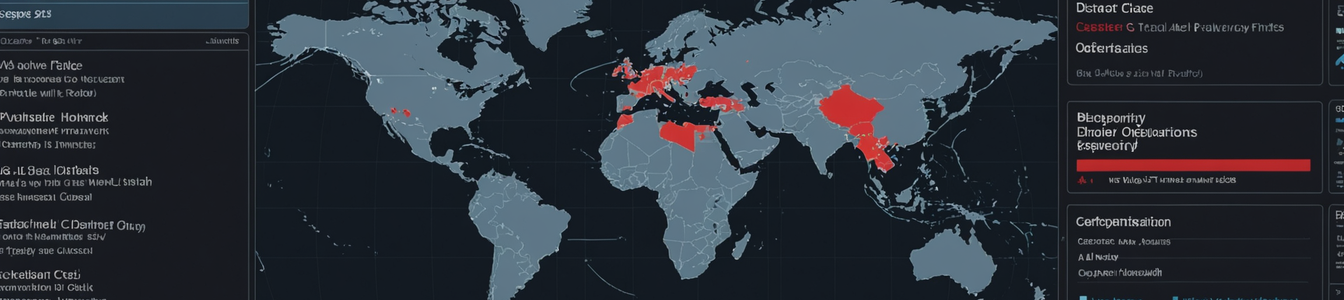
The Ceasefire Blind Spot: Why SOCs Are Most Vulnerable When Geopolitical Tensions Ease
Headlines on April 8, 2026, were dominated by a single narrative: financial euphoria. Following the announcement of a ceasefire between the United States and Iran, global stock markets, led by the Dow Jones, experienced a historic rally with futures soaring by nearly 1,300 points. Simultaneously, oil prices plummeted as immediate supply fears subsided. For the C-suite, this signaled a return to business as usual and a chance to capitalize on market opportunities. For the Security Operations Center (SOC), however, this sudden geopolitical de-escalation marked the beginning of a critical period of heightened risk and operational vulnerability—a phenomenon we term the 'Ceasefire Ripple Effect.'
The High-Alert Hangover and the Shift to Business Priorities
In the weeks leading to the ceasefire, SOCs worldwide operated in a state of prolonged high alert. Threat intelligence feeds were saturated with indicators related to state-sponsored Iranian cyber groups, potential retaliatory attacks on critical infrastructure, and hacktivist activity. Analysts were conditioned to prioritize alerts with geopolitical context, and incident response playbooks were tuned for worst-case scenarios. The ceasefire triggers an immediate but problematic shift.
First, the SOC experiences 'high-alert hangover.' Analysts, exhausted from sustained vigilance, may unconsciously lower their guard, interpreting the geopolitical calm as a reduction in cyber risk—a dangerous fallacy. Second, and more critically, business priorities undergo a rapid realignment. With stocks soaring, executive focus pivots from defense to offense: launching delayed M&A activities, accelerating digital transformation projects put on hold, and pursuing aggressive market plays. The SOC is suddenly inundated with requests for security exceptions to enable rapid business moves, pressure to approve risky vendor integrations for new partnerships, and demands to de-prioritize 'non-critical' security reviews to speed up time-to-market.
New Attack Surfaces and Adversary Adaptation
The ceasefire does not equate to a cessation of hostile cyber activity. Instead, it changes the adversary's calculus and opportunities. State-aligned groups may shift tactics from disruptive attacks to sustained espionage, aiming to steal intellectual property related to the very market rallies and business strategies now in motion. Financially motivated actors see opportunity in the chaos of rapid business expansion and increased financial transactions.
Technically, the risk landscape expands:
- Shadow IT Proliferation: Business units, empowered by the 'green light' post-ceasefire, may rapidly adopt unsanctioned SaaS tools and cloud services to capitalize on opportunities, creating unmanaged attack surfaces.
- Vendor Risk Amplification: The rush to form new partnerships and integrate services can lead to rushed third-party security assessments, potentially onboarding vendors with weak security postures into the heart of the network.
- Cloud Configuration Drift: The push for agility can result in security groups being left overly permissive, storage buckets configured as public, and IaC security checks bypassed in DevOps pipelines.
The SOC Resource Squeeze: Alert Fatigue Meets Talent Drain
Operationally, the SOC is squeezed from multiple directions. The volume of alerts may not decrease, but their context changes, potentially leading to critical alerts being misclassified or ignored amid the noise of business-as-usual activity. Furthermore, the intense focus on geopolitical threats may have created visibility gaps in other areas, such as insider risk or fraud, which adversaries can now exploit.
Simultaneously, the booming market can trigger a talent drain. Cybersecurity professionals, especially in high-demand roles like cloud security and threat intelligence, may be lured away by aggressive hiring and signing bonuses from financial firms and tech companies capitalizing on the rally, leaving SOCs understaffed at a critical juncture.
Actionable Recommendations for Security Leadership
To navigate the Ceasefire Ripple Effect, CISOs and SOC managers must take proactive steps:
- Formalize the Post-Crisis Transition: Do not stand down the crisis response team abruptly. Institute a phased 'de-escalation protocol' for the SOC that maintains enhanced monitoring for a defined period (e.g., 30-60 days) while systematically broadening the threat focus.
- Engage Proactively with Business Leadership: Immediately convene with business unit leaders to understand their new initiatives. Position the security team as a business enabler by providing secure, accelerated pathways for approved projects, rather than being perceived as a gatekeeper.
- Re-calibrate Threat Intelligence: Direct your threat intel team to analyze how adversary TTPs (Tactics, Techniques, and Procedures) are likely to evolve post-ceasefire. Shift monitoring emphasis towards espionage, data exfiltration, and fraud-related activity targeting financial and strategic assets.
- Run a 'Business Acceleration' Security Audit: Proactively scan for and remediate the most common risks born of rapid change: public cloud misconfigurations, excessive permissions in collaboration tools, and unauthorized SaaS deployments.
- Retain Key Talent: Acknowledge the team's effort during the crisis and be transparent about the continued importance of their role during the transition. Advocate for retention measures to counter external market pressures.
Conclusion
History shows that periods of dramatic geopolitical transition are ripe with cyber opportunity—for adversaries. The market rally following a ceasefire is not an all-clear signal for security teams; it is a warning siren. By recognizing the unique blind spots created by the Ceasefire Ripple Effect—operational fatigue, shifting business pressures, and adaptive threats—SOCs can transition from a state of reactive crisis response to one of proactive, resilient security posture management, ensuring the organization's newfound stability is not undermined by a preventable cyber incident.
Comentarios 0
Comentando como:
¡Únete a la conversación!
Sé el primero en compartir tu opinión sobre este artículo.
¡Inicia la conversación!
Sé el primero en comentar este artículo.