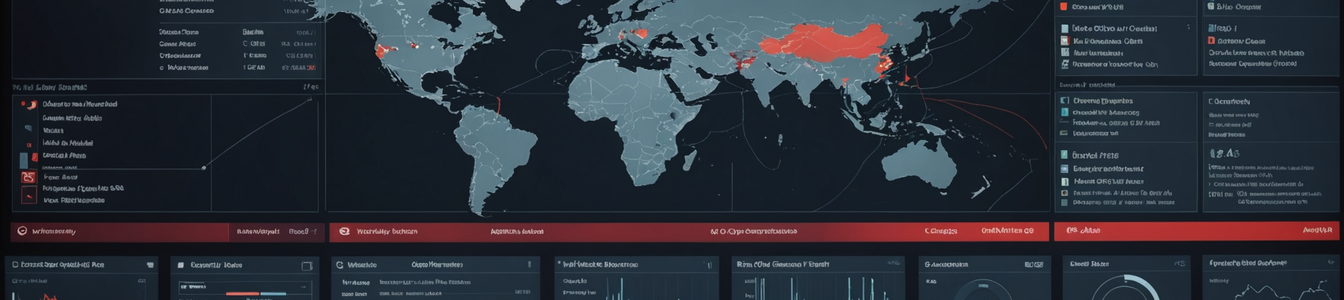
The global security landscape has entered a period of sustained, multi-front tension that is testing the limits of traditional Security Operations Centers (SOCs). From the seizure of vessels in Caribbean waters to accusations of drone incursions on the Korean Peninsula, these geopolitical flashpoints are not merely political headlines—they represent direct and immediate vectors for cyber escalation. For cybersecurity professionals, the challenge is no longer about defending against isolated advanced persistent threats (APTs) but managing a continuous barrage of activity across multiple theaters of digital conflict, each with its own tactics, techniques, and procedures (TTPs).
The Strain on Threat Intelligence Feeds and Analysis
The core function of any SOC is to contextualize alerts. Today, that context is fractured across dozens of crises. An alert indicating reconnaissance from IPs associated with Russian infrastructure could be related to the Venezuela situation, the broader Eastern European conflict, or a separate, unattributed operation. Similarly, network traffic patterns mimicking DDoS attacks could be criminal ransomware gangs, hacktivists aligned with the Manipur conflict, or a state-sponsored distraction ahead of a more targeted breach. The cognitive load on analysts to triage, correlate, and attribute this activity is pushing teams to a breaking point. Threat intelligence platforms are flooded with indicators of compromise (IoCs) from these overlapping zones, diluting signal with noise and increasing the risk of critical alerts being deprioritized.
Resource Allocation and the Burnout Crisis
SOC managers are facing impossible choices in resource allocation. Do they dedicate their senior analysts to monitoring the heightened cyber activity around the Korean Peninsula, where state-sponsored groups are notoriously aggressive? Or do they pivot to the complex hybrid threats emerging from the Venezuela crisis, which may involve a mix of maritime cyber-physical systems attacks and information operations? This 'whack-a-mole' approach leads to analyst burnout, high turnover, and a dangerous depletion of institutional knowledge. The financial market's surge in defense and cybersecurity ETFs is a direct reflection of this strain, as organizations and governments invest heavily in tools and personnel, yet the human element remains the most vulnerable component.
The Blurring Lines of Hybrid Warfare and Cyber Response
Incidents like the seizure of a tanker or arrests of militants with arms caches now have immediate digital counterparts. These physical actions are almost invariably accompanied by cyber operations: espionage against involved governments, disinformation campaigns to shape global narratives, and retaliatory attacks on critical infrastructure. For a SOC, this means their playbooks must evolve. An incident response (IR) to a network intrusion may need to be coordinated with corporate physical security teams, legal departments navigating international sanctions, and communications teams countering false narratives. The technical response—containment, eradication, recovery—is now just one phase in a much broader, geopolitically-charged operational sequence.
Adapting the SOC for a Multi-Polar Threat Environment
To survive this new normal, security operations must undergo a fundamental shift. First, intelligence must become adaptive and prioritized. Instead of consuming all available feeds, SOCs need curated intelligence that is weighted by geopolitical relevance to their organization's footprint and assets. Second, automation is non-negotiable. The automation of Tier-1 alert triage, IOC enrichment, and initial containment steps frees human analysts to focus on high-level correlation and strategic threat hunting. Third, organizations must develop 'geopolitical threat modeling,' formally assessing how different international crises could manifest as cyber risk to their specific operations, supply chains, and partner networks.
Conclusion: From Reactive Defense to Anticipatory Resilience
The era of the SOC as a purely technical, reactive defense hub is over. The current geopolitical tinderbox demands that security operations centers transform into nerve centers for anticipatory resilience. This requires deeper collaboration between cyber threat intelligence teams and geopolitical risk analysts, investment in skills that blend technical prowess with international relations understanding, and leadership that recognizes cybersecurity as a core strategic function in global stability. The teams that can contextualize a malware sample within the framework of a breaking news headline about regional tensions will be the ones that prevent the next major breach. The breaking point is here, and it is also the inflection point for the future of security operations.
Comentarios 0
Comentando como:
¡Únete a la conversación!
Sé el primero en compartir tu opinión sobre este artículo.
¡Inicia la conversación!
Sé el primero en comentar este artículo.