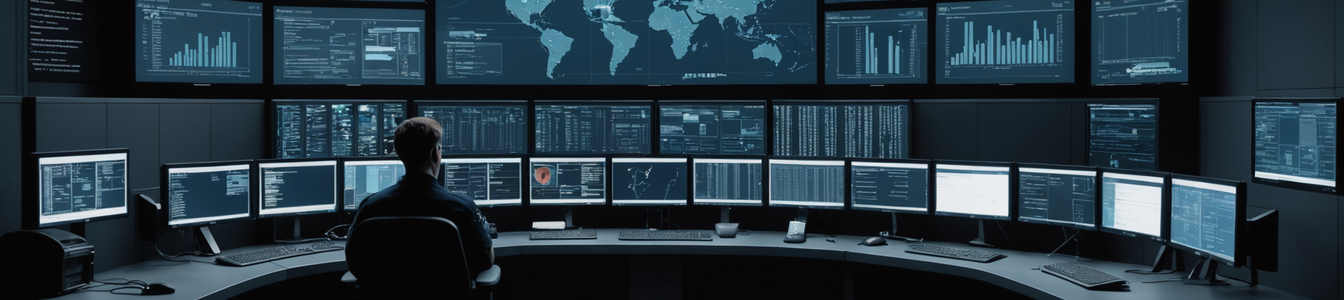
The cybersecurity industry meticulously plans for digital storms: ransomware gales, phishing squalls, and the persistent drizzle of vulnerability exploits. Yet, a more fundamental threat is emerging from outside the digital domain, one for which many Security Operations Centers (SOCs) are perilously unprepared. Simultaneous physical crises—a "superflu" overwhelming UK hospitals following holiday gatherings and catastrophic bushfires and record-shattering heatwaves scorching Australia—are not just front-page news. They are live-fire exercises exposing critical fragility in our digital defense postures, demonstrating how acute physical duress creates cascading failures that can overwhelm the people, processes, and technology underpinning security resilience.
The Human Firewall Breached: Absenteeism and Cognitive Overload
The first and most direct impact is on the human element, the soc-called "human firewall." In the UK, a severe flu season, exacerbated by post-Christmas social mixing, is driving hospital admissions to critical levels, with senior National Health Service (NHS) officials warning the worst may be yet to come. Concurrently, reports indicate shortages of key antiviral medications. This public health crisis translates directly into SOC vulnerability. Analysts and engineers are not immune; they fall ill, they must care for sick family members, or they struggle to access childcare due to school closures—a factor also reported in Australian bushfire zones. The result is sudden, unplanned absenteeism, stretching already lean teams to a breaking point.
In Australia, the threat is even more immediate. "Catastrophic" bushfire conditions have forced evacuations and preemptive school closures, while a severe heatwave—with temperatures soaring up to 16°C above average—has triggered major health warnings and a surge in heat-related illness presentations. For SOC personnel in affected regions, the primary concern shifts from monitoring threat intelligence feeds to ensuring the safety of their families and homes. Cognitive bandwidth, a critical resource for threat hunting and incident analysis, is diverted to situational awareness of physical threats. Fatigue, stress, and distraction create ideal conditions for human error, potentially causing missed alerts or misconfigurations that open digital doors for adversaries.
Infrastructure and Supply Chain Contagion
The crisis extends beyond personnel. Physical disasters directly attack the infrastructure that hosts and enables digital services. Catastrophic bushfires threaten data center physical integrity through power loss, smoke damage, or direct fire impact, forcing emergency failovers that may not have been tested under such widespread duress. Extreme heat can overwhelm cooling systems in server rooms and colocation facilities, leading to hardware throttling or failure. These are classic business continuity challenges, but they occur while the security team itself is under unprecedented stress, complicating coordinated response efforts.
Furthermore, the global supply chain for critical cybersecurity and IT hardware remains fragile. While not explicitly detailed in the current health crisis snippets, a parallel can be drawn. Shortages of flu medication signal a healthcare supply chain under stress. In a similar vein, a major physical crisis that disrupts global logistics—be it a pandemic, geopolitical event, or climate disaster—can delay the delivery of essential security appliances, replacement parts for firewalls, or hardware security modules. Recovery from a cyber-physical attack could be hamstrung not by a lack of expertise, but by an inability to procure a physical router or server.
The Crisis Response Paradox and Strategic Blindness
This confluence of events creates a dangerous paradox for security leaders. During a widespread physical emergency, the demand for stable, secure digital communication skyrockets. Emergency services, government coordination, remote healthcare, and public information dissemination all depend on resilient networks. The SOC's role becomes more critical than ever. Yet, this is precisely the moment when the SOC's operational capacity is most degraded by the same physical event.
Incident response plans often assume the availability of key personnel and stable infrastructure. They rarely game out scenarios where 40% of the team is unavailable, where primary and secondary data centers are both under threat from a regional wildfire, or where corporate leadership is wholly focused on a life-safety crisis. The "tier 1" incident becomes the physical evacuation, not the malware detection. This leads to strategic blindness: advanced persistent threat (APT) groups and opportunistic ransomware actors are known to exploit periods of organizational distraction, such as holidays or natural disasters. A SOC operating at half-strength and with divided attention is a prime target for a strategic digital strike.
Building True SecOps Resilience: Lessons from the Frontlines
These ongoing crises provide stark lessons for elevating security operational resilience:
- Cross-Training and Geographic Dispersion: Over-reliance on a co-located team is a single point of failure. Invest in cross-training to create depth in critical skills and establish geographically dispersed analyst pods to ensure one region can back up another during a localized crisis.
- Human-Centric Crisis Planning: Incident Response (IR) and Business Continuity (BCP) plans must explicitly account for mass absenteeism and personal duress. This includes establishing clear, pre-defined crisis communication channels, mental health support resources, and simplified, fail-safe procedures for when full teams are not available.
- Physical-Digital Risk Integration: Risk assessments must evolve. The likelihood of a cyber-attack should be evaluated in the context of potential concurrent physical stressors in a region (wildfire risk, flood zones, healthcare capacity). Threat intelligence should include monitoring for physical events that could create advantageous conditions for threat actors.
- Supplier Resilience Vetting: Extend third-party risk management programs to assess key suppliers' and cloud providers' resilience to the same physical threats your organization faces. Where are their data centers? What are their personnel contingency plans?
- Automation as a Force Multiplier: To mitigate personnel shortfalls, aggressive investment in Security Orchestration, Automation, and Response (SOAR) and automated playbooks for common incidents is non-negotiable. Automation can maintain a baseline of security hygiene and response during periods of reduced human oversight.
The scenes from the UK and Australia are not anomalies; they are a preview of a new normal where climate change and global interconnectedness amplify physical shocks. The resilience of a modern organization is no longer defined solely by its cybersecurity tools, but by its ability to sustain those cyber defenses when the physical world is in crisis. The security operations center must be engineered not just to withstand digital shocks, but to operate continuously through the operational shockwaves of the real world. Failing to bridge this resilience gap is an existential risk in an increasingly volatile century.
Comentarios 0
Comentando como:
¡Únete a la conversación!
Sé el primero en compartir tu opinión sobre este artículo.
¡Inicia la conversación!
Sé el primero en comentar este artículo.