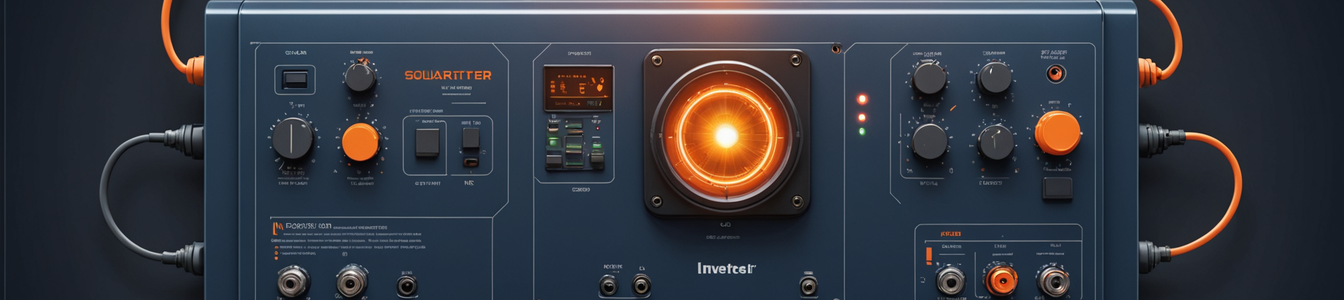
The rapid global transition to renewable energy has created a new and largely unsecured attack surface that cybersecurity experts are only beginning to understand. At the heart of this vulnerability lies a seemingly innocuous device: the solar inverter. These critical components, responsible for converting direct current (DC) from solar panels into alternating current (AC) usable by the grid, are increasingly networked and intelligent. However, their security often lags far behind their functionality, creating a distributed network of potential entry points for malicious actors targeting national power infrastructure.
The Inverter as a Cyber-Physical Weapon
Modern solar inverters are essentially industrial IoT devices with remote management capabilities, firmware update functions, and grid communication protocols. Security assessments have revealed common vulnerabilities including default or hardcoded credentials, unencrypted communication channels, insecure firmware update mechanisms, and exposed administrative interfaces. A compromised inverter can be manipulated to disrupt power quality by introducing frequency or voltage fluctuations, potentially triggering protective relays to trip and cause localized blackouts. In a coordinated attack, thousands of compromised inverters could create cascading failures, destabilizing regional grids in ways that mimic natural disturbances but are far more difficult to diagnose and contain.
Geopolitical Dimensions of Supply Chain Security
The cybersecurity risk is inextricably linked to global supply chain dynamics. The solar manufacturing sector has become heavily concentrated, with one nation dominating production from polysilicon to finished modules and inverters. This concentration creates systemic risk. European photovoltaic manufacturers, recognizing both economic and security threats, are now forming strategic alliances to rebuild domestic manufacturing capacity and reduce dependency. Their initiative highlights a growing awareness that energy security in the digital age encompasses not just fuel sources, but the cybersecurity integrity of the hardware controlling energy flows.
Parallel concerns are emerging in other major economies. In India, parliamentary committees have repeatedly flagged risks from over-dependence on energy imports, calling for diversified sourcing to enhance resilience. While traditionally focused on fossil fuels, this strategic thinking is now extending to the renewable technology supply chain. As Finance Minister Nirmala Sitharaman noted, the Indian economy has transitioned toward greater external resilience, yet new vulnerabilities in critical infrastructure technology demand similar strategic attention.
Converging Threats: IoT, Infrastructure, and Interdependence
The solar inverter threat exemplifies the convergence of three major security challenges: insecure IoT proliferation in critical environments, geopolitical supply chain concentration, and the increasing interdependence of distributed energy resources with legacy grid infrastructure. Unlike centralized power plants with dedicated security teams, distributed solar assets are often managed by homeowners, businesses, or third-party operators with limited cybersecurity expertise. Their inverters connect to both the internet (for monitoring) and the grid (for synchronization), creating a bridge between IT networks and operational technology (OT) systems that was previously air-gapped.
Attack vectors could include:
- Supply Chain Compromise: Malicious firmware implanted during manufacturing or distribution.
- Remote Exploitation: Leveraging internet-facing management portals with weak authentication.
- Local Network Attacks: Pivoting from compromised business or home networks to the inverter.
- Protocol Manipulation: Exploiting vulnerabilities in grid communication standards like IEEE 1547 or SunSpec.
Mitigation Strategies for a Fragile Grid
Addressing this threat requires a multi-layered approach combining technical controls, regulatory frameworks, and strategic supply chain diversification:
- Hardware Security Modules (HSMs): Implementing trusted platform modules in inverters for secure boot, cryptographic operations, and key storage.
- Network Segmentation: Mandating logical separation between inverter management networks and core business/IT networks, with strict firewall policies.
- Firmware Integrity Verification: Requiring cryptographically signed firmware updates and runtime integrity checks.
- Zero-Trust Architecture: Applying zero-trust principles to inverter communications, verifying every connection regardless of origin.
- Supply Chain Transparency: Developing hardware bills of materials (HBOM) and software bills of materials (SBOM) for critical components.
- International Standards: Accelerating development of global cybersecurity standards for grid-edge devices, moving beyond voluntary guidelines to mandatory certifications.
The Path Forward
The energy transition cannot succeed without a parallel security transition. Cybersecurity teams must engage with utility operators, renewable energy developers, and regulators to build security into distributed energy resources from design through decommissioning. This includes conducting regular penetration testing on inverter models, establishing incident response plans for grid-edge device compromises, and sharing threat intelligence across the energy sector.
As nations pursue energy independence through renewables, they must avoid creating new digital dependencies equally vulnerable to disruption. The lesson from both European solar initiatives and Indian energy security debates is clear: resilience requires diversity—not just in energy sources, but in technology providers, software stacks, and security architectures. The solar inverters silently powering our clean energy future could become the weakest link in our critical infrastructure unless the cybersecurity community acts decisively to secure this hidden attack surface before adversaries exploit it.
Comentarios 0
Comentando como:
¡Únete a la conversación!
Sé el primero en compartir tu opinión sobre este artículo.
¡Inicia la conversación!
Sé el primero en comentar este artículo.