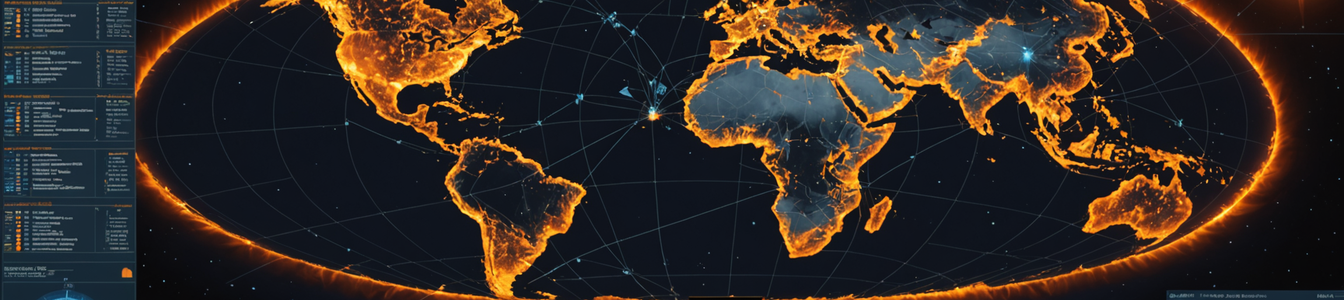
The aviation industry is confronting a new frontier in cybersecurity threats as recent solar storm activity exposes critical vulnerabilities in flight control and navigation systems. What began as routine space weather monitoring has escalated into a global security emergency, forcing airlines and regulators to address fundamental gaps in how critical infrastructure handles environmental threats that intersect with digital systems.
According to aviation authorities, over 50% of India's A320 family aircraft have already received emergency software updates to protect against radiation-induced system corruption. The Directorate General of Civil Aviation (DGCA) data reveals the scale of the response required, with hundreds of aircraft requiring immediate patches to prevent potential system failures during periods of intense solar activity.
Cybersecurity experts are sounding alarms about the broader implications of these vulnerabilities. "We're seeing a convergence of physical environmental threats and cybersecurity that most organizations are completely unprepared for," explained Dr. Maria Chen, a critical infrastructure security researcher at the International Cybersecurity Institute. "Solar radiation can cause bit flips in memory, corrupt navigation data, and create conditions that mimic cyber attacks on flight systems."
The technical challenges are substantial. Aviation systems, particularly those controlling navigation, communication, and flight management, rely on complex software that wasn't originally designed with space weather resilience as a primary consideration. When high-energy particles from solar flares interact with aircraft electronics at cruising altitudes, they can induce single-event upsets (SEUs) that alter memory states or processor operations.
Global aviation authorities have initiated emergency working groups to develop standardized protocols for space weather events. The Federal Aviation Administration (FAA) and European Union Aviation Safety Agency (EASA) are collaborating on new certification requirements that mandate radiation hardening and real-time monitoring capabilities for critical flight systems.
Industry response has been rapid but uneven. Major carriers with robust cybersecurity programs have implemented comprehensive update schedules, while smaller operators struggle with the technical and financial burden. The incident has highlighted the need for coordinated international response mechanisms and information sharing about emerging environmental-cyber threats.
Cybersecurity professionals are now reevaluating threat models to include space weather as a legitimate attack vector. "We can no longer treat cybersecurity as purely about preventing intentional human attacks," noted James Robertson, CISO of a major international airline. "Environmental factors like solar radiation represent a class of threats that require fundamentally different detection and mitigation strategies."
The financial implications are staggering. Industry analysts estimate that the global aviation sector could face billions in upgrade costs and operational disruptions as carriers retrofit existing fleets and manufacturers redesign systems for future aircraft. Insurance providers are already adjusting policies to account for space weather-related incidents.
Looking forward, the aviation cybersecurity landscape must evolve to address these complex, multi-domain threats. Researchers are developing new approaches that combine traditional cybersecurity measures with environmental monitoring and radiation-hardened computing architectures. The incident serves as a wake-up call for all critical infrastructure sectors about the interconnected nature of modern threats.
As solar activity increases toward the predicted 2025 solar maximum, the urgency of these measures becomes increasingly apparent. The aviation industry's response to this challenge will likely set precedents for how other critical sectors address the convergence of environmental and cyber threats in the years ahead.
Comentarios 0
Comentando como:
¡Únete a la conversación!
Sé el primero en compartir tu opinión sobre este artículo.
¡Inicia la conversación!
Sé el primero en comentar este artículo.