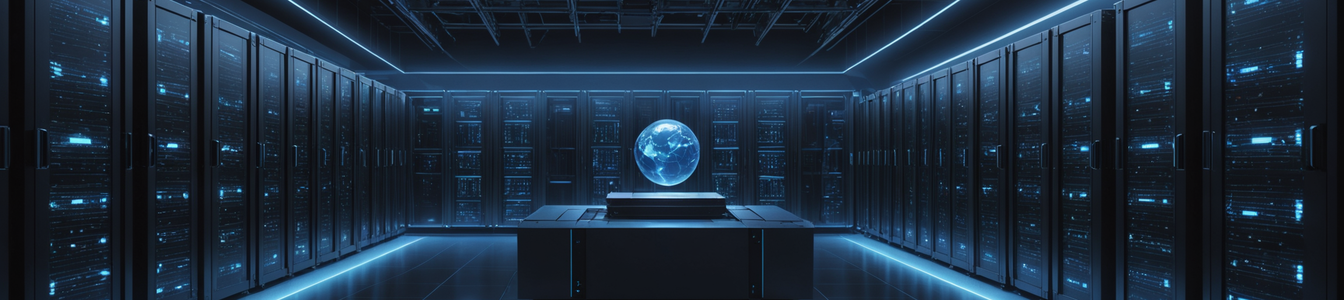
The race to build artificial intelligence infrastructure has taken a dramatic turn toward the final frontier. Elon Musk recently made a startling prediction: within three years, space will become the most affordable location for AI data centers. This vision, driven by SpaceX's capabilities and the unique advantages of orbital environments, represents not just a technological leap but a fundamental reconfiguration of cybersecurity's attack surface. Simultaneously, TSMC's announcement to manufacture advanced AI semiconductors in Japan highlights the parallel diversification of the terrestrial supply chain. Together, these developments create a multidimensional security challenge that will define the next decade of critical infrastructure protection.
The Orbital Computing Proposition
Space-based data centers offer several theoretical advantages for AI workloads. The vacuum of space provides natural cooling, potentially reducing the enormous energy consumption associated with cooling terrestrial AI clusters. Access to uninterrupted solar power could address the grid capacity challenges facing AI expansion on Earth. However, these benefits come with profound security implications. Unlike terrestrial facilities that benefit from physical security perimeters, human security teams, and relatively stable environmental conditions, orbital data centers would operate in what cybersecurity professionals would classify as an inherently hostile environment.
Novel Attack Vectors in the Space Domain
The cybersecurity implications of off-planet computing infrastructure are unprecedented. First, the communication links between Earth and orbital data centers create long-latency, potentially interceptable channels vulnerable to sophisticated signal jamming, spoofing, or man-in-the-middle attacks. Quantum communication encryption may become a necessity rather than an enhancement. Second, the space supply chain introduces unique vulnerabilities. Each launch, component, and software update represents a potential intrusion point. The hardware itself must be radiation-hardened and capable of autonomous self-repair, creating complex trusted computing challenges.
Third, and perhaps most significantly, incident response becomes nearly impossible. There's no possibility of sending a security team to physically inspect or contain a breach. Security systems must be completely autonomous, capable of detecting anomalies, containing threats, and recovering operations without human intervention—a level of AI-driven security autonomy that doesn't yet exist at scale. The concept of 'air-gapping' takes on literal meaning but offers little protection against sophisticated supply chain compromises or insider threats introduced during manufacturing or launch preparation.
Geopolitical Dimensions of Orbital Infrastructure
The move to space-based computing inevitably intersects with space law and geopolitical competition. Which nation's laws govern a data center in low Earth orbit? How are jurisdictional disputes resolved when infrastructure is physically inaccessible? The Outer Space Treaty of 1967 establishes that space is free for exploration and use by all nations, but it contains no provisions for commercial computing infrastructure of this scale. This legal ambiguity creates a potential 'wild west' scenario where the first movers could establish de facto norms and control points.
Furthermore, the concentration of critical AI infrastructure in privately operated orbital platforms raises questions about national security dependencies. If a nation's AI capabilities depend on infrastructure operated by a commercial entity headquartered in another country, entirely subject to that company's security protocols and potentially vulnerable to that company's home government's legal demands, sovereignty takes on new dimensions. This creates what security analysts might term 'orbital sovereignty' challenges.
Terrestrial Foundations: The TSMC-Japan Connection
While eyes turn skyward, crucial developments continue on Earth. TSMC's decision to manufacture advanced AI semiconductors in Japan represents a strategic diversification of the global chip supply chain away from concentration in Taiwan. For cybersecurity professionals, this geographical spread has dual implications. On one hand, it reduces single-point-of-failure risks associated with geopolitical tensions in the Taiwan Strait. On the other, it multiplies the number of manufacturing sites that must be secured to identical standards, expanding the attack surface for state-sponsored actors seeking to compromise hardware at the fabrication level.
The chips produced in these new facilities will likely power both terrestrial and orbital AI systems, creating a hardware security dependency that spans atmospheric boundaries. Ensuring the integrity of these components from design through fabrication, testing, launch integration, and orbital deployment requires a seamless, verifiable chain of custody—a monumental supply chain security challenge.
Building a Security Framework for Off-Planet Infrastructure
The cybersecurity community must begin developing specialized frameworks for space-based critical infrastructure. Traditional models like the NIST Cybersecurity Framework or ISO 27001 require significant adaptation for environments where physical access is impossible, communication latency is measured in seconds or minutes, and systems must operate autonomously for years.
Key considerations include:
- Autonomous Security Operations Centers (SOC): AI-driven systems capable of real-time threat detection, analysis, and response without human intervention.
- Quantum-Resistant Communication Protocols: Encryption that can withstand future quantum computing attacks on the long-haul space-Earth links.
- Radiation-Hardened Trusted Computing Bases: Hardware security modules and roots of trust that maintain integrity despite cosmic radiation.
- International Security Standards: Collaborative development of security norms for commercial space infrastructure, potentially through organizations like the UN Office for Outer Space Affairs or the International Telecommunication Union.
- Supply Chain Verification: Blockchain or similar distributed ledger technologies for tracking component integrity from terrestrial fabrication through orbital deployment.
The Path Forward
Elon Musk's three-year timeline may be ambitious, but the direction is clear. As AI compute demands continue their exponential growth, unconventional locations will become economically viable. The cybersecurity implications of this shift are profound and urgent. Professionals must expand their thinking beyond terrestrial networks and data centers to consider how to secure infrastructure that operates in the most hostile environment imaginable, governed by ambiguous legal frameworks, and dependent on unprecedented levels of autonomy.
The convergence of space-based computing with diversified terrestrial semiconductor manufacturing creates both risks and opportunities. By addressing these challenges proactively, the security community can help ensure that humanity's expansion into orbital infrastructure doesn't create a new domain of vulnerability, but rather a model of resilient, secure computing for the next century. The final frontier of computing must not become the final frontier of cyber exploitation.
Comentarios 0
Comentando como:
¡Únete a la conversación!
Sé el primero en compartir tu opinión sobre este artículo.
¡Inicia la conversación!
Sé el primero en comentar este artículo.