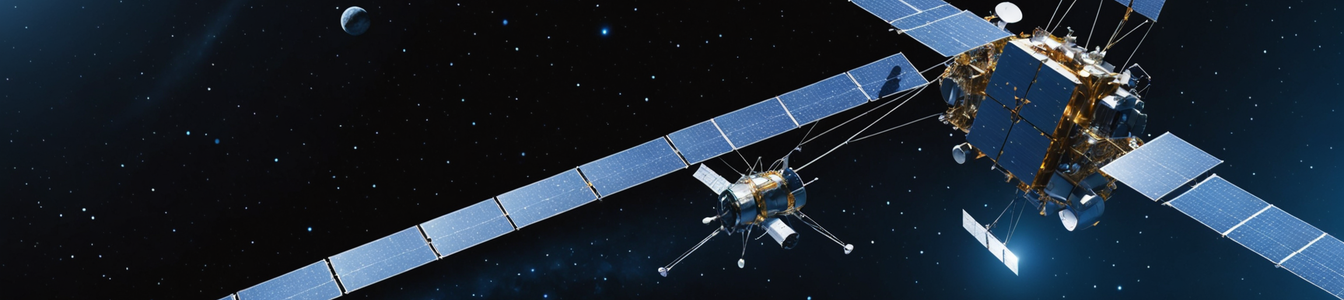
The cybersecurity landscape is poised for its most dramatic expansion yet—beyond the atmosphere. SpaceX's recent application to the Federal Communications Commission (FCC) for a next-generation satellite constellation has unveiled plans not just for global internet, but for solar-powered orbital data centers dedicated to artificial intelligence processing. This initiative, which could scale to an unprecedented one million satellites, fundamentally redefines the concept of critical infrastructure and presents a novel, multi-layered frontier for cybersecurity defense.
From Starlink to Stardata: The Vision of Orbital Compute
The core of SpaceX's proposal is the deployment of specialized satellites equipped with high-performance computing (HPC) hardware and powered by large solar arrays. Unlike traditional data centers constrained by terrestrial real estate, power grid capacity, and latency physics, these orbital facilities promise near-infinite scalability, direct solar energy, and the potential for ultra-low latency for certain global communications by leveraging the speed of light in a vacuum. The primary stated driver is to support the immense computational hunger of advanced AI models, positioning space as the next logical domain for cloud and edge computing.
The Cybersecurity Attack Surface Expands into Orbit
For security teams, this creates a threat model of staggering complexity. The traditional network perimeter dissolves, replaced by a dynamic, physically remote constellation.
- Satellite-to-Satellite Cyber Warfare: The proposed mesh network of data centers communicating via inter-satellite laser links creates a new vector for attack. A compromised node could propagate malware laterally across the constellation using these high-bandwidth optical links. Securing these laser communication protocols against interception, jamming, or data injection becomes paramount.
- Supply Chain Vulnerabilities at Cosmic Scale: Building and launching a million satellites involves a global supply chain for radiation-hardened processors, memory, and network interfaces. Each component presents a potential point for nation-state level tampering, hardware backdoors, or counterfeit parts that could undermine the entire fleet's integrity. The inability to physically inspect or patch hardware post-launch elevates the risk.
- Autonomous System Security: These orbital data centers will require a high degree of autonomy for thermal management, orbital adjustments, and fault response. The software controlling these functions—and the AI workloads themselves—becomes a critical target. An exploit could lead to a satellite becoming non-operational, a hazard to other spacecraft, or a controlled asset for an adversary.
- Geopolitical and Data Sovereignty Conflicts: Control over orbital compute resources translates to strategic advantage. The data processed—whether for commercial AI, government intelligence, or military applications—resides on assets in international space. This blurs legal jurisdictions and raises profound questions about data sovereignty, espionage, and the potential for "space blockades" or cyber-kinetic attacks to deny access to critical computing power.
Earth-Based Parallels and the Big Picture
The push into space mirrors intense activity on Earth. Major financial players like KKR are leading multi-billion dollar acquisitions of traditional data center firms, such as the reported $10+ billion deal for a Singapore-based operator. This underscores the immense value and strategic importance of compute infrastructure. The race is no longer just about building more facilities on the ground; it's about controlling the next high ground—low Earth orbit.
A Call for Space Cybersecurity Protocols
This new frontier lacks mature regulatory or security frameworks. The cybersecurity community must engage now to:
- Develop and standardize encryption and authentication protocols for inter-satellite links.
- Establish rigorous, auditable security standards for the space hardware supply chain.
- Create incident response and forensics methodologies for space-based assets.
- Advocate for international treaties or norms governing cyber operations in space, akin to discussions around terrestrial critical infrastructure.
SpaceX's proposal is more than a technological marvel; it is a catalyst that will force the cybersecurity industry to evolve. Defending assets 500 kilometers above Earth, where physical access is impossible and threats can come from any direction, requires a fundamental rethinking of security principles. The era of space-based critical infrastructure has begun, and its security will be one of the defining challenges of the coming decade.
Comentarios 0
Comentando como:
¡Únete a la conversación!
Sé el primero en compartir tu opinión sobre este artículo.
¡Inicia la conversación!
Sé el primero en comentar este artículo.