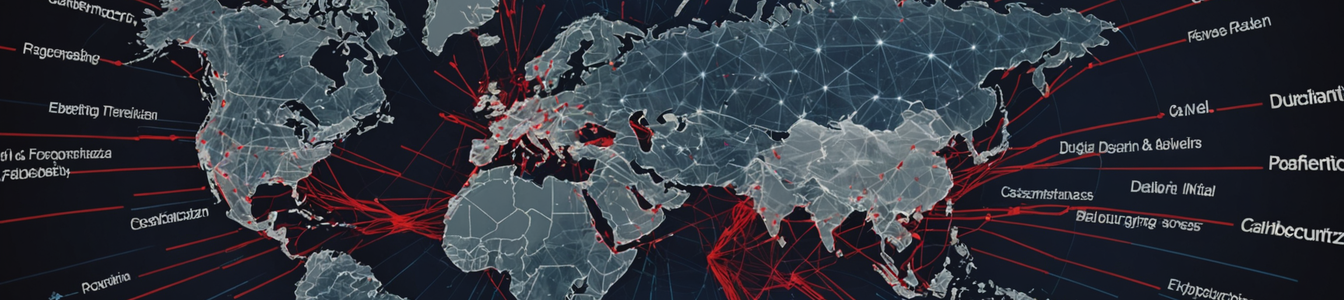
The digital frontlines of modern conflict are no longer confined to servers and code; they are increasingly woven into the fabric of breaking news and humanitarian crises. A clear and present trend in the cyber threat landscape is the deliberate weaponization of real-world geopolitical events by state-sponsored hacking groups to craft irresistibly credible phishing lures. This tactic, which supercharges the initial access phase of the cyber kill chain, has been starkly illustrated by two concurrent developments: targeted campaigns exploiting U.S. sanctions on Venezuelan oil and the potential exploitation of the tragic civil unrest in Iran.
The Venezuela Sanctions Lure: A Case Study in Strategic Phishing
Recent intelligence indicates that sophisticated China-linked Advanced Persistent Threat (APT) actors have been targeting U.S. government agencies with a highly tailored phishing campaign. The hook? Official-looking documents and communications pertaining to the U.S. blockade that has effectively shut off China and Cuba from Venezuelan oil. This topic sits at the nexus of energy security, international finance, and great-power competition, guaranteeing its immediate relevance and urgency for diplomats, analysts, and policy-makers within targeted agencies.
The attackers understand their audience. An email with a subject line referencing an "Urgent Update on Venezuelan Oil Sanctions Compliance" or a "Memorandum on Energy Security Implications" is far more likely to bypass cognitive skepticism than a generic phishing attempt. The lure is designed to trigger professional concern and operational necessity, prompting the target to open a malicious attachment or click a link to a credential-harvesting page disguised as an internal portal. This campaign demonstrates a shift from broad, scattergun phishing to intelligence-driven, precision social engineering.
The Iranian Protest Vector: Exploiting Human Emotion and Urgency
Parallel to this, the cybersecurity community is on high alert for campaigns leveraging the ongoing and deeply sensitive protests in Iran. A shocking report, corroborated by sources including Iranian doctors, has put the estimated death toll from the government crackdown at over 16,000, with hundreds of thousands injured. This humanitarian catastrophe creates a fertile ground for malicious actors.
Threat groups, potentially aligned with regional adversaries or interested foreign intelligence services, could craft lures posing as:
- Humanitarian aid organizations seeking donations or volunteer coordination.
- Journalistic entities requesting encrypted interviews or sharing "suppressed" documentary evidence.
- Fake VPN services or secure communication tools marketed to protesters and dissidents.
- Petitions or advocacy groups gathering signatures for international action.
These lures exploit powerful human emotions—outrage, sympathy, fear, and a desire to help—to compromise individuals connected to the issue, including activists, researchers, journalists, and diplomats. The compromised devices could then serve as footholds for espionage or disruptive attacks.
Analysis for the Cybersecurity Professional: The Evolving Kill Chain
This trend represents a significant evolution in the Cyber Kill Chain framework. The "Weaponization" and "Delivery" stages are now deeply informed by real-time geopolitical and social analysis. Attackers are effectively conducting open-source intelligence (OSINT) to identify high-impact lures, thereby increasing the probability of successful exploitation.
Key implications for defense include:
- Enhanced Threat Intelligence: Security teams must move beyond purely technical indicators of compromise (IOCs). Threat intelligence feeds must be enriched with geopolitical monitoring to anticipate which current events are likely to be weaponized. Understanding an organization's geopolitical exposure is now a core part of risk assessment.
- Context-Aware Security Training: Employee awareness training must evolve. Instead of just teaching users to spot poorly written emails, training should include real-world examples of current event-based lures. Simulations should test an employee's ability to question the legitimacy of a highly relevant and professionally compelling message.
- Complicated Attribution: Using globally relevant news stories as lures creates a "crowded battlefield." While the Venezuela campaign has been linked to Chinese APTs, other actors could easily mimic the same lure to create false flags, muddying forensic investigations and potentially guiding retaliatory actions in the wrong direction.
- The Convergence of IO and CYBER: This is a clear example of Information Operations (IO) and cyber intrusion converging. The narrative shaping the lure (e.g., highlighting the impact of sanctions or the brutality of a crackdown) is as important as the malware it delivers. Defending against this requires a holistic strategy that addresses both cognitive and technical vulnerabilities.
Conclusion: A New Normal in Digital Conflict
The weaponization of headlines is not a fleeting tactic but a new normal in state-sponsored cyber operations. For cybersecurity leaders, the mandate is clear: build a resilient human firewall trained to withstand psychologically sophisticated lures, and integrate a deep understanding of world events into your threat model. The next major phishing campaign targeting your organization may not arrive as a fake invoice, but as a meticulously crafted document referencing the very crisis your team is tasked to manage. In this environment, the most critical security control may well be an informed and skeptical mind, acutely aware that today's headlines are tomorrow's hacking tools.
Comentarios 0
Comentando como:
¡Únete a la conversación!
Sé el primero en compartir tu opinión sobre este artículo.
¡Inicia la conversación!
Sé el primero en comentar este artículo.