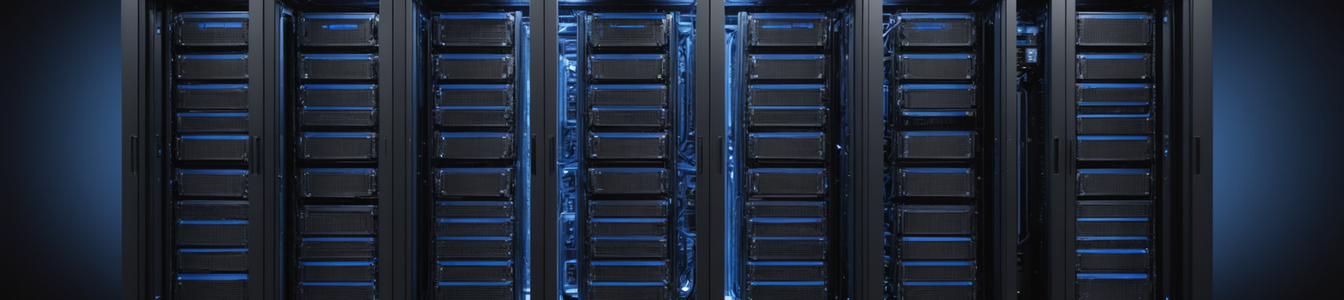
The global race for artificial intelligence supremacy has entered a new, perilous phase where silicon and software are now battlegrounds for national security. At the epicenter of this shift is Super Micro Computer (Supermicro), a leading server and storage solutions manufacturer, which has been thrust into a compliance maelstrom following a criminal indictment. The company has announced a comprehensive independent investigation after U.S. authorities charged its co-founder, Charles Liang, and several others with conspiring to violate export controls. The alleged scheme involved rerouting powerful AI-optimized servers, subject to strict U.S. export restrictions, to sanctioned entities in China through intermediary countries.
This legal action is not an isolated incident but a symptom of a broader, escalating "compliance warfare" gripping the critical AI hardware supply chain. The servers in question are not mere commodity hardware; they are high-performance computing systems equipped with advanced GPUs from manufacturers like NVIDIA, which are central to training large language models and conducting complex AI research. Their diversion represents a direct challenge to U.S. efforts to maintain a technological edge, particularly in military and dual-use applications.
Simultaneously, and in a move that frames this issue as a two-front conflict, China has begun enforcing a new set of stringent security rules aimed at defending its own supply chains from perceived global threats. While the full technical specifications of these rules are closely held, analysts indicate they mandate deeper visibility, security audits, and potentially the exclusion of foreign components deemed risky from critical infrastructure and state-backed projects. This creates a powerful counter-current: as Western nations tighten export controls to limit China's access, China is implementing its own defensive measures to reduce dependency and vet foreign technology.
For cybersecurity and supply chain risk professionals, this convergence creates a perfect storm of operational and strategic challenges. The Supermicro case highlights the extreme level of third-party and insider risk now present. A company's hardware integrity—long a concern for backdoor implants—is now inextricably linked to its compliance posture. A malicious firmware update is a threat; a shipment deliberately rerouted through a transshipment point to evade customs is a different, but equally dangerous, threat vector that compromises the entire chain of custody.
The New Due Diligence Imperative
The traditional vendor questionnaire is obsolete. Security teams must now integrate deep-dive export control compliance checks into their vendor risk management programs. This involves:
- Geopolitical Mapping: Understanding the ultimate end-user and end-use of critical components, far beyond the immediate customer.
- Transaction Forensics: Employing tools and audits to verify shipping documentation, financial trails, and logistics data for signs of obfuscation.
- Insider Threat Programs: Enhancing programs to detect potential collusion between employees and external actors seeking to circumvent controls, recognizing that financial gain is a powerful motivator.
The "Zero-Trust Hardware" Concept
In this environment, the principles of zero-trust are expanding from network perimeters to physical supply chains. Organizations cannot assume hardware is compliant or untainted based on a vendor's brand or past history. Verification at multiple points—pre-shipment, at receipt, and during integration—becomes critical. This may include hardware fingerprinting, secure element verification, and bill-of-materials audits against known export-controlled components.
Strategic Implications for Multinationals
Corporations are caught in a regulatory crossfire. They must navigate U.S. and allied export regulations while also complying with the incoming, and often opaque, security mandates from China if they wish to operate in that market. This may force the development of bifurcated supply chains: one "clean" chain for sensitive markets adhering to Western controls, and another for other regions. The cost, complexity, and security implications of managing such parallel systems are enormous.
The Supermicro probe and China's new rules signal that the era of a truly global, frictionless technology supply chain is over. AI hardware has been classified as a strategic asset. The role of cybersecurity leaders is expanding to encompass geopolitical risk analysis and complex regulatory compliance. The integrity of the next generation of AI systems depends not just on secure code, but on a verifiably secure and compliant journey from the factory floor to the data center rack. Failure to adapt to this new reality exposes organizations to catastrophic legal liability, reputational damage, and national security repercussions.
Comentarios 0
Comentando como:
¡Únete a la conversación!
Sé el primero en compartir tu opinión sobre este artículo.
¡Inicia la conversación!
Sé el primero en comentar este artículo.