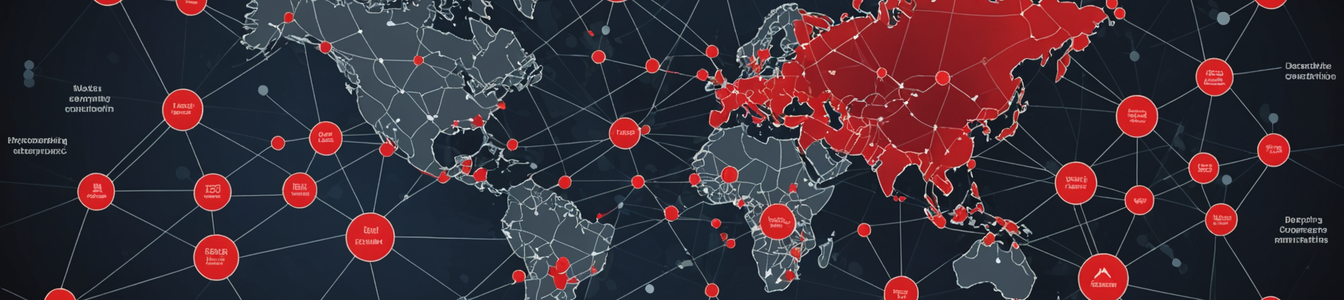
The global trade landscape is undergoing seismic shifts that are fundamentally reshaping how organizations approach supply chain security. Recent policy announcements, including proposed 500% tariffs on specific imports and strategic import restrictions on critical materials, are forcing cybersecurity teams to reconsider their risk management frameworks and security protocols.
Geopolitical tensions have become a primary driver of supply chain security requirements. The proposed extreme tariff measures targeting countries engaged in specific trade relationships demonstrate how quickly political decisions can disrupt established supply chains. Organizations that previously relied on single-source suppliers or concentrated regional manufacturing are now facing unprecedented cybersecurity challenges as they scramble to diversify their operations.
Germany's delicate balancing act with China for critical raw materials illustrates the complex security considerations involved in modern trade relationships. As nations navigate these geopolitical tightropes, corporate security teams must implement sophisticated monitoring systems to track policy changes, assess their potential impact on supply chain integrity, and develop contingency plans for rapid supplier transitions.
The cybersecurity implications extend beyond simple logistics. Each new supplier relationship introduces potential vulnerabilities in the digital ecosystem. Security teams must now conduct thorough due diligence on new partners' cybersecurity postures, implement secure data exchange protocols across multiple jurisdictions, and ensure compliance with varying regional data protection regulations.
India's experience with targeted tariff exemptions highlights another critical aspect of this new reality. While certain sectors may receive temporary relief, the underlying uncertainty requires organizations to build more agile security architectures. Zero-trust frameworks are becoming essential as companies can no longer assume continuous relationships with established suppliers.
The restrictions on precious metal imports, such as the platinum jewelry ban extending to 2026, demonstrate how trade policies are increasingly targeting specific commodities for strategic reasons. Cybersecurity teams must now understand the geopolitical significance of their organization's supply chains and build early warning systems to anticipate potential disruptions.
Technical security measures are evolving to address these challenges. Organizations are implementing:
- Multi-regional data governance frameworks that can adapt to changing trade relationships
- Enhanced supplier risk assessment protocols that evaluate both cybersecurity maturity and geopolitical exposure
- Automated compliance monitoring systems that track regulatory changes across multiple jurisdictions
- Secure remote access solutions for rapidly onboarding new suppliers
- Blockchain-based supply chain verification to ensure material provenance and integrity
Supply chain attacks have become increasingly sophisticated, with threat actors exploiting the complexity of global trade relationships. The current trade environment creates additional attack vectors as organizations establish new partnerships under time pressure, potentially compromising thorough security vetting processes.
Business continuity planning must now incorporate geopolitical risk scenarios. Cybersecurity teams are working closely with supply chain managers to develop playbooks for rapid supplier transitions, including pre-vetted alternative suppliers and standardized security onboarding procedures.
The convergence of trade policy and cybersecurity requires new skill sets within security organizations. Professionals must now understand international trade dynamics, regulatory compliance across multiple regions, and the technical implications of rapidly changing supplier ecosystems.
As organizations navigate this new landscape, they're discovering that traditional perimeter-based security models are insufficient. The modern supply chain requires security frameworks that can maintain integrity across constantly shifting partnerships and regulatory environments. This represents both a significant challenge and an opportunity to build more resilient, secure global operations.
Looking forward, organizations that successfully integrate geopolitical intelligence with cybersecurity operations will gain competitive advantages. The ability to anticipate trade policy shifts and rapidly adapt security frameworks accordingly will become a critical differentiator in an increasingly volatile global trade environment.
Comentarios 0
Comentando como:
¡Únete a la conversación!
Sé el primero en compartir tu opinión sobre este artículo.
¡Inicia la conversación!
Sé el primero en comentar este artículo.