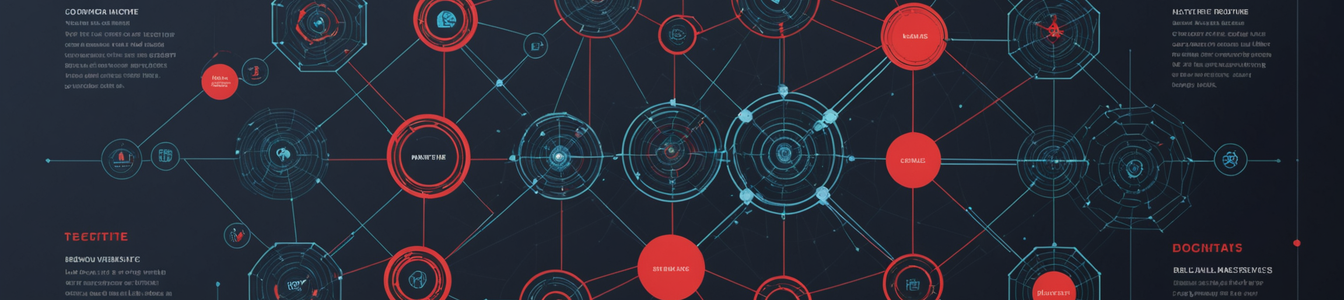
The digital age promised unprecedented verification capabilities—blockchain for transactions, digital signatures for documents, biometric authentication for identity. Yet a disturbing trend is emerging: the simultaneous failure of trust mechanisms across seemingly unrelated sectors. From financial markets to judicial systems, media certification to corporate governance, parallel breakdowns in verification infrastructure are creating what security experts now call a 'trust deficit dashboard'—a systemic vulnerability where authentication failures in one sector amplify risks in others.
The Convergence of Verification Failures
Recent incidents illustrate this dangerous convergence. In India, an Association for Democratic Reform report revealed serious criminal cases against 73 Rajya Sabha members, highlighting governance verification failures. Simultaneously, the country's Central Board of Film Certification blocked the release of an Oscar-nominated documentary, raising questions about content verification systems. Meanwhile, BSL Limited reported zero physical share transfer requests under SEBI's re-lodgement window—a statistical anomaly that suggests potential gaps in financial verification processes.
In Europe, Italian media reports describe tensions between government and judiciary, with accusations that magistrates are being 'humiliated'—a concerning development for judicial verification systems. Meanwhile, Finnish company Suominen published its 2025 annual report through Philippine channels, demonstrating how corporate reporting verification can become geographically fragmented.
Technical Analysis: Common Failure Points
Cybersecurity analysts identify several common technical vulnerabilities across these sectors:
- Identity Verification Gaps: KYC (Know Your Customer) processes in finance show similar failure patterns to identity verification in governance systems. Weak digital identity frameworks allow bad actors to exploit multiple systems simultaneously.
- Document Integrity Failures: Whether financial reports, judicial documents, or media certifications, digital signature validation and timestamp verification systems show consistent weaknesses. The BSL Limited case suggests potential issues with share transfer documentation integrity.
- Audit Trail Fragmentation: Different sectors maintain separate audit systems that don't communicate, allowing attackers to exploit inconsistencies. A criminal record in governance databases might not trigger alerts in financial systems.
- Content Authentication Breakdown: The film certification case reveals how content verification systems can be compromised for political purposes, similar to how disinformation campaigns exploit media authentication gaps.
The Attack Surface Expansion
This convergence creates unprecedented attack surfaces. Threat actors no longer need to breach individual systems—they can exploit the trust gaps between them. A compromised identity in a governance system can be leveraged to gain credibility in financial systems. Questionable judicial decisions can undermine corporate governance verification.
'The real danger isn't in any single system failing,' explains Dr. Elena Rodriguez, cybersecurity researcher at the Global Trust Institute. 'It's in the correlated failures. When financial, judicial, and media verification systems all show weakness simultaneously, attackers can execute sophisticated cross-sector operations that would be impossible against isolated systems.'
Case Study: The Cross-Sector Disinformation Attack
Consider a hypothetical attack leveraging these vulnerabilities: An actor with questionable background (governance verification failure) establishes a corporate entity (financial verification gap), uses it to fund media campaigns (content verification weakness), and challenges unfavorable coverage through judicial systems with compromised independence. Each sector's verification failure reinforces the others, creating a self-validating loop of deception.
Technical Recommendations for Cybersecurity Teams
- Implement Cross-Sector Verification Protocols: Develop systems that can verify identities and documents across governance, financial, and media domains using interoperable standards.
- Establish Trust Correlation Monitoring: Deploy AI systems that monitor verification failures across sectors, alerting when multiple systems show correlated weaknesses.
- Enhance Digital Provenance Tracking: Implement blockchain or distributed ledger solutions for critical documents across all sectors, ensuring immutable audit trails.
- Develop Sector-Agnostic Identity Frameworks: Create identity verification systems that work consistently across governance, financial, and media applications.
- Implement Zero-Trust Architecture for Institutional Trust: Apply zero-trust principles not just to network access but to institutional verification—never assume trust based on sector or source alone.
The Future of Trust Infrastructure
As verification failures converge, the cybersecurity community faces a paradigm shift. Traditional sector-specific security approaches are insufficient against cross-system trust exploitation. The solution requires:
- Global Standards for Verification Interoperability: International cooperation to create cross-sector verification standards.
- Decentralized Trust Architectures: Moving away from centralized verification authorities that create single points of failure.
- Transparent Verification Algorithms: Open standards for how verification decisions are made across sectors.
- Cross-Training for Security Professionals: Cybersecurity experts need understanding of governance, financial, and media systems to identify cross-sector vulnerabilities.
Conclusion: Rebuilding Trust in the Verification Age
The simultaneous failure of verification systems across multiple sectors represents one of the most significant cybersecurity challenges of our time. It's not merely about fixing individual systems but about rebuilding the interconnected trust infrastructure that underpins modern society. Cybersecurity professionals must expand their focus beyond technical systems to include institutional trust mechanisms, recognizing that the most dangerous attacks may exploit not software vulnerabilities, but verification failures in the systems designed to establish truth itself.
The 'trust deficit dashboard' is flashing warning signs across sectors. The question is whether the cybersecurity community can develop integrated solutions before attackers perfect cross-system exploitation techniques. The integrity of financial markets, governance systems, judicial processes, and media ecosystems depends on our ability to create verification systems that work not in isolation, but in concert—establishing trust not through siloed authorities, but through transparent, interoperable, and resilient verification networks.
Comentarios 0
Comentando como:
¡Únete a la conversación!
Sé el primero en compartir tu opinión sobre este artículo.
¡Inicia la conversación!
Sé el primero en comentar este artículo.