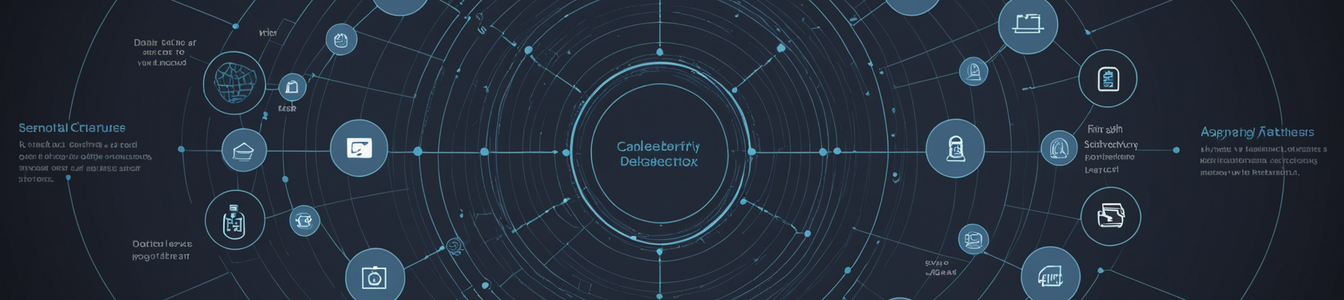
The cybersecurity landscape for financial services is undergoing a fundamental transformation, moving from isolated defense postures to integrated, intelligence-driven collaboration. A recently recognized partnership between global online trading platform Vantage Markets and cybersecurity giant Trend Micro exemplifies this shift, establishing a new blueprint for how financial institutions and security vendors can work together to combat sophisticated threats.
Beyond the Threat Feed: A Collaborative Defense Model
Traditional vendor relationships in cybersecurity often follow a transactional pattern: a company purchases a product or subscribes to a threat intelligence feed. The partnership between Vantage Markets and Trend Micro breaks this mold. It is built on a framework of real-time, bidirectional threat intelligence collaboration. This isn't merely about Vantage Markets receiving alerts; it's about integrating Trend Micro's global threat research directly into the platform's security operations and infrastructure.
The model enables what industry experts are calling "integrated security deployment." Trend Micro's threat intelligence, gleaned from its vast network of sensors, research on emerging malware families, and analysis of attacker tactics, techniques, and procedures (TTPs), is contextualized for the financial trading environment. This intelligence is then operationalized within Vantage Markets' systems, allowing for the creation of custom detection rules, proactive blocking of malicious infrastructure targeting financial services, and accelerated incident response.
Why the Financial Sector Demands This Shift
Financial trading platforms like Vantage Markets operate in a uniquely hostile threat environment. They are high-value targets for several reasons:
- High-Stakes Transactions: Real-time trading involves the immediate movement of capital, making any disruption or fraud attempt critically damaging.
- Sensitive Client Data: Platforms hold vast amounts of personally identifiable information (PII) and financial data, a prime target for data exfiltration and credential theft.
- API-Centric Architecture: Modern trading relies heavily on APIs, which have become a major attack vector for data manipulation and account takeover attempts.
- Regulatory Scrutiny: Financial institutions face stringent global regulations (like GDPR, MiFID II, and various local financial authorities' rules) requiring demonstrable security controls and rapid breach reporting.
In this context, a delayed response to a threat is not an option. The collaboration focuses on threats particularly relevant to fintech and trading, including advanced credential phishing campaigns designed to steal trader accounts, ransomware groups specifically targeting financial data for extortion, and sophisticated fraud schemes leveraging API vulnerabilities.
The Mechanics of Real-Time Intelligence Sharing
While specific technical details of the integration remain proprietary, the recognized model suggests a deep technical alignment. It likely involves:
- Direct Platform Integration: Trend Micro's intelligence is probably fed directly into Vantage Markets' Security Information and Event Management (SIEM) or Extended Detection and Response (XDR) platform, enriching internal logs with external threat context.
- Actionable Indicators: The sharing goes beyond simple IP addresses and domains (IOCs). It includes behavioral indicators (IOBs) and TTPs, helping Vantage Markets' security team understand the "how" behind an attack, not just the "what."
- Contextualization for Finance: Raw threat data is filtered and prioritized based on relevance to the financial sector. An attack campaign targeting healthcare may be deprioritized, while a new banking Trojan variant triggers immediate action.
- Feedback Loop: Vantage Markets can contribute anonymized telemetry and attack patterns seen on its platform back to Trend Micro, enhancing the vendor's global threat picture, particularly regarding finance-specific attacks. This completes the collaborative cycle.
Implications for the Cybersecurity Market
This partnership signals a broader market shift with significant implications:
- From Product to Partnership: Vendors are increasingly being evaluated not just on their technology, but on their willingness and ability to form deep, collaborative partnerships. The value is in the integration and joint operational workflow.
- The Rise of Sector-Specific Intelligence: Generic threat intelligence is becoming less valuable. The future lies in tailored intelligence streams for verticals like finance, healthcare, and critical infrastructure, where threat actors and their methods differ substantially.
- Setting a New Standard for FinTech: Other trading platforms, neobanks, and digital payment providers will likely look to this model as a benchmark. It raises the bar for what constitutes effective cybersecurity in the sector, potentially driving a wave of similar collaborations.
- Evolving the Shared Responsibility Model: In cloud and platform-based services, the shared responsibility model defines who secures what. This collaboration adds a new layer: shared intelligence and coordinated response, blurring the lines between vendor and client responsibilities in a productive way.
Challenges and Considerations
While promising, this collaborative model is not without challenges. It requires a high degree of trust between organizations for sharing sensitive security data. Robust legal agreements covering data anonymization, usage rights, and liability are essential. Furthermore, it demands significant investment in integration engineering and ongoing coordination between security teams, which may be a resource hurdle for smaller financial institutions.
Conclusion: A Collaborative Future
The recognition of the Vantage Markets and Trend Micro partnership is more than an industry award; it is a validation of a new approach to financial sector cybersecurity. As threat actors continue to organize and share resources, the defense community must respond in kind. The move from passive intelligence consumption to active, real-time collaboration represents a maturation of the cybersecurity ecosystem. For CISOs in the financial world, this model offers a pathway to transform threat intelligence from a background report into a frontline defense mechanism, ultimately creating a more resilient digital financial infrastructure for everyone.
Comentarios 0
Comentando como:
¡Únete a la conversación!
Sé el primero en compartir tu opinión sobre este artículo.
¡Inicia la conversación!
Sé el primero en comentar este artículo.