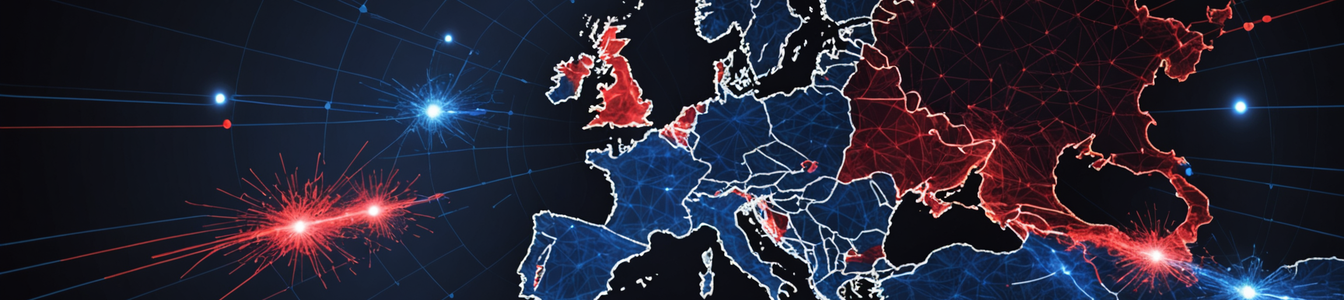
The global incident response (IR) playbook is being rewritten in real-time. Cybersecurity giants, exemplified by Abacus's recent expansion of its UK IR team, are making calculated investments in regional hubs, signaling a fundamental shift in how digital crises are managed. This move is not merely about adding headcount; it's a direct response to a converging storm of threats where traditional cyber attacks are increasingly intertwined with localized physical crime and geopolitical instability, demanding a new breed of hyper-regionalized response capability.
For years, the dominant model for multinational cybersecurity firms has been the 'follow-the-sun' approach: a distributed network of IR teams that hand off investigations across time zones to provide 24/7 coverage. This model excels at managing widespread ransomware campaigns or global network intrusions. However, it often stumbles when faced with crises deeply rooted in local socio-economic, legal, and criminal landscapes. The UK's current situation is a case study in this limitation.
The Hybrid Threat Reality: From Fuel Pumps to Financial Systems
Reports indicate a stark surge in organized physical crime, such as a 30% increase in sophisticated 'fill up & flee' petrol station thefts since the onset of the Iran conflict. While this appears as a physical crime wave, its implications for cybersecurity and critical infrastructure operators are profound. These criminal enterprises are often funded by or linked to cyber-enabled financial fraud. The operational tactics—rapid strikes, exploiting systemic vulnerabilities, and quick monetization—mirror those of cyber criminal groups. An IR team in a different time zone, unfamiliar with local law enforcement protocols, fuel distribution networks, or the specific tactics of these organized groups, is ill-equipped to help a client secure their interconnected physical supply chain and payment systems.
Furthermore, the downstream effects of such crime waves strain the very systems needed for remediation. The UK court system, for instance, is facing soaring costs—reportedly up to £152,000 daily—for translators due to a surge in cases involving international criminals, many linked to complex fraud and scam operations. This judicial bottleneck can delay prosecutions, allow criminal networks to persist, and complicate the legal component of incident response, such as evidence collection for cross-border prosecution. A local IR team with established relationships and understanding of the UK's legal process becomes invaluable.
The Strategic Imperative: Beyond Follow-the-Sun to Embedded Resilience
Abacus's expansion represents a strategic recognition that global coverage must be underpinned by local depth. The new 'hub' model supplements follow-the-sun with 'embedded resilience.' This means maintaining teams that possess not only technical expertise in digital forensics and threat intelligence but also regional fluency. This fluency includes:
- Legal and Regulatory Navigation: Intimate knowledge of the UK's National Cyber Security Centre (NCSC) protocols, GDPR and UK GDPR implications for data breaches, and coordination with local law enforcement like the National Crime Agency (NCA).
- Threat Intelligence Contextualization: The ability to parse global threat feeds and apply them to the specific industries and criminal patterns active in the UK and Europe, such as targeting of retail fuel networks or regional banking trojans.
- Physical-Digital Convergence Expertise: Understanding how attacks can bridge operational technology (OT) in critical infrastructure (like fuel distribution) with information technology (IT) systems, requiring responders who can assess risks across both domains.
Operational Gaps and the Future of IR
This pivot, however, exposes coverage gaps. Not all firms can afford to build robust regional teams. This could create a two-tiered market where only the largest players or specific high-risk regions receive this level of dedicated support. Furthermore, it places immense pressure on talent acquisition, seeking professionals who are both technically elite and culturally/legally astute in their region.
The expansion also reflects a broader trend where geopolitical instability, as highlighted by analysts warning of 'economic seppuku' from political volatility in other regions, directly fuels cyber and cyber-enabled crime. Instability creates opportunity for threat actors, and responding to their actions requires stability and permanence in the defender's posture.
For CISOs and security leaders, the lesson is clear: when evaluating IR retainers and managed security services, the question is no longer just "Do you have global coverage?" but "What is your depth of capability and on-the-ground presence in our primary regions of operation?" The era of remote, purely digital IR is fading. The future belongs to integrated teams that can navigate the server room, the courtroom, and the specific streets where hybrid threats are born, requiring a blend of global scale and local savvy that is now the gold standard in cyber defense.
Comentarios 0
Comentando como:
¡Únete a la conversación!
Sé el primero en compartir tu opinión sobre este artículo.
¡Inicia la conversación!
Sé el primero en comentar este artículo.